Auto Dealership Merchant Account

Merchant Account for Auto Dealership Business [Instant Approval]

Opening a merchant account for an auto dealership through 2Accept connects new-car franchises, used-car independents, multi-franchise dealer groups, buy-here-pay-here (BHPH) dealers, classic and collector car dealers, motorcycle dealerships, RV and motorhome dealers, boat dealerships, powersports dealers (ATV / UTV / snowmobile / personal watercraft), commercial truck dealers, and ultra-luxury franchises (Ferrari, Lamborghini, Bentley, Rolls-Royce, Aston Martin, McLaren) to acquiring banks that explicitly underwrite MCC 5511, 5521, 5571, and 5599 with surcharging-program registration filed with Visa (Surcharge Disclosure Form, 30-day advance notification, surcharge capped at the lesser of cost-of-acceptance or 3% post-2023 Visa cap reduction from 4%) and Mastercard (30-day advance notification), state-by-state surcharge-legality suppression configured into the gateway (no surcharging in Connecticut, Massachusetts, or Maine where state statute explicitly prohibits; surcharge-disclosure-rule compliance in New York requiring posting in dollars and cents and California under Cal. Civ. Code §1748.1 requiring percentage and dollar amount displayed at point of sale and on the receipt), credit-only surcharge calculation honoring the federal Durbin Amendment prohibition on debit-card surcharging, BHPH weekly and biweekly installment billing with tokenized vault and Account Updater, signed buyer’s-order capture at the F&I desk, and high-ticket deposit billing — all without the freezes, holds, and sudden terminations that aggregators like Stripe, Square, and PayPal issue the moment they see a $35,000 vehicle deposit or a surcharge field at authorization.

The process of opening an auto dealership merchant account with 2Accept takes four steps. First, complete the online application with your EIN, Articles of Incorporation, state automotive dealer license (every state has its own dealer licensing regime with bond requirements, location requirements, sales-tax-collection obligations, and title-handling requirements — and licensing must be current in every state where the dealership operates), last three months of bank and processing statements, your signed buyer’s-order or bill-of-sale template (with VIN capture, itemized purchase-price breakdown, trade-in details, TILA disclosure if dealer-financed, FTC Used Car Rule Buyers Guide acknowledgment on used inventory, refund and cancellation policy on the deposit, and customer signature), your surcharge-program scope (which channels surcharge, the percentage applied, whether the surcharge applies to full-vehicle sales or only to service / parts / down-payment tickets), the states in which the dealership operates (which directly determines the surcharge-suppression configuration in the gateway), your BHPH retail-installment-contract template with TILA-compliant disclosure if you run in-house financing, and your DMS platform (CDK Global, Reynolds & Reynolds, Dealertrack, DealerSocket, ELEAD, VinSolutions, or other). Second, a dedicated auto-dealership underwriter reviews your dealer license, surcharge-program scope, state-by-state surcharge-legality posture, average-vehicle-ticket distribution, BHPH-vs-third-party-financing mix, deposit-billing workflow, and chargeback history within one business hour. Third, you receive your MID and integrate via your DMS, your dealer-website platform (Dealer Inspire, DealerOn, Dealer.com), your BHPH platform (Wayne Reaves, Selly, RouteOne, DealerCenter), or direct REST API after signing the merchant processing agreement — and 2Accept files the Visa Surcharge Disclosure Form and the Mastercard surcharge advance-notification on your behalf at the 30-day-prior-to-go-live mark. Fourth, you go live in 48 hours with credit-card surcharge calculated correctly at authorization, debit-card surcharging suppressed (Durbin), state-by-state suppression honoring CT / MA / ME prohibition and NY / CA posting rules, EMV chip + NFC contactless + Apple Pay / Google Pay at the F&I desk, AVS + CVV + 3DS on e-commerce deposit and parts checkout, BHPH installment billing with tokenized vault and Account Updater, signed buyer’s-order capture, and chargeback alerts.

Rates for an auto dealership merchant account on 2Accept start at 2.89% for established new-car franchises and used-car independents with clean processing history, completed Visa and Mastercard surcharge-program registration, credit-only surcharge applied at 2-2.5% (safely under the 3% Visa cap post-2023 reduction), state-by-state suppression correctly configured, AVS + CVV + 3DS enabled on CNP deposit and parts transactions, EMV chip + PIN on F&I-desk POS, signed buyer’s-order capture, and chargeback ratios under 0.5%. Rates run higher for new dealerships without processing history, BHPH operations with elevated installment-default chargeback exposure, ultra-luxury supercar dealerships with $200K-$1.5M single-ticket sales (where per-transaction underwriting attention is required), classic-car dealers selling investment-grade pre-1990 inventory at $100K-$2M tickets, dealerships with prior surcharge-program violations (Visa or Mastercard penalty history for non-registered surcharging, exceeding the cap, or applying surcharge to debit), and dealerships in CT / MA / ME that must operate without surcharging due to state prohibition. Pricing depends on monthly volume, average-vehicle-ticket distribution, surcharge-program scope, state(s) of operation, BHPH-installment-book size, chargeback ratio, and dealer licensing complexity across multiple states for multi-state dealer groups.
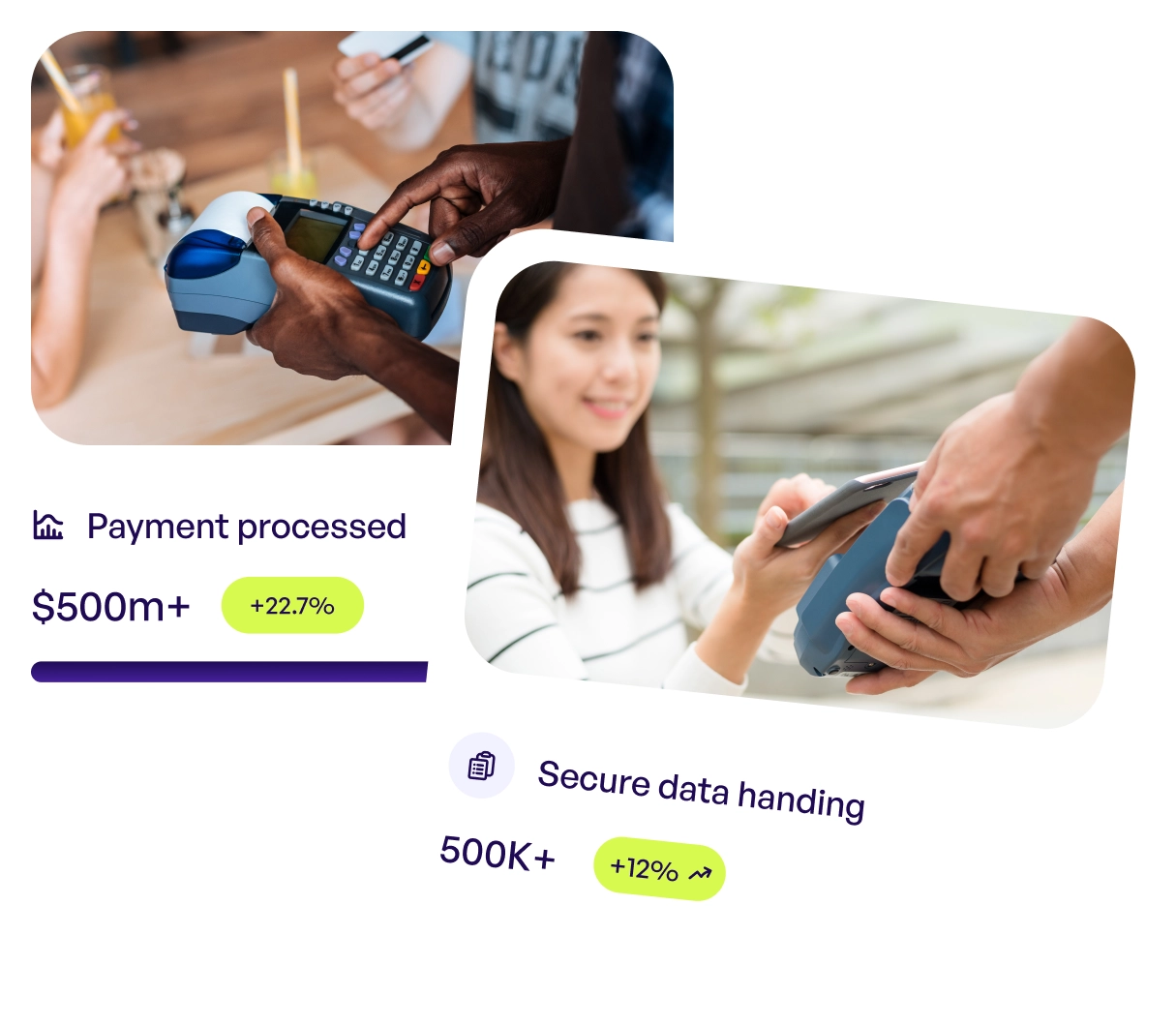
48h
Average approval
98%
Approval rate
40+
Acquiring banks
$2B+
Processed yearly

Apply for a merchant account

Free underwriting review. No application fee.

Phone number
SSL encrypted. No credit pull. Soft underwriting review only.
Industries we underwrite

Everything 2Accept handles for auto dealership surcharging programs

Every dimension below covers what auto dealerships running surcharge programs typically evaluate when choosing a payment processor — and where mainstream aggregators silently fail. Stripe, Square, and PayPal will not configure compliant surcharging at all (no surcharge field at authorization, no surcharge line item on the receipt, no separate surcharge clearing record to the card brands), they prohibit vehicle-dealer MCCs (5511, 5521, 5571, 5599) outright on their high-ticket review thresholds, and they freeze accounts the moment a $35,000 vehicle deposit posts. 2Accept's auto-dealership underwriting desk registers your surcharge program with Visa (30-day advance notification, surcharge percentage filed, cap at the lesser of the merchant's cost of acceptance or 3% post-2023 Visa reduction) and Mastercard (30-day advance notification), configures the gateway to surcharge only credit cards (debit-card surcharging is prohibited by federal Durbin Amendment rules — debit must remain at face value), suppresses surcharging in the four states where it is explicitly prohibited (Connecticut, Massachusetts, Maine, and historically Colorado prior to 2022 — Colorado now allows with caps), and applies the state-specific posting and percentage rules in New York, California, and the other states with surcharge-disclosure statutes. The MID supports new-car dealers, used-car dealers, multi-franchise dealer groups, buy-here-pay-here (BHPH) dealers with in-house installment billing, classic and collector car dealers, motorcycle dealerships, RV and boat dealers, powersports dealers, commercial truck dealers, and ultra-luxury franchises (Ferrari, Lamborghini, Bentley, Rolls-Royce) under MCC 5511, 5521, 5571, and 5599.

Dealer Categories & MCCs We Process

Auto dealership categories covered by 2Accept

2Accept underwrites the full landscape of auto-dealership commerce — new-car franchises selling current-model-year vehicles under MCC 5511 (motor vehicle dealers — new and used), used-car independent dealers selling pre-owned inventory under MCC 5521 (motor vehicle dealers — used only), multi-franchise dealer groups operating five to fifty rooftops across a metro under a holding-company structure with separate MIDs per rooftop or a consolidated MID with location-level reporting, buy-here-pay-here (BHPH) dealers selling vehicles to credit-challenged buyers with in-house installment financing where the dealer extends credit and collects weekly or biweekly payments through the life of the loan, classic and collector car dealers selling pre-1990 vehicles (and concours-grade investment-grade vehicles up to seven figures) under MCC 5511 / 5521, motorcycle dealerships selling new and used motorcycles under MCC 5571 (motorcycle dealers), RV and motorhome dealers selling Class A / B / C motorhomes and travel trailers under MCC 5599 (motor home dealers — also used for boat and powersports in many configurations), boat dealerships selling new and used powerboats, sailboats, and personal watercraft under MCC 5599, powersports dealers selling ATVs, UTVs, side-by-sides, snowmobiles, and personal watercraft under MCC 5571 / 5599, commercial truck dealers selling Class 6-8 commercial trucks and trailers under MCC 5511, and ultra-luxury dealerships selling Ferrari, Lamborghini, Bentley, Rolls-Royce, Aston Martin, McLaren, Bugatti, and Pagani inventory under MCC 5511 with per-transaction ticket caps configured for $200K-$500K+ single sales. Each dealer category maps to one of four MCCs (5511, 5521, 5571, 5599) and runs under a surcharge-program registration filed independently with Visa and Mastercard.

Dealer category, average vehicle ticket distribution, surcharge-program scope (credit-only surcharging compliant with Durbin), state(s) of operation (which directly determines whether surcharging is legal, prohibited, or restricted by posting and percentage rules), and BHPH-vs.-third-party-financing mix are reviewed during onboarding because they determine which MCC the acquirer assigns, what surcharge cap applies (the lesser of the merchant's actual cost of acceptance or the Visa 3% cap post-2023 reduction from the prior 4% cap, with Mastercard's parallel cap at the merchant's cost of acceptance not to exceed the same level), and what state-by-state suppression logic gets configured into the gateway. A $35K average-ticket franchise dealer in Texas with a credit-only surcharge program at 2.5% has a very different configuration profile from a $4K average-ticket BHPH operation in Florida with weekly installment billing and no surcharging, and an $850K average-ticket Ferrari dealer in California has a very different profile from a $9K motorcycle dealer in Wisconsin.

Apply for a Dealer Categories & MCCs We Process MID

Approved Auto Dealership Categories

  • New & Used Car DealersMCC 5511
  • Used-Only & BHPH DealersMCC 5521 (with installment support)
  • Motorcycle & Powersports DealersMCC 5571 / 5599
  • RV / Motorhome / Boat DealersMCC 5599
  • Classic & Luxury Dealers (Ferrari / Lambo / Bentley)MCC 5511 (high-ticket caps)
  • Commercial Truck DealersMCC 5511 (Class 6-8)
Surcharging Program Models

Surcharging program models we register and underwrite

Surcharging at an auto dealership comes in three operating configurations and 2Accept registers and underwrites all three. First, full-amount credit-card surcharging — the dealership applies a surcharge (commonly 2-3%, capped at the lesser of the merchant's cost of acceptance or the Visa / Mastercard 3% ceiling post-2023) to every credit-card transaction, with debit cards excluded from surcharging by federal Durbin Amendment rules and exempt cards (HSA/FSA, prepaid in some configurations) excluded by card-brand rules. The surcharge is filed as a separate line item on the receipt, the customer is notified of the surcharge amount before authorization, and the surcharge amount is passed through to the card brand as a clearing-record field so the brand can monitor that no merchant exceeds the cap. Second, partial-amount or 'cash discount' surcharging — the dealership posts a higher sticker price and offers a discount for cash, debit, or check payment, structured so the credit-card amount equals the sticker price (no surcharge field on the receipt) but the cash price runs lower. Cash-discount programs are technically not surcharging under card-brand rules if the discount-to-cash is the offered structure rather than the surcharge-to-credit being the added structure — many smaller dealers elect this path because it avoids Visa / Mastercard surcharge registration entirely, but it requires careful posting and disclosure to remain compliant with state UDAP statutes and FTC truth-in-pricing rules. Third, convenience-fee programs on specific channels — the dealership runs no surcharge on the main showroom counter but applies a convenience fee on credit-card payments accepted online, by phone, or by mail (channels that are clearly 'inconvenient' for cash payment, qualifying for the card-brand convenience-fee exception). 2Accept configures the gateway, files the Visa Surcharge Disclosure Form and Mastercard advance notification, and applies state-by-state suppression — the surcharge does not apply in Connecticut, Massachusetts, or Maine, and applies under the state-specific posting and percentage rules in New York (must post surcharge in dollars and cents, not just percentage), California (must post surcharge percentage and dollar amount on the receipt and at point of sale per Cal. Civ. Code §1748.1), and the other states with explicit surcharge-disclosure statutes.

Whether the dealership is a single-rooftop used-car independent running $15K-$40K tickets with a 2.5% credit surcharge under MCC 5521, a multi-franchise dealer group running $20K-$60K tickets across new and certified pre-owned inventory under MCC 5511 with surcharge applied on F&I-desk down payments and parts/service tickets but excluded on full-vehicle purchases (some groups elect this hybrid to keep the full-vehicle sale frictionless while recovering card costs on smaller transactions), a BHPH operation running $4K-$12K vehicles with no surcharging on the down payment but recurring weekly or biweekly installment billing through the loan life with tokenized vault and Account Updater, a classic-car dealer running $80K-$2M ticket sales on rare and concours-grade inventory with deposit + balance billing and signed bill-of-sale capture, or a Ferrari / Lamborghini / Bentley dealership running $200K-$1.5M+ single-ticket sales on supercar inventory with elevated per-transaction acquirer review and dedicated underwriting attention, the MID is structured to support the operating model with surcharging-program registration filed correctly with both card brands and state-specific compliance suppression baked into the gateway logic.

Apply for a Surcharging Program Models MID

Approved Surcharging Configurations

  • Full Credit-Card Surcharging (3% cap, Visa 2023)Registered with Visa + Mastercard
  • Cash-Discount Posting (No Surcharge Registration)Configured at gateway
  • Convenience-Fee Programs (Online / Phone / Mail)Channel-restricted
  • Hybrid (Surcharge on Service / No Surcharge on Vehicle)Supported
  • BHPH Weekly / Biweekly Installment BillingTokenized vault + Account Updater
  • Deposit + Balance on Classic / Luxury InventoryMilestone-triggered capture
Surcharge Registration & State Legality

Surcharge-program compliance handling for dealerships

Surcharging at an auto dealership operates under five overlapping compliance regimes that 2Accept's underwriting desk audits at onboarding and monitors throughout the life of the MID. First, Visa surcharge rules require the merchant to file a Visa Surcharge Disclosure Form at least 30 days before applying any surcharge, the surcharge must not exceed the lesser of the merchant's actual cost of acceptance or the Visa cap (reduced from 4% to 3% in April 2023 — most dealers cap their surcharge at 2-2.5% to stay safely under the ceiling), the surcharge applies only to credit cards (debit cards must remain at face value under the federal Durbin Amendment, regardless of state law on surcharging), and the surcharge amount must be passed as a clearing-record field so Visa can monitor cap compliance. Second, Mastercard surcharge rules parallel Visa's — 30-day advance notification, cap at the lesser of cost-of-acceptance or the parallel ceiling, credit-only application, separate line item on the receipt, and clear customer notification before authorization. Third, state-level surcharge legality is a 50-state patchwork that 2Accept tracks per state and configures into the gateway: surcharging is fully prohibited in Connecticut (Conn. Gen. Stat. §42-133ff), Massachusetts (Mass. Gen. Laws ch. 140D §28A), and Maine (Me. Rev. Stat. tit. 9-A §8-509), so dealerships operating in those states cannot surcharge regardless of card-brand registration; surcharging is allowed in most other states subject to state-specific posting and disclosure rules (New York requires the surcharge to be posted in dollars and cents alongside the cash price, California requires posting under Cal. Civ. Code §1748.1 with percentage and dollar amount visible at point of sale and on the receipt, and several other states have surcharge-disclosure statutes with their own specifics).

Fourth, federal Truth in Lending Act (TILA / Regulation Z) applies to any dealer extending credit to consumers — full disclosure of the APR, finance charge, amount financed, total of payments, and total sale price is required on every retail installment contract, and BHPH dealers operating in-house financing fall squarely under TILA disclosure obligations on every loan. The federal Equal Credit Opportunity Act (ECOA / Regulation B) prohibits discrimination in credit decisioning, and the Federal Trade Commission's Used Car Rule (16 CFR Part 455) mandates the Buyers Guide window sticker on every used vehicle in dealer inventory disclosing warranty status, known defects, and the 'AS IS — NO DEALER WARRANTY' or implied-warranty status. The federal Magnuson-Moss Warranty Act governs how written and implied warranties on consumer products (including vehicles) must be disclosed and honored. State-level lemon laws apply to new and (in many states) used vehicle sales — California's Song-Beverly Consumer Warranty Act (Cal. Civ. Code §1790 et seq.) is the most aggressive lemon-law regime in the country, with replacement / refund remedies for substantial warranty defects. Fifth, every state has its own automotive dealer licensing regime with bond requirements (typically $25K-$75K surety bond), location requirements (most states require a physical lot with minimum square footage and signage), sales-tax-collection obligations (the dealer collects state and local sales tax at delivery), and title-handling requirements. 2Accept reviews dealer licensing status state-by-state at onboarding and flags gaps before submission.

Apply for a Surcharge Registration & State Legality MID

Compliance Frameworks Covered

  • Visa Surcharge Disclosure Form (30-day filing)Filed at onboarding
  • Mastercard Surcharge Advance Notification (30-day)Filed at onboarding
  • State Surcharge Suppression (CT / MA / ME prohibited)Gateway-enforced
  • NY / CA Surcharge Posting RulesReceipt + signage configured
  • TILA / Regulation Z (BHPH In-House Financing)Disclosure language reviewed
  • FTC Used Car Rule + State Lemon LawsVerified per state
High-Ticket Billing & BHPH Installments

Payment features for auto dealerships

Auto-dealership billing depends on six technical pillars that mainstream commerce processors do not natively support together. First, credit-card surcharge calculation at authorization — the gateway calculates the surcharge percentage on the credit-card portion only (excluding the debit-card portion, which must remain at face value under Durbin), applies the state-specific suppression logic for Connecticut, Massachusetts, and Maine, posts the surcharge as a separate line item on the receipt, and transmits the surcharge amount as a clearing-record field to the card brand for cap monitoring. Second, high-ticket vehicle deposit billing — when a customer puts $5K-$25K down on a $40K-$200K vehicle order or holds a unit pending financing approval, the deposit posts to a dealer-deposit MID configured for elevated per-transaction tickets, with the balance taken on a separate transaction at delivery (often by wire, certified check, or third-party lender ACH rather than card, since the full-vehicle card portion would generate $400-$1,500 in surcharge or merchant-acceptance fees that customers and dealers typically avoid on full-amount card pay). Third, signed bill-of-sale or buyer's-order capture at the F&I desk — captures the exact vehicle (VIN, year/make/model), the purchase price, any add-ons (extended warranty, GAP insurance, dealer-installed accessories, paint protection, F&I products), the trade-in value if applicable, taxes and fees, and the customer's signature acknowledging the terms; the signed buyer's order is the single most important chargeback-defense evidence on a vehicle-purchase dispute, on par with the signed scope-of-work agreement in custom-build automotive work. Fourth, BHPH installment billing — tokenized vault stores the customer's payment-method-of-record (debit card preferred to avoid surcharge complications on installments, or ACH directly from the customer's bank account), recurring weekly or biweekly charges run through the life of the loan (typically 24-48 months on a $4K-$15K vehicle financed at 18-25% APR under TILA-compliant disclosure), and Account Updater (VAU + ABU) keeps the card-on-file current across the multi-year installment period. Fifth, parts and service ticket billing at the dealer's service department — surcharge applies if elected on parts/service tickets (often configured separately from full-vehicle sales since parts/service tickets run $50-$3K and the card-acceptance cost recovery is more material per dollar), with EMV chip + contactless + Apple Pay / Google Pay at the service-writer desk. Sixth, dealer trade billing on wholesale auction inventory and dealer-to-dealer transactions, often run as ACH or wire to avoid card processing on $5K-$30K wholesale unit transfers.

For BHPH dealers specifically, the recurring installment model is the heart of the business — the dealer extends credit at the retail installment contract signing, the customer agrees to weekly or biweekly payment under TILA-compliant disclosure, and the dealer collects those payments for 24-48 months. 2Accept's BHPH MID supports tokenized vault rebill on a configurable cadence (weekly Monday, biweekly Friday, monthly first-of-month, etc.), Account Updater enrolled by default across the loan lifetime to refresh expired and reissued cards via Visa Account Updater (VAU) and Mastercard Automatic Billing Updater (ABU) so card-expiration-driven payment failures don't trigger collections actions, cascading retry logic on declined payments (try again next business day, escalate to backup payment method, send dunning email after second decline), and reporting that ties payment history back to the underlying retail installment contract for repossession and charge-off compliance. For classic and luxury dealers selling $80K-$2M+ inventory, 2Accept supports per-transaction ticket limits up to $500K+ on the primary MID with case-by-case approval for sub-million-dollar single charges, deposit + balance milestone billing for vehicles ordered or held pending financing approval, and signed bill-of-sale capture with VIN, condition documentation, and photographic evidence of the unit at delivery to defend against 'not as described' disputes on high-ticket investment-grade inventory.

Apply for a High-Ticket Billing & BHPH Installments MID

Supported Payment Capabilities

  • Credit-Card Surcharge Calculation (Auth + Clearing)Visa / MC compliant
  • High-Ticket Vehicle Deposit Billing ($5K-$25K)Elevated-ticket MID
  • Signed Buyer's Order / Bill of Sale CaptureIncluded at onboarding
  • BHPH Weekly / Biweekly Installment RebillTokenized vault + Account Updater
  • EMV + NFC + Apple Pay / Google Pay at F&I DeskStandard on all POS
  • Per-Transaction Ticket Caps (Luxury / Classic)Up to $500K+ on primary MID
DMS Integration & Surcharge Gateway

Platform & gateway integrations for auto dealerships

Most auto dealerships run on a dealer-management system (DMS) — CDK Global, Reynolds & Reynolds, Dealertrack, DealerSocket, AutoMate, ELEAD, VinSolutions, or PBS — that manages the F&I desk, vehicle inventory, customer database, service department work orders, and integrated payment capture at multiple points (F&I desk on vehicle sales, service-writer desk on parts/service tickets, parts counter on retail parts sales, BHPH installment-billing module on weekly/biweekly recurring charges). 2Accept ships native gateway connectors for the major DMS platforms, replacing the default processor with a surcharge-configured high-risk-friendly acquiring relationship that approves vehicle-dealer MCCs (5511, 5521, 5571, 5599) without freezing on high-ticket transactions and that calculates, posts, and clears the credit-card surcharge correctly at authorization. For BHPH dealers, the integration extends to the dedicated BHPH platforms (Wayne Reaves, Selly, RouteOne, DealerCenter) that manage retail installment contracts, payment scheduling, and collections — the 2Accept gateway plugs into the recurring-billing module so installment charges run on schedule with tokenized vault and Account Updater enrolled by default.

For e-commerce — increasingly relevant for dealers selling parts, accessories, and online vehicle deposits — 2Accept integrates with Shopify, WooCommerce, and the dealer-specific e-commerce platforms (Dealer Inspire, DealerOn, Dealer.com, Reynolds Reynolds Web Services) with the surcharge logic applied on the checkout for credit-card payments while debit, ACH, and finance-routed transactions skip the surcharge. For multi-rooftop dealer groups, 2Accept structures separate MIDs per rooftop (or a consolidated MID with location-level reporting) so each store's volume, chargeback ratio, and surcharge-program reporting roll up independently. For luxury and exotic dealers (Ferrari, Lamborghini, Bentley, Rolls-Royce), the gateway connects directly to the dealer's CRM and inventory management with per-transaction ticket caps configured for the ultra-high-ticket portion of the inventory and dedicated underwriting touch on each transaction above the standard limit.

Apply for a DMS Integration & Surcharge Gateway MID

Native Integration Support

  • CDK Global / Reynolds & Reynolds / DealertrackDirect integration
  • DealerSocket / VinSolutions / ELEAD / AutoMateDirect integration
  • Wayne Reaves / Selly / RouteOne / DealerCenter (BHPH)Native integration
  • Dealer Inspire / DealerOn / Dealer.com (Websites)Native plugins
  • Shopify / WooCommerce (Parts & Accessories)Native plugins
  • Authorize.net / NMI / USAePay (Surcharge-enabled)Direct gateway
Vehicle Dispute Defense

Risk defense for auto dealership chargeback exposure

Auto-dealership chargeback exposure clusters around five failure modes specific to the vertical: high-ticket vehicle-purchase disputes ($25K-$200K+ chargebacks where the cardholder claims the vehicle wasn't as described, had undisclosed damage, or the title transfer wasn't completed — defended with the signed buyer's order capturing exact VIN / year / make / model / mileage / condition, the FTC Used Car Rule Buyers Guide window sticker copy, photographic delivery evidence with customer-acknowledged sign-off, and DMV title-transfer records); surcharge-compliance disputes (cardholder disputes the surcharge claiming it wasn't disclosed, exceeded the cap, or was applied in a state where surcharging is prohibited — defended with the signed receipt showing the surcharge as a separate line item, the point-of-sale signage acknowledging the surcharge, the state-specific suppression configuration showing the surcharge was correctly excluded in CT/MA/ME, and the Visa/Mastercard surcharge-program registration documentation); deposit disputes (cardholder puts a $5K-$25K deposit on a vehicle order or hold, the deal falls through (financing denied, customer changes mind, vehicle damaged in transit), and the cardholder disputes the deposit charge claiming it wasn't refundable or the dealer didn't deliver the agreed unit — defended with the signed deposit agreement specifying refundable vs. non-refundable terms, the customer's acknowledgment of the deposit terms, and the dealer's documented attempt to deliver the agreed vehicle); BHPH installment default chargebacks (BHPH customer defaults on the retail installment contract, the dealer continues to attempt installment charges on the tokenized card, the customer disputes those charges as 'I cancelled the loan' — defended with the signed retail installment contract under TILA-compliant disclosure showing the customer's commitment to the full payment schedule, the customer's signed authorization for recurring charges, and the dealer's documented payment-history reporting); and surcharge-program registration violations (Visa or Mastercard penalty for surcharging without registration, exceeding the 3% cap, or applying surcharge to debit cards in violation of Durbin — defended with the maintained registration documentation, the gateway's surcharge-calculation logs showing compliance, and the debit-vs-credit BIN-table routing logs showing debit cards were never surcharged).

The signed buyer's order is the single most important piece of chargeback evidence on a $25K+ vehicle-purchase dispute, on par with the signed scope-of-work agreement in custom-build automotive work. 2Accept's onboarding includes a buyer's-order template review that ensures the F&I-desk workflow captures: VIN and exact vehicle identification (year, make, model, trim, color, mileage at sale, key/keyless-entry status, equipment list), purchase price with itemized breakdown (vehicle price, F&I products, taxes, doc fees, title and registration), trade-in details if applicable (VIN of trade, agreed trade value, payoff amount on trade), financing disclosure under TILA if dealer-financed (APR, finance charge, amount financed, total of payments, total sale price), warranty status under FTC Used Car Rule (AS-IS, dealer warranty, manufacturer warranty), refund and cancellation policy on the deposit (refundable or non-refundable, conditions for refund, timeframe for refund), and the customer's signature acknowledging every line. With the signed buyer's order plus AVS / CVV / 3DS authentication match on CNP deposit transactions (or EMV PIN entry on card-present F&I-desk transactions), plus DMV title-transfer record (proving the dealer delivered the unit as committed), plus post-delivery satisfaction outreach, representment win rates on vehicle-purchase disputes run 60-75% — without the signed buyer's order, win rates collapse below 25% and the dealer eats the $25K-$200K transaction amount plus the chargeback fee. For high-volume dealer groups, multi-MID cascading distributes volume across rooftops so no single MID exceeds Visa's VAMP threshold or Mastercard's ECM threshold (1.5%), and surcharge-program registration is filed independently per MID.

Apply for a Vehicle Dispute Defense MID

Risk & Chargeback Tools Included

  • Signed Buyer's Order / Bill of Sale CaptureIncluded at onboarding
  • Surcharge Disclosure on Receipt + POS SignageStandard on every transaction
  • AVS + CVV + 3DS 2.0 (CNP) / EMV PIN (POS)Standard on all transactions
  • Ethoca + Verifi CDRN AlertsIncluded (Mid/Top tier)
  • Representment Service (Vehicle Disputes)Available (~60-75% win rate)
  • Multi-MID Cascading (Multi-Rooftop Dealer Groups)Supported (per-rooftop MIDs)
Pricing Tiers

High risk processing rates, published up front

Every high risk merchant account is priced by risk tier. Your vertical, volume, and chargeback ratio determine which tier underwrites you. Rates are average and may vary depending on individual circumstances and risk profile. Interchange may be passed to merchants for more challenging approvals

Low-Tier High Risk
2.89%
+ $0.20

Subscription · SaaS · Coaching · Digital

  • Domestic U.S. MID
  • Next-day funding
  • 0–10% rolling reserve
  • Free gateway integration
  • Account updater included
Apply
Most Approved
Mid-Tier High Risk
3.49%
+$0.25

CBD · Peptides · Telehealth · Vape · Dating · Travel

  • Domestic or offshore MID
  • Chargeback alerts (Ethoca + Verifi)
  • 0-10% rolling reserve
  • Dedicated underwriter
  • MATCH-list considered
  • Multi-MID load balancing
Apply
Top-Tier High Risk
4.95%
+$0.30

Adult · Firearms · Crypto · Gaming

  • Offshore acquiring
  • AEP / MSB registration support
  • 0-10% rolling reserve
  • 3DS 2.0 authentication
  • Descriptor optimization
  • Cascading across 3+ MIDs
Apply
How It Works

From application to live processing in 4 steps

01

Apply Online

Complete the 4-minute application. No credit pull, no application fee, no long-term contract.

02

Meet Your Underwriter

A 2Accept underwriter reviews your business model, volume, and documents within 1 business hour.

03

Go Live in 48 Hours

Sign your MPA, receive your MID, and integrate via gateway API, hosted checkout, or Shopify.

04

Scale Safely

Grow with chargeback alerts, fraud scoring, and multi-MID load balancing as your volume scales.

2Accept vs Aggregators

Why a dedicated MID beats Stripe, Square, and PayPal

Aggregators pool thousands of merchants under one master account. When any single MCC trips a threshold, entire verticals get frozen. A dedicated MID from 2Accept belongs to your business alone.

Feature 2ACCEPTStripeSquarePayPal
CBD / Hemp approved
Vape / E-cig approved
Firearms / Ammo approved
Dedicated MID (not aggregator)
MATCH-list merchants considered
Human underwriter (not chatbot)
Multi-MID load balancing
Risk Management

Keep your MID alive with built-in chargeback defense

Every 2Accept high risk merchant account includes the monitoring and mitigation stack required to stay under Visa's 1.0% chargeback threshold.

Chargeback Alerts

Ethoca and Verifi CDRN integrations catch disputes before they post, letting you refund pre-chargeback and protect your ratio.

Fraud Scoring

Kount, Sift, and NoFraud rules block velocity attacks, BIN testing, and stolen-card fraud in real time at authorization.

3DS 2.0 Authentication

3D Secure shifts liability to the issuer on authenticated transactions, eliminating fraud-based chargebacks on compliant checkouts.

Representment

Our dispute team files compelling evidence packages against friendly fraud and product-not-received disputes, recovering revenue within 45 days.

Multi-MID Load Balancing

Split volume across 2–5 MIDs via our cascading gateway to stay under per-MID caps and maintain chargeback ratios on every account.

Descriptor Optimization

Dynamic billing descriptors matched to your brand lower “I don't recognize this charge” disputes by 40%+.

Real businesses, real approvals

What merchants say

“After Stripe terminated us for selling CBD gummies, 2Accept had us live in 48 hours on a domestic MID. Zero freezes in 18 months.”

SL

Sarah L. Founder, 

CBD E-commerce Brand

“I tried four processors for my FFL store. 2Accept was the only one that understood MCC 5999 and got my ammo transactions approved.”

MR

Michael R. , 

Owner, Firearms Retailer

“Our subscription box was flagged by Square for 'high chargeback volume.' 2Accept's Ethoca alerts dropped our ratio to 0.3% in one month.”

MR

Michael R. , 

Firearms Retailer

What It Is

What is an auto dealership merchant account?

An auto dealership merchant account is a specialized payment processing account that acquiring banks issue to new-car franchises, used-car independents, multi-franchise dealer groups, buy-here-pay-here (BHPH) dealers, classic and collector car dealers, motorcycle and powersports dealerships, RV / motorhome / boat dealers, commercial truck dealers, and ultra-luxury supercar franchises (Ferrari, Lamborghini, Bentley, Rolls-Royce, Aston Martin, McLaren, Bugatti) — designed to handle the elevated underwriting exposure that comes with high-ticket vehicle-purchase chargebacks ($25K-$200K+ single-transaction disputes), credit-card surcharge-program registration with Visa and Mastercard under the post-April-2023 reduced 3% Visa cap (down from the prior 4% cap), the state-by-state legality patchwork on surcharging (explicitly prohibited in Connecticut, Massachusetts, and Maine; allowed with posting and percentage disclosure rules in New York and California; allowed in most other states subject to general UDAP and truth-in-pricing rules), the federal Durbin Amendment prohibition on debit-card surcharging that must be enforced at the gateway-calculation level, BHPH installment billing under TILA-compliant retail-installment contracts with tokenized recurring rebill across 24-48-month loan terms, FTC Used Car Rule Buyers Guide obligations on used inventory, state lemon laws (California's Song-Beverly Consumer Warranty Act being the most aggressive), and state automotive dealer licensing requirements that vary materially state by state.

The account permits high-ticket single-transaction vehicle sales from $4K BHPH used vehicles up to $2M+ classic and supercar inventory, credit-card surcharge calculation at authorization with debit-card suppression and state-specific suppression baked in, deposit + balance billing on vehicle orders and holds pending financing, signed buyer's-order capture at the F&I desk, BHPH weekly and biweekly installment billing with Account Updater enrolled across loan lifetime, EMV chip + contactless + Apple Pay / Google Pay at F&I-desk and service-writer-desk POS, and operates under tailored underwriting terms that include 0-10% rolling reserves, completed Visa and Mastercard surcharge-program registration, TILA-compliant retail-installment-contract disclosure for BHPH dealers, and discount rates between 2.89% and 4.95% — with the credit-card surcharge passed through to the consumer recovering 100% of the card-acceptance cost on credit-surcharged transactions.

An auto dealership business gets a high-risk classification (or at minimum elevated-scrutiny classification, depending on the specific dealer category and surcharge configuration) because dealership commerce carries structurally elevated exposure across five failure modes that mainstream low-ticket commerce simply does not face. First, single-transaction vehicle-purchase chargebacks run $25K-$200K+ on each dispute — a single $85K luxury-vehicle chargeback represents what an aftermarket-parts retailer would absorb across thousands of disputes, so even a low ratio of chargebacks generates catastrophic dollar exposure for the acquirer. Second, surcharge-program compliance carries its own dispute surface — cardholders dispute the surcharge claiming inadequate disclosure, the merchant exceeds the 3% Visa cap (or the parallel Mastercard cap at cost-of-acceptance), the merchant applies surcharge in CT / MA / ME where state law prohibits, or the merchant applies surcharge to debit cards in violation of the federal Durbin Amendment — each of which generates regulatory and card-brand penalty exposure separate from the underlying transaction dispute. Third, BHPH installment-default chargebacks accumulate over the 24-48-month loan period — a customer defaults at month 14, the dealer continues to attempt installment charges on the tokenized card per the retail installment contract, and the customer disputes those charges claiming 'I cancelled the loan,' creating dispute volume that posts weeks or months after the underlying transactions. Fourth, deposit-dispute chargebacks on $5K-$25K vehicle holds when deals fall through (financing denied, customer changes mind, vehicle damaged in transit), with the cardholder disputing the deposit claiming it wasn't refundable or the dealer didn't deliver the agreed unit. Fifth, state dealer licensing complexity (every state has its own regime, multi-state operations require licensing in every state of operation, bond requirements range $25K-$75K, location requirements force physical lots with minimum square footage) plus state lemon laws (Song-Beverly in California is the most aggressive, with replacement / refund remedies that can convert dealer profit into substantial losses on a single defective unit) plus FTC Used Car Rule Buyers Guide obligations create regulatory exposure that the acquirer must factor in.

Opening an auto dealership merchant account differs from opening a standard low-risk account in three ways. First, underwriting takes 48 hours to 7 business days rather than instant approval, because the acquirer reviews your state dealer license(s) (one for each state where the dealership operates), surcharge-program scope (which channels surcharge, at what percentage, in which states), surcharge-suppression configuration (CT / MA / ME prohibition honored, NY / CA posting rules honored), signed buyer's-order template, TILA-compliant retail-installment-contract template if BHPH, FTC Used Car Rule Buyers Guide template on used inventory, refund and cancellation policy on deposits, fraud-defense configuration (AVS + CVV + 3DS on CNP, EMV PIN on card-present), average-vehicle-ticket distribution, and processing history. Second, pricing typically ranges from 2.89% (established new-car franchises and used-car independents with clean processing, completed Visa / Mastercard surcharge registration, credit-only surcharge at 2-2.5%, signed buyer's-order workflow, and chargeback ratios under 0.5%) to 4.95% (BHPH operations with elevated installment-default chargeback exposure, ultra-luxury supercar dealers with $200K-$1.5M single-ticket sales, classic-car investment-grade dealers, dealerships with prior surcharge-program violation history, dealerships in CT / MA / ME operating without surcharge) rather than the flat 2.6%-2.9% aggregators offer — and the surcharge passed through to the consumer recovers 100% of the card-acceptance cost on credit-surcharged transactions, making the effective net-of-surcharge rate near-zero for the dealership on the credit-card portion of the book. Third, the account issues a dedicated MID (or set of MIDs across vehicle-sales / service-and-parts / BHPH-installment / multi-rooftop) that belongs exclusively to your dealership business, the surcharge-program registration is filed with Visa and Mastercard at the 30-day-advance-notification mark, the gateway is configured with credit-vs-debit BIN-table routing to honor Durbin, the state-by-state suppression matrix is loaded, and the MID cannot be terminated for processing the dealership transactions it was approved to serve.

2Accept underwrites auto dealership merchant accounts for new-car franchises, used-car independents, multi-franchise dealer groups, buy-here-pay-here (BHPH) dealers, classic and collector car dealers, motorcycle dealerships, RV and motorhome dealers, boat dealerships, powersports dealers, commercial truck dealers, and ultra-luxury supercar franchises across the United States. Applications are reviewed by a dedicated auto-dealership underwriter within one business hour, approved in 48 hours to 7 business days depending on compliance complexity (multi-state dealer licensing adds review time, BHPH-installment-book size adds review time, ultra-luxury per-transaction ticket caps require case-by-case review, surcharge-program scope across multiple states adds review time), and integrated through CDK Global, Reynolds & Reynolds, Dealertrack, DealerSocket, AutoMate, ELEAD, VinSolutions, PBS, Wayne Reaves, Selly, RouteOne, DealerCenter, Dealer Inspire, DealerOn, Dealer.com, Shopify, WooCommerce, or direct REST API after signing the merchant processing agreement. The Visa Surcharge Disclosure Form and Mastercard surcharge advance-notification are filed by 2Accept on the merchant's behalf at the 30-day-prior-to-go-live mark.

Common types of auto dealerships we underwrite

  Acquiring banks segment auto dealerships by what they sell, how they bill, what financing model applies, and what surcharge configuration they elect. The dealership categories 2Accept underwrites most often are:
  • Classic and collector car dealers —  — MCC 5511 / 5521, $40K-$2M+ tickets on pre-1990 inventory and concours-grade investment-grade vehicles; deposit + balance billing on units ordered or held, signed bill-of-sale with VIN / condition / photographic documentation at delivery
  • Commercial truck dealers (Class 6-8) —  — MCC 5511, $60K-$250K tickets on commercial trucks and trailers, often with fleet-account billing and ACH-on-balance hybrid structures
  • New-car franchise dealerships —  — MCC 5511, $20K-$80K average vehicle ticket on current-model-year inventory; surcharge typically applied to service and parts tickets (not full-vehicle sales) to keep the headline vehicle price frictionless while recovering card costs on smaller transactions
  • Boat dealerships —  — MCC 5599, $15K-$500K+ tickets on new and used powerboats, sailboats, and personal watercraft; deposit + balance billing with milestone capture and signed bill of sale
  • Multi-franchise dealer groups —  — MCC 5511 across 5-50 rooftops with consolidated holding-company reporting; separate MIDs per rooftop or location-level reporting under a master MID, with surcharge-program registration filed independently per MID
  • RV and motorhome dealers —  — MCC 5599 (motor home dealers — also used for boat and powersports), $25K-$300K tickets on Class A / B / C motorhomes and travel trailers; deposit + balance billing on units ordered
  • Ultra-luxury supercar dealerships —  — MCC 5511, $200K-$2M+ single-ticket sales on Ferrari / Lamborghini / Bentley / Rolls-Royce / Aston Martin / McLaren / Bugatti / Pagani inventory; per-transaction ticket caps configured for ultra-high-ticket portion of inventory with dedicated underwriting touch above standard limits
  • Buy-here-pay-here (BHPH) dealers —  — MCC 5521, $4K-$15K vehicles to credit-challenged buyers with in-house financing; tokenized vault for weekly or biweekly installment billing under TILA-compliant retail installment contracts, typically no surcharging on installments to avoid Durbin complications on debit-card recurring rebill
  • Powersports dealers (ATV / UTV / snowmobile) —  — MCC 5571 / 5599, $5K-$30K tickets on ATVs, UTVs, side-by-sides, snowmobiles, and PWCs
  • Used-car independent dealers —  — MCC 5521, $8K-$35K average ticket on pre-owned inventory; surcharge often applied across the board (vehicle sales + deposits + service / parts) at 2-2.5% under the post-2023 Visa 3% cap
  • Motorcycle dealerships —  — MCC 5571 (motorcycle dealers), $8K-$45K tickets on new and used motorcycles, often with surcharge applied on parts / accessories / gear and full vehicle sales
  • Internet-only / online used-car retailers —  — MCC 5521, $10K-$50K tickets sold direct-to-consumer with home delivery; CNP-only billing with AVS + CVV + 3DS authentication and signed-delivery confirmation

Advantages of an auto-dealership-specific merchant account

  A dedicated auto-dealership merchant account gives you advantages that no payment aggregator can match, because the account is underwritten by an acquiring bank that explicitly approves vehicle-dealer MCCs (5511, 5521, 5571, 5599), registers your surcharging program with Visa and Mastercard, and configures the gateway to honor state-by-state surcharge legality and federal Durbin Amendment debit-card protections:
  • High-ticket vehicle deposit billing supported —  — per-transaction ticket caps configured for the dealership's average and peak tickets, with ultra-luxury single-ticket caps up to $500K+ on the primary MID and case-by-case approval for sub-million-dollar charges
  • State-by-state surcharge suppression configured —  — no surcharging in Connecticut, Massachusetts, or Maine where state statute explicitly prohibits; New York posting-rule compliance (dollars and cents alongside cash price); California Cal. Civ. Code §1748.1 compliance (percentage and dollar amount posted at point of sale and on the receipt)
  • Federal Durbin Amendment honored at the BIN-table level —  — debit cards never surcharged regardless of state law on credit-card surcharging; credit-vs-debit routing logic loaded into the gateway so the surcharge calculation skips debit transactions entirely
  • BHPH installment billing with tokenized vault and Account Updater —  — weekly or biweekly recurring charges run through the 24-48-month loan life with VAU + ABU refreshing expired and reissued cards, cutting card-expiration-driven payment failures by 30-50% across the installment portfolio
  • Multi-rooftop dealer group support —  — separate MIDs per rooftop (or consolidated MID with location-level reporting) with surcharge-program registration filed independently per MID, chargeback ratios monitored per location, and rolled-up reporting at the holding-company level
  • EMV chip + NFC contactless + Apple Pay + Google Pay at F&I desk —  — modern POS-grade hardware with PCI-compliant encryption, qualifies for lower card-present interchange on F&I-desk transactions
  • Dedicated MID for dealership transactions —  — belongs to your business alone, not shared in an aggregator pool that gets frozen the moment a $35K vehicle deposit posts
  • 3% Visa surcharge cap honored (post-2023 reduction from 4%) —  — most dealers cap at 2-2.5% to stay safely under the ceiling; the gateway enforces the cap at authorization so no transaction can exceed the registered percentage
  • Chargeback alerts included —  — Ethoca + Verifi CDRN catch vehicle-purchase disputes 24-72 hours before they post, critical on accounts where a single high-ticket chargeback can run $25K-$200K+
  • Signed buyer's-order / bill-of-sale capture —  — F&I-desk workflow captures VIN, itemized price breakdown, trade-in details, TILA disclosure if dealer-financed, FTC Used Car Rule Buyers Guide acknowledgment, deposit refund policy, and customer signature; the single most important chargeback-defense evidence on a vehicle-purchase dispute
  • Human auto-dealership underwriters —  — understand Visa / Mastercard surcharge-program registration, the post-2023 3% Visa cap, state-by-state surcharge legality (CT / MA / ME prohibition, NY / CA posting rules), federal Durbin Amendment debit-card protections, BHPH retail-installment-contract billing under TILA, FTC Used Car Rule, state dealer licensing variability, and ultra-luxury single-ticket underwriting; not chatbots or generic ticket queues
  • No sudden terminations for vehicle-dealer MCCs —  — the MID is approved for MCC 5511 / 5521 / 5571 / 5599 with surcharging configured, so Stripe-style aggregator de-platforming on 'we don't support vehicle dealers' doesn't apply
  • Surcharge-program registration filed with Visa and Mastercard —  — 2Accept files the Visa Surcharge Disclosure Form and the Mastercard advance notification on your behalf at the 30-day-prior-to-go-live mark, with surcharge percentage filed, cost-of-acceptance documented, and cap compliance monitored

How to qualify for an auto dealership merchant account

  Qualifying for an auto dealership merchant account requires meeting documentation, entity, licensing, and compliance requirements that the acquiring bank reviews during underwriting. Standard qualification criteria include:
  • Three months of bank statements —  showing consistent revenue from dealership sales
  • Live dealer website or DMS access —  — working e-commerce checkout for parts and online vehicle deposits (Dealer Inspire, DealerOn, Dealer.com), or DMS access (CDK Global, Reynolds & Reynolds, Dealertrack, DealerSocket) demonstrating the F&I-desk workflow
  • State automotive dealer license —  — current in every state where the dealership operates; every state has its own dealer licensing regime with bond requirements ($25K-$75K surety), location requirements (physical lot with minimum square footage and permanent signage), sales-tax-collection obligations, and title-handling requirements
  • Three months of processing statements —  if you were previously processing dealership transactions on another MID or aggregator (also used for cost-of-acceptance documentation supporting surcharge percentage)
  • FTC Used Car Rule Buyers Guide template —  — required on every used vehicle in dealer inventory; discloses warranty status (AS-IS, dealer warranty, manufacturer warranty), known defects, and major mechanical and electrical systems
  • Business bank account —  in the legal entity's name for settlement
  • Chargeback ratio under 1.0% —  on prior dealership processing history (under 0.5% on BHPH and ultra-luxury accounts where per-transaction exposure is elevated)
  • Personal guarantee —  from the principal for new dealerships or sub-650 credit applicants
  • AVS + CVV + 3DS 2.0 on CNP, EMV PIN on card-present —  — mandatory authentication stack on all card-not-present transactions, EMV chip-and-PIN or contactless tap on all F&I-desk card-present transactions
  • Signed buyer's-order / bill-of-sale template —  — captures VIN, year/make/model/trim/color, mileage at sale, equipment list, itemized purchase price (vehicle, F&I products, taxes, doc fees, title, registration), trade-in details, TILA disclosure if dealer-financed, FTC Used Car Rule Buyers Guide acknowledgment, refund and cancellation policy on the deposit, and customer signature
  • Surcharge-program scope documentation —  — which channels surcharge (vehicle sales, service / parts, deposits, online, phone), the percentage applied, the cost-of-acceptance calculation supporting the percentage, the state(s) of operation, and the gateway suppression configuration for CT / MA / ME (prohibited) and NY / CA (posting-rule-restricted)
  • Government-issued ID —  for the principal signer
  • TILA-compliant retail-installment-contract template —  — required if BHPH or dealer-financed; disclosure of APR, finance charge, amount financed, total of payments, total sale price, and customer's signed authorization for recurring installment charges on the tokenized payment method
  • Cost-of-acceptance documentation —  — recent processing statement(s) showing your effective rate of card acceptance, supporting the surcharge percentage being at or below your actual cost (the Visa cap is the lesser of cost-of-acceptance or 3%, and exceeding cost-of-acceptance is itself a violation regardless of the 3% ceiling)
  • Soft credit pull —  for personal guarantee verification — no hard inquiry on the FICO report
  • Registered legal entity —  — LLC, Corporation, or DBA with valid EIN
  • Vehicle inventory summary —  — current inventory count, average ticket distribution, breakdown by category (new / used / classic / luxury / commercial), and any inventory above standard per-transaction caps (typically $100K+)

Strategies for managing an auto dealership merchant account

  Keeping an auto dealership merchant account active long-term requires active risk management because vehicle-purchase chargebacks run $25K-$200K+ per dispute, surcharge-program compliance is monitored continuously by Visa and Mastercard, state surcharge-legality status can shift (Colorado switched from prohibited to allowed-with-caps in 2022, and other states are revising statutes regularly), federal Durbin Amendment enforcement on debit-card surcharging is non-negotiable, BHPH installment-default chargebacks accumulate over the 24-48-month loan life, and acquirers re-audit dealership MIDs (especially BHPH and ultra-luxury categories) more often than standard verticals. The strategies that protect a dealership MID are:
  • Capture the signed buyer's order at the F&I desk —  — VIN, itemized price, trade-in details, TILA disclosure, FTC Used Car Rule acknowledgment, deposit refund policy, and customer signature; this is the single most important chargeback evidence on $25K+ vehicle-purchase disputes and win rates without it collapse below 25%
  • Maintain current Visa Surcharge Disclosure Form and Mastercard notification —  — file the original 30-day-advance notification at go-live, update with any percentage changes (still subject to 30-day advance notification), and retain documentation for production on dispute or card-brand audit
  • Honor federal Durbin Amendment on every debit-card transaction —  — BIN-table routing logic in the gateway suppresses surcharge calculation on every debit-card transaction regardless of state law on credit-card surcharging; debit-card surcharging is a federal violation and a card-brand violation that triggers immediate MID termination
  • Enroll BHPH installments in Account Updater —  — VAU + ABU refresh expired and reissued cards across the 24-48-month loan life, cutting involuntary default rates from card-expiration-driven payment failures by 30-50%
  • Refund before chargeback —  — resolve disputes within 24 hours of an Ethoca or Verifi alert so they never post against your ratio; on a $65K luxury-vehicle dispute, refunding inside the alert window preserves the ratio and avoids the $25-$40 chargeback fee versus a $65K chargeback that hits the ratio for what would take ~$6.5M of low-ticket volume to balance
  • Document vehicle delivery with VIN-matched photographic evidence —  — photos at delivery showing the unit, the VIN plate, the odometer reading, and the customer-acknowledged sign-off (paper or DMS-logged digital signature); defends against 'not as described,' 'wrong vehicle delivered,' and 'unit not received' disputes
  • Honor state-by-state surcharge suppression in the gateway —  — surcharge never applied in CT / MA / ME regardless of cardholder origin; NY surcharge posted in dollars and cents on the receipt; CA surcharge posted with percentage and dollar amount per Cal. Civ. Code §1748.1; document state-of-transaction (sale state, not necessarily cardholder state) at every authorization
  • Audit state dealer licensing posture annually —  — state dealer licensing requirements shift, bond requirements get re-checked, and FTC Used Car Rule Buyers Guide window stickers must be current on every used vehicle in inventory
  • File representment on friendly fraud —  with compelling-evidence packages including signed buyer's order with IP log or wet-ink signature, AVS + CVV + 3DS match or EMV PIN entry, VIN-matched delivery photos, DMV title-transfer record (proving the dealer delivered the unit), and customer post-delivery email correspondence, within the 30-day dispute window
  • Optimize the billing descriptor —  — match it to the customer-facing dealership name on the receipt to reduce 'I don't recognize this charge' disputes, critical on dealerships where the customer who paid a deposit 60 days before delivery may not remember the corporate billing entity by the time the charge hits their statement
  • Distribute volume across multiple MIDs —  via cascading gateway logic to stay under per-MID chargeback ratios; separate MIDs for distinct business lines (vehicle sales / service / parts / BHPH installment / each rooftop in a multi-rooftop group) so a dispute spike on one doesn't threaten the others
  • Audit your surcharge percentage against cost-of-acceptance quarterly —  — the Visa cap is the lesser of cost-of-acceptance or 3%, so if your effective card rate drops (because you negotiate better pricing or your debit-card mix shifts), your surcharge cap drops with it; exceeding cost-of-acceptance is a violation regardless of the 3% ceiling
  • Run EMV chip + PIN or contactless on every F&I-desk transaction —  — chip + PIN at the F&I desk shifts fraud liability to the issuer on in-person transactions, qualifies for lower card-present interchange, and creates the strongest possible signature evidence on disputes
  • Capture deposit-refund-policy acknowledgment at deposit charge —  — refundable vs. non-refundable terms, conditions for refund, timeframe for refund; customer's signature or IP-logged checkbox at the deposit transaction defends against 'wasn't told the deposit was non-refundable' chargebacks
  • Display surcharge disclosure at point of sale and on the receipt —  — signage at the F&I desk and parts/service counter, surcharge as a separate line item on the receipt (not buried in 'fees'), and customer verbal acknowledgment before authorization; defends against 'undisclosed surcharge' chargebacks
  • Reconcile BHPH installment charges against the retail installment contract —  — every recurring charge ties back to the signed contract with the customer's authorization for recurring billing on the tokenized payment method; if the customer disputes an installment, the production of the signed contract plus the installment-authorization clause defends the charge
  • Run AVS + CVV + 3DS 2.0 on every CNP transaction —  — mandatory authentication shifts fraud liability to the issuer on e-commerce deposits, parts, and online vehicle purchases; declining mismatched AVS or CVV on $500+ tickets prevents 60-80% of fraud-card chargebacks
Payment processing
Frequently Asked Questions

Questions merchants ask before applying

What documents do I need to apply for an auto dealership merchant account?

An auto dealership application typically requires your EIN, Articles of Incorporation, state automotive dealer license(s) for every state where the dealership operates (with current bond and location documentation), voided check for settlement, 3 months of business bank statements, 3 months of processing statements (if applicable — also used for cost-of-acceptance documentation supporting your surcharge percentage), government-issued ID for the signer, your DMS access details (CDK Global, Reynolds & Reynolds, Dealertrack, DealerSocket, ELEAD, VinSolutions, or other) or live dealer website URL, your signed buyer's-order or bill-of-sale template, your surcharge-program scope documentation (which channels surcharge, at what percentage, in which states), your TILA-compliant retail-installment-contract template if you run BHPH or in-house financing, your FTC Used Car Rule Buyers Guide template on used inventory, and your inventory summary with average ticket distribution. 2Accept files the Visa Surcharge Disclosure Form and the Mastercard surcharge advance-notification on your behalf at the 30-day-prior-to-go-live mark.

Do I sign a long-term contract on an auto dealership merchant account?

No. 2Accept dealership agreements do not include early termination fees or multi-year lock-in. You may close the dealership account with 30 days written notice. The acquiring bank retains the rolling reserve for 180 days post-closure to cover any lingering vehicle-purchase chargebacks or BHPH installment-default chargebacks — the longer hold reflects the warranty-period and lemon-law window on vehicles where disputes can surface weeks or months after the original transaction.

Can I apply for a dealership MID if I operate in Connecticut, Massachusetts, or Maine?

Yes — but the dealership cannot apply credit-card surcharging in those states, because Connecticut (Conn. Gen. Stat. §42-133ff), Massachusetts (Mass. Gen. Laws ch. 140D §28A), and Maine (Me. Rev. Stat. tit. 9-A §8-509) explicitly prohibit surcharging by state statute. 2Accept configures the gateway to suppress surcharge calculation entirely on transactions originating in those states regardless of cardholder origin, and the MID operates without surcharge-program registration in those states. Dealerships in CT / MA / ME absorb the card-acceptance cost rather than passing it through, which is why effective rates run slightly higher on those operations than on dealerships in surcharge-allowed states.

Can I apply if a previous processor terminated my dealership account?

Yes. 2Accept specifically underwrites dealerships terminated by Stripe, Square, PayPal, or other processors. Full disclosure of the termination reason is required, along with a remediation plan addressing whatever caused the termination (surcharge-program registration violation, debit-card surcharge violation under Durbin, exceeding the 3% Visa cap, surcharging in CT / MA / ME where prohibited, vehicle-purchase chargeback ratio, BHPH installment-default exposure, state dealer license gap, or signed buyer's-order workflow gap). MATCH-listed dealerships are placed on offshore acquirers with tightened compliance monitoring.

Can I apply with bad personal credit if I run an auto dealership?

Yes. Personal credit below 600 does not automatically disqualify a dealership. Acquirers weigh dealership volume, average-vehicle-ticket distribution, chargeback ratio, state dealer licensing currency, surcharge-program compliance posture, BHPH installment-book health (if applicable), and signed buyer's-order workflow more heavily than personal FICO. A personal guarantee is typically required on sub-600 credit applications, and the acquirer may add a small rolling reserve increase. Dealerships with strong operating history (12+ months, chargeback ratio under 0.5%, clean surcharge-program registration) can approve at top-tier pricing even with sub-650 personal credit.

Is there an application fee for an auto dealership merchant account?

No. 2Accept does not charge an application fee, underwriting fee, surcharge-program registration fee, or setup fee on auto dealership accounts. You only pay transaction fees once your dealership MID goes live and starts processing — and the credit-card surcharge passed through to the consumer on credit-surcharged transactions recovers 100% of the card-acceptance cost, making the effective net-of-surcharge rate near-zero for the dealership on the credit-card portion of the book. There is no fee to be reviewed, and there is no fee if you are declined.

Do I need an existing licensed dealership to apply?

Yes. Acquiring banks require a registered legal entity (LLC, Corp, or DBA), an EIN, a current state automotive dealer license for every state where the dealership operates, a business bank account in the legal entity's name, and a live dealership operation — a physical lot meeting state location requirements, current bond posted, inventory on hand, and either DMS access or a live dealer website with working checkout for parts and online deposits. Startup dealerships under 6 months old qualify at mid-tier rates with a personal guarantee from the principal and a 90-day rolling reserve that typically drops after clean processing history.

How do I integrate my surcharging gateway after approval?

After approval, 2Accept provides credentials for Authorize.net, NMI, USAePay, or a native 2Accept gateway with the surcharge-calculation logic pre-configured (credit-card BIN-table routing for surcharge application, debit-card BIN-table routing for Durbin-compliant suppression, state-by-state suppression matrix loaded for CT / MA / ME prohibition and NY / CA posting rules). Dealership integrations support CDK Global, Reynolds & Reynolds, Dealertrack, DealerSocket, AutoMate, ELEAD, VinSolutions, PBS, Wayne Reaves, Selly, RouteOne, DealerCenter, Dealer Inspire, DealerOn, Dealer.com, Shopify, WooCommerce, and direct REST API. Our integration team provides free developer support during go-live and tests every surcharge configuration against the state matrix before signoff.

Can my dealership rate decrease over time?

Yes. After 6 months of clean processing (chargeback ratio under 0.5%, consistent volume, no bank complaints, surcharge-program compliance audit passed, AVS + CVV + 3DS authentication match rate above 95% on CNP, EMV chip + PIN entry on F&I-desk transactions, signed buyer's-order capture on every $5K+ deposit and full-vehicle sale, current state dealer licensing), 2Accept can submit a rate review request to the acquiring bank. Successful dealership rate reviews reduce the discount rate by 0.25%-0.75% and can shift the account from flat-rate to interchange-plus pricing for additional savings — particularly impactful on dealerships with high card-present mix at the F&I desk where card-present interchange savings flow through transparently.

Do auto dealerships need a rolling reserve?

Most auto dealership merchant accounts carry a 0%-10% rolling reserve held for 180 days to soften the elevated exposure on vehicle-purchase chargebacks ($25K-$200K+ per dispute), BHPH installment-default chargebacks that accumulate over the 24-48-month loan life, and deposit disputes on $5K-$25K vehicle holds when deals fall through. Established new-car franchises and used-car independents with clean processing history can qualify for zero-reserve domestic accounts. New dealerships, BHPH operations, ultra-luxury supercar dealers, and classic-car investment-grade dealers typically sit toward the 10% end given the larger per-transaction amounts and longer warranty / lemon-law windows that expose the acquirer to dispute risk. Reserve percentages can be renegotiated downward after 6 months of clean processing.

What is the Visa 3% surcharge cap and how does it apply?

Visa reduced its credit-card surcharge cap from 4% to 3% effective April 2023, applying to all U.S. merchants that surcharge credit-card transactions under a Visa-registered surcharge program. The 3% is the absolute ceiling; the actual cap is the lesser of the merchant's actual cost of acceptance or 3%. If your effective card-acceptance rate is 2.5%, your surcharge cannot exceed 2.5% even though the 3% Visa ceiling allows more. Mastercard runs a parallel cap structure at cost-of-acceptance. 2Accept files the surcharge-program registration on your behalf with both card brands, documents cost-of-acceptance from your processing statements, and enforces the cap at authorization in the gateway so no transaction can exceed the registered percentage.

Are there any hidden fees on dealership accounts?

No. 2Accept publishes a flat monthly statement with your discount rate, per-transaction fee, monthly gateway fee, monthly POS terminal fee (if F&I-desk hardware is supplied), surcharge-program-registration-maintenance fee (if applicable), and chargeback fee only. There are no PCI non-compliance surcharges, no early termination fees, no monthly minimums (in most cases), and no junk-fee line items. Ethoca + Verifi alerts on Mid / Top tier, Account Updater on BHPH installments, and signed buyer's-order capture infrastructure are included in the base rate.

Is there a monthly minimum on a dealership MID?

Not always. 2Accept does require monthly minimum processing volume on dealership accounts where the approval is laborious or the account would operate at a loss when volume is low or zero — typically applied to ultra-luxury supercar dealers, classic-car investment-grade dealers, and multi-state multi-rooftop dealer groups where each account requires significant underwriting and surcharge-program maintenance work. You will always pay transaction fees only on the volume you process. Some acquiring banks on top-tier dealership verticals may set a $25K monthly minimum to maintain the MID.

What is the chargeback fee on a dealership account?

Chargeback fees on 2Accept auto dealership merchant accounts range from $15 to $40 per dispute depending on the account configuration, risk profile, and acquiring bank. The fee applies whether you win or lose the representment. Given that a single vehicle-purchase chargeback can run $25K-$200K+, the $15-$40 fee is the smallest cost in the dispute — the real cost is the transaction amount plus the ratio hit. Ethoca and Verifi alerts prevent disputes from becoming chargebacks at all, which is why they're included by default on Mid and Top tier dealership accounts.

What rates should I expect on an auto dealership merchant account?

Auto dealership rates start at 2.89% for established new-car franchises and used-car independents with clean processing history, completed Visa / Mastercard surcharge-program registration, credit-only surcharge applied at 2-2.5% (safely under the 3% Visa cap post-2023 reduction), state-by-state suppression correctly configured (no surcharging in CT / MA / ME, NY / CA posting rules honored), AVS + CVV + 3DS enabled on CNP, EMV chip + PIN on F&I-desk POS, signed buyer's-order capture, and chargeback ratios under 0.5%. Rates run higher (3.49%-4.95%) for new dealerships without processing history, BHPH operations with elevated installment-default chargeback exposure, ultra-luxury supercar dealerships with $200K-$1.5M single-ticket sales, classic-car investment-grade dealers, dealerships with prior surcharge-program violation history, and dealerships in CT / MA / ME that must operate without surcharging. The surcharge passed through to the consumer recovers 100% of the card-acceptance cost on credit-surcharged transactions, making the effective net-of-surcharge rate near-zero for the dealership on the credit-card portion of the book — which is why surcharging is so widely adopted in the dealership vertical.

When does my dealership MID fund?

Domestic U.S. dealership merchant accounts receive next-day funding via ACH for all batches submitted before 8:00 PM ET. The rolling reserve (if any) is held back at the MID level rather than per-transaction — so a $65K luxury-vehicle settlement clears next-day with the reserve percentage carved off the aggregate batch, not the individual ticket. Offshore dealership acquiring accounts fund on a weekly or bi-weekly schedule (T+3 to T+7). BHPH installment charges settle on the standard next-day cycle since each individual installment is a smaller transaction.

What qualifies an auto dealership as high risk?

An auto dealership is classified high risk (or at minimum elevated-scrutiny risk) because its MCC (5511 for new and used vehicle dealers, 5521 for used-only, 5571 for motorcycle dealers, 5599 for motor home / RV / boat dealers) carries structurally elevated dispute exposure across five failure modes: single-transaction vehicle-purchase chargebacks running $25K-$200K+ where 'not as described' or 'undisclosed damage' claims are common; surcharge-program compliance disputes from cardholders claiming inadequate disclosure or cap violation; BHPH installment-default chargebacks that accumulate over the 24-48-month loan life; deposit disputes on $5K-$25K vehicle holds when deals fall through; and state dealer licensing complexity plus state lemon laws (especially California's Song-Beverly) plus FTC Used Car Rule Buyers Guide obligations.

Can I surcharge credit cards in every state?

No. Surcharging is explicitly prohibited by state statute in Connecticut (Conn. Gen. Stat. §42-133ff), Massachusetts (Mass. Gen. Laws ch. 140D §28A), and Maine (Me. Rev. Stat. tit. 9-A §8-509) — dealerships operating in those states cannot surcharge regardless of card-brand registration. Surcharging is allowed in most other states subject to state-specific posting and disclosure rules — New York requires posting in dollars and cents alongside the cash price, California requires posting under Cal. Civ. Code §1748.1 with percentage and dollar amount visible at point of sale and on the receipt, and several other states have surcharge-disclosure statutes with their own specifics. Colorado switched from prohibited to allowed-with-caps in 2022. 2Accept configures the gateway with state-by-state suppression for prohibited states and posting-rule compliance for restricted states based on the state where the transaction originates (not necessarily where the cardholder lives).

Do you support multi-rooftop dealer groups with consolidated reporting?

Yes. Multi-franchise dealer groups operating 5-50 rooftops under a holding-company structure qualify with either separate MIDs per rooftop (each with its own surcharge-program registration filed independently with Visa and Mastercard, its own state-specific suppression configuration, its own chargeback-ratio monitoring) or a consolidated MID with location-level reporting under a master account. Rolled-up reporting at the holding-company level gives the principal a single dashboard view across all rooftops while preserving per-rooftop MID-level risk isolation.

Do you underwrite buy-here-pay-here (BHPH) dealerships?

Yes. 2Accept underwrites BHPH dealerships running in-house installment financing under MCC 5521 with TILA-compliant retail-installment-contract templates, tokenized vault for weekly or biweekly installment billing across 24-48-month loan terms, Account Updater (VAU + ABU) enrolled by default across the loan lifetime to refresh expired and reissued cards, cascading retry logic on declined installments, and reporting that ties payment history back to the underlying retail installment contract. BHPH MIDs typically do not surcharge installments to avoid Durbin complications on recurring debit-card rebill and to keep the customer's effective payment amount predictable across the loan.

Can I process ultra-luxury vehicle sales ($200K-$2M+ single tickets)?

Yes. 2Accept underwrites ultra-luxury supercar dealerships (Ferrari, Lamborghini, Bentley, Rolls-Royce, Aston Martin, McLaren, Bugatti, Pagani) under MCC 5511 with per-transaction ticket caps configured for $200K-$500K+ on the primary MID and case-by-case approval for sub-million-dollar single charges. Each ultra-luxury transaction receives dedicated underwriting touch, signed bill-of-sale capture with VIN / condition / photographic documentation, deposit + balance billing on units ordered or held pending financing, and elevated representment-evidence packages for any dispute. Classic and collector car dealers selling investment-grade pre-1990 inventory at $100K-$2M tickets operate under the same elevated-ticket framework.

Can I run a different surcharge percentage on service / parts vs. full-vehicle sales?

Yes. Many dealerships elect to apply a higher surcharge percentage (closer to the 2.5-3% cap) on smaller service / parts tickets where the card-acceptance-cost recovery per dollar is more material and a lower or zero surcharge on full-vehicle sales where the headline price needs to remain frictionless. 2Accept configures the gateway with channel-specific surcharge rules — F&I desk vs. service-writer desk vs. parts counter vs. online — each registered with Visa and Mastercard under the appropriate scope. Each percentage is subject to the same cost-of-acceptance test (cannot exceed actual cost) and the same 3% Visa absolute ceiling.

Do you register my surcharging program with Visa and Mastercard?

Yes. 2Accept files the Visa Surcharge Disclosure Form and the Mastercard surcharge advance-notification on your behalf at the 30-day-prior-to-go-live mark. The Visa filing documents your surcharge percentage, your cost-of-acceptance calculation supporting that percentage (the Visa cap is the lesser of cost-of-acceptance or the 3% ceiling post-2023 reduction from 4%), and your state(s) of operation. The Mastercard filing parallels Visa's with its own 30-day advance-notification requirement and cap-at-cost-of-acceptance structure. Both filings must be on file before the first surcharged transaction posts, and 2Accept maintains the registration documentation through the life of the MID for production on dispute or card-brand audit.

Can I surcharge debit cards?

No. Federal Durbin Amendment rules prohibit surcharging on debit cards regardless of state law on credit-card surcharging — debit must be accepted at face value. 2Accept configures the gateway with BIN-table routing logic that suppresses surcharge calculation entirely on every debit-card transaction, identified at authorization by the issuing-card BIN range. Applying surcharge to debit cards triggers federal regulatory exposure and Visa / Mastercard penalty for non-compliant surcharging, and is itself grounds for MID termination by the acquirer.

Can I get dealership processing if I'm on the MATCH list?

Yes. 2Accept can consider MATCH-listed dealership applicants. Full disclosure of the termination reason code and a remediation plan are required — particularly for prior surcharge-program violations (which gets addressed with cleaned-up cost-of-acceptance documentation, corrected percentage filing, and rigorous state-by-state gateway configuration), prior vehicle-purchase chargeback exposure (which gets addressed with tightened signed buyer's-order capture and VIN-matched delivery photo documentation), prior BHPH installment-default exposure (which gets addressed with TILA-compliant contract terms and tokenized-recurring-authorization clauses), or prior dealer license gaps (which gets addressed by current licensing in every state of operation).

What increases my chance of dealership approval?

Clean processing history (under 0.5% chargeback ratio), six or more months of bank statements showing consistent dealership revenue, current state automotive dealer license in every state of operation, completed Visa / Mastercard surcharge-program registration scope (filed by 2Accept at go-live), AVS + CVV + 3DS fully enabled on CNP deposit and parts transactions, EMV chip + PIN on F&I-desk POS, signed buyer's-order template capturing VIN / itemized price / TILA disclosure / FTC Used Car Rule acknowledgment / deposit refund policy / customer signature, TILA-compliant retail-installment-contract template if BHPH, current FTC Used Car Rule Buyers Guide on every used unit in inventory, and balanced average-ticket distribution all strengthen approval. Personal credit above 650, entity formation over 12 months old, multi-state dealer licensing currency, and prior dealership processing history also help but are not required.

Can I be approved without prior dealership processing history?

Yes. New dealerships without prior processing can be considered at mid-tier pricing with a 5-10% rolling reserve and personal guarantee. Projected volume, average-vehicle-ticket distribution, current state dealer licensing, signed buyer's-order workflow readiness, surcharge-program scope and cost-of-acceptance documentation, BHPH retail-installment-contract readiness (if applicable), AVS / CVV / 3DS / EMV readiness, principal experience in the dealership industry, and business plan substitute for processing history. The reserve drops after 90 days of clean processing.

Do you pull my personal credit on a dealership application?

A soft credit inquiry is run during dealership underwriting for personal guarantee verification. Soft pulls do not affect your FICO score and do not appear on your credit report to other lenders. Hard credit pulls can be used in some cases depending on the particular acquiring bank's requirements — particularly on BHPH and ultra-luxury supercar accounts where the per-transaction risk is elevated and the personal guarantee carries more underwriting weight.

What causes a first-pass rejection on a dealership application?

First-pass dealership rejections usually result from missing or lapsed state automotive dealer license, missing surcharge-program scope documentation, surcharge percentage exceeding cost-of-acceptance, surcharge percentage exceeding the 3% Visa cap post-2023, surcharging configured for states where it is prohibited (CT / MA / ME) without state suppression, surcharging configured to apply to debit cards in violation of Durbin, missing or weak signed buyer's-order template, missing FTC Used Car Rule Buyers Guide on used inventory, missing TILA-compliant retail-installment-contract template on BHPH, AVS / CVV / 3DS not enabled on CNP, EMV chip + PIN not enabled on F&I-desk POS, a disclosed chargeback ratio above 1.0%, prior surcharge-program violation history, prior FTC dealer-fraud consent-order history, or the applicant's entity appearing on the card brand internal dealer fraud watchlist. 2Accept's dealership underwriter catches most of these before submission to prevent rejections.

What's your auto dealership approval rate?

98% of auto dealerships that complete a full application with all required documentation (state dealer license current in every state of operation, signed buyer's-order template, surcharge-program scope documentation, cost-of-acceptance documentation, TILA-compliant retail-installment-contract template if BHPH, FTC Used Car Rule Buyers Guide template, processing statements, inventory summary) get approved. The 2% rejection rate is driven by OFAC sanctions matches, active bankruptcy proceedings that cannot be mitigated with reserves and security deposits, unlicensed dealer operation (selling vehicles without a current state automotive dealer license), prior FTC consent-order history on dealer fraud, state attorney-general enforcement letter history on consumer fraud, or the applicant being on the card brand's internal dealer fraud watchlist.

What happens if my dealership application is denied?

If a primary acquirer denies your dealership application, 2Accept automatically reshops it to secondary and offshore dealership-friendly banks within our network without requiring you to resubmit. If all placements decline, you receive a written explanation and a remediation roadmap specific to dealership underwriting — typically focused on tightening signed buyer's-order capture, completing or correcting surcharge-program registration scope, documenting cost-of-acceptance for the proposed surcharge percentage, completing or renewing state dealer licensing in every state of operation, strengthening TILA-compliant retail-installment-contract terms if BHPH, or restructuring multi-rooftop MIDs to isolate risk per location.

How long does it take to get a dealership MID approved?

Most auto dealership merchant accounts are approved in 48 hours to 7 business days after complete documentation is received. Standard new-car franchise and used-car independent applications with clean processing, completed surcharge-program scope, signed buyer's-order workflow, current state dealer license, and standard ticket distribution approve in 48-72 hours. Multi-franchise dealer groups, BHPH operations, ultra-luxury supercar dealers, classic-car investment-grade dealers, and dealerships operating across multiple states (each requiring separate dealer license verification) may require 3-7 business days due to additional state-licensing review, BHPH retail-installment-contract template audit, surcharge-program registration filing with Visa and Mastercard, and per-rooftop MID structuring. The Visa Surcharge Disclosure Form and Mastercard advance-notification must be on file 30 days before the first surcharged transaction posts, so the timeline from application to first-surcharged-transaction includes both the underwriting cycle and the 30-day surcharge-notification window.

Can I fight friendly fraud chargebacks on vehicle sales?

Yes. 2Accept's representment team files compelling evidence packages on vehicle-purchase disputes (signed buyer's order with IP log or wet-ink signature, AVS + CVV + 3DS match record on CNP deposit transactions or EMV PIN entry on F&I-desk transactions, VIN-matched photographic delivery evidence with customer-acknowledged sign-off, DMV title-transfer record proving the dealer delivered the unit as committed, FTC Used Car Rule Buyers Guide acknowledgment, TILA disclosure if dealer-financed, customer post-delivery email correspondence) to win friendly fraud cases at roughly 60-75% for 2Accept-managed dealership disputes. The signed buyer's order is the single most important piece of evidence — win rates collapse below 25% without it on $25K+ vehicle-purchase disputes.

What happens if a cardholder disputes the surcharge itself?

Surcharge disputes generally fall into two patterns: 'I wasn't told about the surcharge' (defended with point-of-sale signage photos, the receipt showing surcharge as a separate line item, and the customer's signed buyer's order acknowledging the surcharge) and 'the surcharge exceeded the cap' (defended with the Visa / Mastercard surcharge-program registration documentation showing your filed percentage, cost-of-acceptance documentation from your processing statements supporting the percentage, and the gateway's surcharge-calculation log showing the actual percentage applied to the disputed transaction). 2Accept retains all surcharge-program registration and gateway-calculation documentation through the life of the MID for production on dispute or card-brand audit.

What chargeback ratio will get my dealership account closed?

Visa's VAMP threshold is 0.65% (transitioning from VDMP at 0.9%) and Mastercard's ECM threshold is 1.5%. Crossing either triggers Early Warning monitoring on your dealership MID. Staying over for 4+ months leads to enrollment in VAMP, ECM, or VFMP, additional fines of $25,000-$200,000, and possible dealership MID termination with MATCH listing. The risk is structurally elevated on dealership verticals because a single $65K vehicle-purchase chargeback represents what an aftermarket-parts merchant absorbs across hundreds of disputes — careful signed buyer's-order capture, VIN-matched delivery photo documentation, EMV / AVS / CVV / 3DS authentication, and refund-before-chargeback discipline is what keeps the ratio survivable.

How long does representment take on a dealership chargeback?

A Visa representment cycle on dealership disputes resolves in 45-60 days: merchant submits evidence (30 days), issuer reviews (30 days), and the final case status posts in the merchant portal. Mastercard cycles run 45 days. Amex resolves in 20 days. Winning representments recover both the dealership transaction amount (which on $65K+ vehicle sales is material to cash flow) and the chargeback fee.

Does 3D Secure 2.0 eliminate fraud chargebacks on dealership e-commerce?

3DS 2.0 shifts liability for fraud-based chargebacks (reason codes 10.4, 83) from the merchant to the issuing bank on authenticated dealership CNP transactions — applies to e-commerce vehicle deposits, online parts orders, and phone-pay transactions. It does not eliminate friendly fraud, product-not-received, 'not as described' on vehicles, or surcharge-disclosure chargebacks — all common on dealership. Implementing 3DS typically reduces total dealership fraud chargebacks by 60-80% on e-commerce volume and saves $4-$8 per transaction in fraud losses on high-ticket deposits. 3DS 2.0 is mandatory by default on every 2Accept auto dealership e-commerce MID.

What is an Excessive Chargeback Merchant (ECM) and how does it affect dealership MIDs?

An Excessive Chargeback Merchant is a Mastercard designation applied when a merchant exceeds 100 chargebacks in a month AND a 1.5% chargeback ratio for two consecutive months. ECM enrollment imposes escalating fines ($5,000-$25,000 monthly), mandatory chargeback reduction plans, and a path to permanent MATCH listing if the ratio is not remediated within 6 months. On vehicle-sales dealership MIDs the 100-chargeback threshold is rarely hit because transaction counts are lower — but the 1.5% ratio can be hit with as few as 3-5 disputes on a low-volume / high-ticket book, making the percentage threshold the binding constraint. On BHPH installment MIDs, the higher transaction count from weekly / biweekly recurring rebill means the 100-count threshold becomes more achievable, which is why installment-default discipline matters.

What counts as a chargeback vs a refund on a dealership sale?

A refund is initiated by the merchant and returns funds to the customer without a dispute entry. A chargeback is initiated by the customer through their issuing bank, carries a reason code (10.1-13.9 for Visa), counts against the VAMP / ECM ratio, and imposes a $15-$40 chargeback fee regardless of outcome. On dealership accounts, refund-before-chargeback is even more critical than on mainstream e-commerce because a single $65K vehicle-purchase chargeback affects the ratio as much as ~$6.5M of low-ticket volume — refunding inside the Ethoca / Verifi alert window is almost always the right move on a $5K+ dispute, even when the dealer believes the unit was delivered to spec.

How do chargeback alerts work on dealership transactions?

Ethoca Alerts and Verifi CDRN forward dispute intents from issuing banks before they post as chargebacks. On dealership transactions you receive the alert within 24-72 hours of the customer's bank contact, issue a refund inside the alert window, and the chargeback never counts against your dealership MID's ratio. On a $65K luxury-vehicle dispute, the math is dramatic: a $65K refund preserves the MID's chargeback ratio (and avoids the $25-$40 chargeback fee), versus a $65K chargeback that hits the ratio, costs the fee, costs the transaction amount until / unless representment wins, and counts toward VAMP / ECM enrollment thresholds.

How does 2Accept compare to Stripe or Square for auto dealerships?

Stripe, Square, and PayPal are payment aggregators that pool thousands of merchants under one master MID, do not configure compliant credit-card surcharging at all (no Visa Surcharge Disclosure Form filed, no surcharge field at authorization, no separate surcharge line item on the receipt, no state-by-state suppression for CT / MA / ME, no Durbin-compliant debit-card BIN routing), and prohibit vehicle-dealer MCCs (5511, 5521, 5571, 5599) on their high-ticket review thresholds. Even dealership accounts they initially approve get frozen the moment a $35K vehicle deposit posts. 2Accept issues a dedicated dealership MID from an acquiring bank that explicitly approves vehicle-dealer MCCs, registers your surcharging program with Visa and Mastercard at the 30-day-prior-to-go-live mark, configures the gateway with state-by-state suppression and Durbin-compliant BIN routing, supports BHPH installment rebill with tokenized vault and Account Updater, and provides next-day funding without fund holds on high-ticket transactions.

What about Authorize.net or NMI for dealership e-commerce?

Authorize.net and NMI are payment gateways, not merchant accounts. A gateway transmits dealership card data between your DMS or website and the acquiring bank but does not underwrite or settle dealership funds. You still need an auto dealership merchant account behind them. 2Accept connects your Authorize.net or NMI gateway to a dealership-approved acquiring bank with the surcharge-calculation logic configured (credit-vs-debit BIN routing, state-by-state suppression matrix, Visa / Mastercard cap enforcement at authorization), AVS + CVV + 3DS on CNP, EMV / NFC hardware on F&I-desk POS, BHPH installment-rebill infrastructure with tokenized vault and Account Updater, and signed buyer's-order capture pre-wired into the workflow.

Can I use Shopify Payments or Square for my dealership e-commerce?

Shopify Payments is powered by Stripe and prohibits or imposes automatic manual-review holds on vehicle-dealer MCCs — high-ticket vehicle deposits, BHPH installment rebill, and any transaction over the platform's standard review threshold are routinely flagged. Even allowed categories see settlement holds of 60-90 days on $5K+ transactions during 'risk review,' and neither Shopify Payments nor Square supports compliant surcharging. 2Accept integrates directly with Shopify and other e-commerce platforms as a third-party gateway, replacing Shopify Payments while keeping the native checkout experience intact, with surcharging configured, AVS + CVV + 3DS active on CNP, and dealership-specific underwriting wired into the merchant account behind the checkout.

Do you integrate with CDK Global, Reynolds & Reynolds, Dealertrack, or DealerSocket?

Yes. 2Accept offers native gateway integration with CDK Global, Reynolds & Reynolds, Dealertrack, DealerSocket, AutoMate, ELEAD, VinSolutions, PBS, and other major dealer-management systems. The integration connects directly to the F&I-desk payment module so vehicle-sale deposit and balance transactions post to the deal jacket, service-and-parts transactions post to the work order, and BHPH installments post to the retail installment contract. Surcharge calculation, state-by-state suppression, and Durbin-compliant debit routing are applied at authorization.

Can I keep my current DMS and just switch dealership processors?

Yes. If you currently use CDK Global, Reynolds & Reynolds, Dealertrack, DealerSocket, AutoMate, ELEAD, VinSolutions, PBS, or any compatible DMS for your dealership operations, 2Accept switches only the acquiring bank behind it. Your F&I-desk workflow, customer database, vehicle inventory, service-and-parts work orders, BHPH retail-installment-contract records, deposit + balance schedules, and DMS payment posting remain in place with no customer-visible change and no re-integration work — and 2Accept files the new Visa Surcharge Disclosure Form and Mastercard advance-notification on your behalf at the 30-day-prior-to-go-live mark for the new MID.

Can I run two processors at once for dealership redundancy?

Yes. Running a primary and backup dealership processor (or multi-MID load balancing across rooftops in a multi-franchise group) is standard risk practice for high-volume dealerships. 2Accept builds multi-MID structures into Mid-Tier and Top-Tier dealership plans by default, with cascading gateway logic that distributes volume based on per-MID chargeback ratio, average ticket, and surcharge-program scope. Each MID maintains its own Visa Surcharge Disclosure Form and Mastercard advance-notification on file.

How is 2Accept different from PaymentCloud, Durango, or Soar Payments for dealerships?

PaymentCloud, Durango, and Soar are ISOs / MSPs similar to 2Accept, but they operate primarily as resellers with variable pricing and don't specialize in dealership underwriting or surcharge-program registration. 2Accept publishes flat-tier pricing upfront (2.89% / 3.49% / 4.95%), files the Visa Surcharge Disclosure Form and Mastercard advance-notification on the merchant's behalf at the 30-day-prior-to-go-live mark, includes Ethoca + Verifi alerts in standard plans, provides dedicated dealership underwriters who understand the post-2023 3% Visa surcharge cap, state-by-state surcharge legality (CT / MA / ME prohibited; NY / CA posting rules), federal Durbin Amendment debit-card protections, BHPH retail-installment-contract billing under TILA, FTC Used Car Rule, state dealer licensing variability, and ultra-luxury single-ticket underwriting, and offers guaranteed 48-hour approvals on standard new-car-franchise and used-car-independent applications with 98% approval rate.

What about Affirm, Sunbit, or third-party financing alongside a dealership MID?

Affirm, Sunbit, and other third-party financiers run their own credit decision on each transaction, pay the dealer in full at order time, and collect from the customer over 6-60 months on their own books. They are complementary to, not a replacement for, an auto dealership merchant account. The right configuration is a dealership card MID for cash-pay customers, deposits, service / parts tickets, and BHPH installments plus third-party financing routing for buyers who prefer multi-year financing on $20K-$80K vehicle purchases — the dealer captures all audiences with zero card chargeback exposure on the financed orders. 2Accept's gateway routes seamlessly between the two at the F&I-desk payment-method step.

Ready to open your auto dealership merchant account?

Underwriting review in 1 business hour. Full approval in 48.

No application fee
98% approval rate
Dedicated human underwriter
More verticals we underwrite

Adjacent industries 2Accept also approves

Auto dealership operators running surcharge programs often expand into adjacent verticals as their business matures — a used-car independent adds an aftermarket-parts and service arm running under standard automotive MCCs, a multi-franchise dealer group layers a high-ticket consulting arm or owner-training program, a classic-car dealer rolls into automotive collectibles and memorabilia, a powersports dealer picks up hunting and outdoor or survivalist and tactical adjacencies, and an RV dealer adds a moving-and-storage subcontract for buyers relocating between states. 2Accept underwrites all of these neighboring verticals under the same acquiring relationships, so a dealership operator layering a new revenue stream into an existing book doesn't restart underwriting from scratch — and the surcharge-program registration filed for the dealership MID is independent of the surcharge configuration (or absence of it) on the adjacent MIDs.


Many 2Accept auto-dealership merchants run multiple MIDs as their business model diversifies — a primary MID for the core vehicle-sales business under MCC 5511 or 5521 with surcharge-program registration on file with Visa and Mastercard, a second MID for the dealership's service department under MCC 7538 with EMV / NFC at the service-writer desk and surcharge applied separately on parts and service tickets (often at a different rate than the vehicle-sales surcharge to optimize cost recovery per ticket size), a third MID for the BHPH installment book with tokenized vault and Account Updater enrolled across the loan lifetime, and (for multi-rooftop groups) separate MIDs per rooftop with rolled-up reporting at the holding-company level. We structure these as separate accounts under one master underwriting relationship so chargeback ratios are isolated per MID, surcharge-program registration is filed independently for each MID that surcharges, state-by-state surcharge legality is configured into each MID's gateway logic, and a vehicle-purchase dispute spike on one rooftop doesn't threaten the parts-and-service book or the BHPH installment portfolio.

GET STARTED