Crypto Merchant Account

Merchant Account for Crypto Business [Instant Approval]

Opening a merchant account for a crypto business through 2Accept connects centralized exchanges, OTC desks, fiat on-ramp providers, NFT marketplaces, custodial wallet operators, and crypto ATM networks to acquiring banks that explicitly underwrite MCC 6051 (financial institutions / quasi-cash / cryptocurrency) and MCC 6211 (security brokers / forex) — without the freezes, rolling holds, and sudden terminations that aggregators like Stripe, Square, and PayPal issue the moment they see fiat-to-crypto on-ramp volume, NFT primary sales, or any merchant descriptor referencing the word “crypto” or “exchange.”

The process of opening a crypto merchant account with 2Accept takes four steps. First, complete the online application with your EIN, Articles of Incorporation, FinCEN MSB registration number, current state-by-state MTL coverage map, last three months of bank and processing statements, your BSA/AML written program with designated Compliance Officer, and the chain-analysis provider you run (Chainalysis, TRM Labs, or Elliptic). Second, a dedicated crypto underwriter reviews your KYC tier structure, FATF Travel Rule integration, OFAC screening posture, and dispute history within one business hour. Third, you receive your MID(s) and integrate via REST API into your exchange engine, white-label platform, or Web3 storefront after signing the merchant processing agreement. Fourth, you go live in 48 hours with chargeback alerts, 3DS 2.0 mandatory under Visa’s Crypto Compliance Program, chain-analysis screening, and multi-MID load balancing built into the account.

Rates for a crypto merchant account on 2Accept start around 3.95% for established fiat on-ramp providers with full MSB and state MTL coverage and run higher for OTC desks, NFT marketplaces in early Travel Rule rollout, and offshore-placed crypto ATM operators, with interchange-plus pricing for high-volume exchanges processing above $250K monthly in card-derived fiat deposits. Pricing depends on monthly volume, average ticket size, chargeback ratio, KYC tier mix, sanctions exposure profile, state MTL coverage, and whether your account requires a domestic FinCEN-registered acquirer or offshore acquiring with multi-currency settlement.
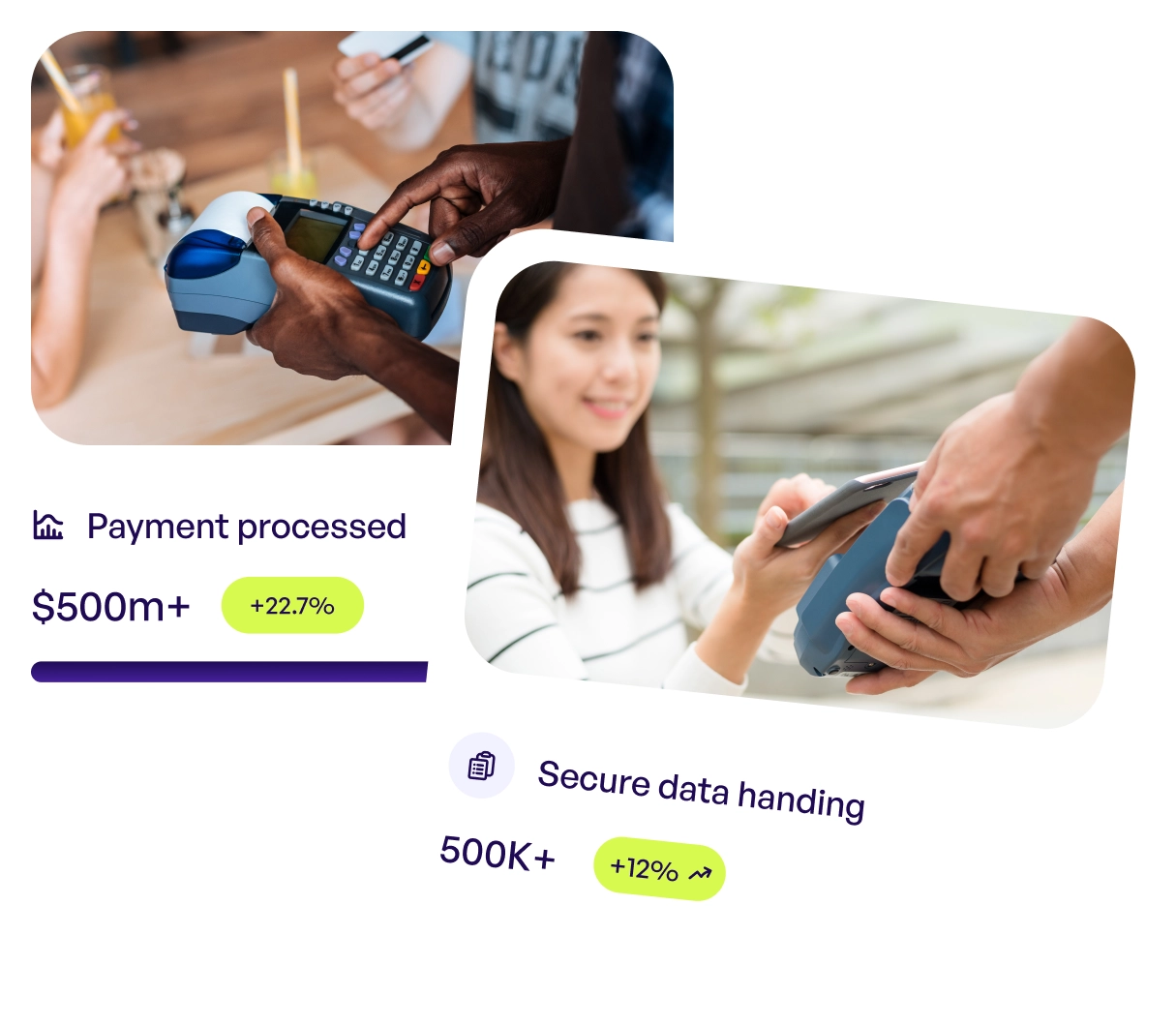
48h
Average approval
98%
Approval rate
40+
Acquiring banks
$2B+
Processed yearly

Apply for a merchant account

Free underwriting review. No application fee.

Phone number
SSL encrypted. No credit pull. Soft underwriting review only.
Industries we underwrite

Everything 2Accept handles for crypto merchants

Every dimension below covers what crypto operators typically evaluate when choosing a card-acquiring partner for fiat on-ramp and off-ramp flows. 2Accept's crypto underwriting desk approves the services, business models, compliance configurations, integrations, and risk controls listed here without aggregator-style account freezes the moment Visa or Mastercard reclassifies an MCC 6051 transaction.

Crypto Services We Approve

Crypto services covered by 2Accept

2Accept underwrites the full spectrum of crypto operating models — from centralized exchanges running spot order books to peer-to-peer marketplaces, OTC desks brokering eight-figure block trades, fiat on-ramp widgets embedded inside Web3 wallets, NFT marketplaces settling royalties to smart contracts, and operators of branded crypto ATM fleets. Each service category maps to a specific MCC profile (typically MCC 6051 for quasi-cash and crypto-asset purchases, MCC 6211 for security brokers and forex margin platforms) and a dedicated MID structure tuned to that service's chargeback and AML profile.

Service positioning, custodial vs. non-custodial flow, KYC tier (Tier 1 / Tier 2 / Tier 3 verification), Travel Rule coverage, sanctions screening provider, and whether the merchant touches U.S. persons all get reviewed during onboarding because they determine whether a domestic FinCEN-registered acquirer can underwrite the MID or whether offshore placement is required.

Apply for a Crypto Services We Approve MID

Approved Crypto Service Categories

  • Centralized Exchanges (CEX, Spot)MCC 6051 (domestic / offshore)
  • OTC Desks (Block Trade Brokers)MCC 6051 / 6211
  • Fiat On-Ramp / Off-Ramp WidgetsMCC 6051 (KYC tier required)
  • NFT & Web3 MarketplacesMCC 6051 / 5816
  • Custodial & Non-Custodial WalletsMCC 6051 (Tier 2+ KYC)
  • Crypto ATM & Kiosk OperatorsMCC 6051 (MSB registered)
Crypto Business Models

Crypto business models we underwrite

Crypto operators come in many configurations — pure-play centralized exchanges, hybrid CEX-DEX platforms, OTC brokers serving institutional clients, white-label exchange operators reselling another platform's tech stack, introducing brokers (IBs) routing flow to a primary exchange, custodial wallet providers offering integrated swap services, NFT marketplaces settling primary sales and secondary royalties, and crypto ATM operators running networks of physical kiosks. 2Accept underwrites all of these configurations, matching each to the acquirer that approves the model.

Whether your business runs one-time fiat-to-crypto purchases, recurring DCA (dollar-cost-averaging) subscriptions, margin lending with rolling collateral, or NFT marketplace listing fees, the MID is structured to support the billing cadence with tokenized vault storage, Account Updater for recurring purchase cards, and 3DS 2.0 authentication required by Visa's Crypto Compliance Program.

Apply for a Crypto Business Models MID

Approved Business Configurations

  • Centralized Exchange (CEX) OperatorsApproved (MSB + MTL required)
  • OTC Desk / Institutional BrokerApproved
  • Introducing Broker (IB) to Primary ExchangeApproved (with primary's MSB)
  • White-Label Exchange ResellerApproved with custody disclosure
  • Custodial Wallet & Swap ProviderApproved (MSB required)
  • Crypto ATM Operator (Kiosk Network)Approved (state-by-state MTL)
MSB, FinCEN & KYC Compliance

Compliance handling for crypto merchants

Crypto sits at the intersection of FinCEN MSB rules, FATF Travel Rule obligations, state-by-state Money Transmitter Licensing (MTL), OFAC sanctions screening, the SEC and CFTC's overlapping jurisdictional posture, and the card networks' own crypto programs (Visa's Crypto Compliance Program, Mastercard's Crypto Secure). 2Accept's underwriting desk audits your compliance posture at onboarding — FinCEN MSB registration number, state MTL coverage map, BSA/AML written program, designated Compliance Officer, OFAC and PEP screening provider, FATF Travel Rule integration (Notabene, Sumsub Travel Rule, TRP), and the chain-analytics tooling you run (Chainalysis KYT, TRM Labs, Elliptic Navigator).

Missing or weak compliance is the #1 cause of first-pass rejection on crypto applications. We catch the gaps before submission and coach merchants through remediation — incomplete MTL coverage, missing Travel Rule attestations, untiered KYC limits, or chain-analysis gaps on deposit screening — so the application clears underwriting on the first review cycle.

Apply for a MSB, FinCEN & KYC Compliance MID

Compliance Frameworks Covered

  • FinCEN MSB RegistrationRequired & verified at onboarding
  • State Money Transmitter Licensing (MTL)State-by-state map reviewed
  • FATF Travel Rule (Notabene / Sumsub / TRP)Required for >$1K transfers
  • OFAC, SDN & PEP Sanctions ScreeningRequired on every wallet
  • Physician Oversight (GLP-1)Required, audited annually
  • Chain Analysis (Chainalysis / TRM / Elliptic)Required on deposits + withdrawals
Fiat On/Off Ramp Fearures

Fiat ramp payment features for crypto operators

Crypto businesses are increasingly defined by the quality of their fiat on-ramp and off-ramp rails. 2Accept MIDs support card-to-crypto purchases via Visa, Mastercard, Amex, and Discover with instant fiat clearing, ACH on-ramp via NACHA-rule-compliant transfers, domestic and international wire support, and SEPA Instant for EU off-ramp settlement. The MID is configured to dispatch fiat to your settlement bank within T+1 (next business day) on domestic accounts so liquidity is available for the buy-side hedge before the crypto leg settles on-chain.

For off-ramp, 2Accept supports payout structures including ACH credit pushes, Visa Direct (OCT) and Mastercard Send for instant push-to-card disbursements, and multi-currency settlement in USD, EUR, GBP, CAD, and AUD on offshore acquiring accounts. NFT marketplaces and Web3 platforms with creator royalty obligations can route split settlements directly to the underlying creator's bank without holding fiat in escrow.

Apply for a Fiat On/Off Ramp Fearures MID

Supported Fiat Ramp Capabilities

  • Card-to-Crypto On-Ramp (Visa / MC / Amex)Supported (3DS 2.0 mandatory)
  • ACH On-Ramp (NACHA Same-Day)Included
  • Domestic + International WireSupported (Fedwire + SWIFT)
  • Visa Direct (OCT) / Mastercard SendPush-to-card off-ramp
  • Multi-Currency SettlementUSD, EUR, GBP, CAD, AUD
  • Split Settlement (NFT Royalties)Supported via gateway API
Crypto Platform Integrations

Platform & gateway integrations for crypto operators

Most crypto platforms run on either a proprietary stack or a white-label exchange engine (AlphaPoint, OpenWare, Modulus, OpenDAX, B2C2 institutional, Chainsmith). 2Accept ships a documented REST API and a webhook event stream that plug into any of these stacks, so card-derived fiat deposits land in the merchant's omnibus banking layer with the same memo, reference ID, and KYC attestation that the exchange's matching engine expects.

For NFT marketplaces and Web3 storefronts, native integrations exist for Shopify (third-party gateway replacing Shopify Payments, which prohibits crypto), WooCommerce, custom storefronts via REST, and direct payment-page iframe embedding for any Web3 wallet that needs to surface a card-buy widget. 2Accept is fully complementary to crypto-native processors like BitPay, Coinbase Commerce, and MoonPay — many of our merchants route card flow through 2Accept and crypto flow through BitPay in the same checkout.

Apply for a Crypto Platform Integrations MID

Native Integration Support

  • Custom REST API (Exchange Engines)Full developer docs + sandbox
  • White-Label Platform ConnectorsAlphaPoint / OpenWare / Modulus
  • Shopify (NFT / Web3 storefronts)Third-party gateway plugin
  • WooCommerce / BigCommerceNative plugin
  • Hosted Payment Page (Wallet Embed)Iframe + redirect modes
  • Complementary to BitPay / Coinbase / MoonPayCard MID alongside crypto rails
Crypto Risk & Fraud Defense

Risk defense for crypto chargeback & sanctions exposure

Crypto chargeback ratios run structurally higher than mainstream e-commerce because of fiat-to-crypto on-ramp fraud (stolen-card buyers who immediately move the purchased crypto on-chain), buyer's-remorse disputes when an asset's price drops post-purchase, and the elevated cardholder-not-present fraud profile of high-velocity exchange deposits. 2Accept's risk stack catches disputes before they post (Ethoca + Verifi alerts on the card side), authenticates transactions to shift fraud liability to the issuer (3DS 2.0 mandatory under Visa's Crypto Compliance Program), and pairs the card-side controls with crypto-native chain-analysis tooling (Chainalysis KYT, TRM Labs Real-Time Screening, Elliptic Lens) on the wallet side so a sanctioned or mixer-tainted deposit triggers an automatic hold before fiat clears.

For high-volume crypto operators, multi-MID cascading distributes volume across 2–5 accounts so no single MID exceeds Visa's VAMP threshold or Mastercard's ECM threshold on dispute ratio. Sanctions exposure is mitigated with OFAC SDN screening on every cardholder name plus chain-analysis screening on every withdrawal address before the fiat-leg settles.

Apply for a Crypto Risk & Fraud Defense MID

Risk & Fraud Tools Included

  • Ethoca + Verifi CDRN AlertsIncluded (Mid/Top tier)
  • 3DS 2.0 (Visa Crypto Program)Mandatory on all card on-ramp
  • Chainalysis KYT / TRM Labs / EllipticIntegrated on deposits + withdrawals
  • OFAC, SDN, PEP ScreeningReal-time on every cardholder
  • Multi-MID Cascading (2–5 MIDs)Supported via gateway
  • Representment ServiceAvailable (~50% win rate)
Pricing Tiers

High risk processing rates, published up front

Every high risk merchant account is priced by risk tier. Your vertical, volume, and chargeback ratio determine which tier underwrites you. Rates are average and may vary depending on individual circumstances and risk profile. Interchange may be passed to merchants for more challenging approvals

Low-Tier High Risk
2.89%
+ $0.20

Subscription · SaaS · Coaching · Digital

  • Domestic U.S. MID
  • Next-day funding
  • 0–10% rolling reserve
  • Free gateway integration
  • Account updater included
Apply
Most Approved
Mid-Tier High Risk
3.49%
+$0.25

CBD · Peptides · Telehealth · Vape · Dating · Travel

  • Domestic or offshore MID
  • Chargeback alerts (Ethoca + Verifi)
  • 0-10% rolling reserve
  • Dedicated underwriter
  • MATCH-list considered
  • Multi-MID load balancing
Apply
Top-Tier High Risk
4.95%
+$0.30

Adult · Firearms · Crypto · Gaming

  • Offshore acquiring
  • AEP / MSB registration support
  • 0-10% rolling reserve
  • 3DS 2.0 authentication
  • Descriptor optimization
  • Cascading across 3+ MIDs
Apply
How It Works

From application to live processing in 4 steps

01

Apply Online

Complete the 4-minute application. No credit pull, no application fee, no long-term contract.

02

Meet Your Underwriter

A 2Accept underwriter reviews your business model, volume, and documents within 1 business hour.

03

Go Live in 48 Hours

Sign your MPA, receive your MID, and integrate via gateway API, hosted checkout, or Shopify.

04

Scale Safely

Grow with chargeback alerts, fraud scoring, and multi-MID load balancing as your volume scales.

2Accept vs Aggregators

Why a dedicated MID beats Stripe, Square, and PayPal

Aggregators pool thousands of merchants under one master account. When any single MCC trips a threshold, entire verticals get frozen. A dedicated MID from 2Accept belongs to your business alone.

Feature 2ACCEPTStripeSquarePayPal
CBD / Hemp approved
Vape / E-cig approved
Firearms / Ammo approved
Dedicated MID (not aggregator)
MATCH-list merchants considered
Human underwriter (not chatbot)
Multi-MID load balancing
Risk Management

Keep your MID alive with built-in chargeback defense

Every 2Accept high risk merchant account includes the monitoring and mitigation stack required to stay under Visa's 1.0% chargeback threshold.

Chargeback Alerts

Ethoca and Verifi CDRN integrations catch disputes before they post, letting you refund pre-chargeback and protect your ratio.

Fraud Scoring

Kount, Sift, and NoFraud rules block velocity attacks, BIN testing, and stolen-card fraud in real time at authorization.

3DS 2.0 Authentication

3D Secure shifts liability to the issuer on authenticated transactions, eliminating fraud-based chargebacks on compliant checkouts.

Representment

Our dispute team files compelling evidence packages against friendly fraud and product-not-received disputes, recovering revenue within 45 days.

Multi-MID Load Balancing

Split volume across 2–5 MIDs via our cascading gateway to stay under per-MID caps and maintain chargeback ratios on every account.

Descriptor Optimization

Dynamic billing descriptors matched to your brand lower “I don't recognize this charge” disputes by 40%+.

Real businesses, real approvals

What merchants say

“After Stripe terminated us for selling CBD gummies, 2Accept had us live in 48 hours on a domestic MID. Zero freezes in 18 months.”

SL

Sarah L. Founder, 

CBD E-commerce Brand

“I tried four processors for my FFL store. 2Accept was the only one that understood MCC 5999 and got my ammo transactions approved.”

MR

Michael R. , 

Owner, Firearms Retailer

“Our subscription box was flagged by Square for 'high chargeback volume.' 2Accept's Ethoca alerts dropped our ratio to 0.3% in one month.”

MR

Michael R. , 

Firearms Retailer

What It Is

What is a crypto merchant account?

crypto merchant account is a specialized payment processing account that acquiring banks issue to centralized exchanges, OTC desks, fiat on-ramp providers, NFT marketplaces, custodial wallet operators, and crypto ATM networks, designed to handle the elevated chargeback exposure, sanctions risk, and regulatory complexity that aggregators like Stripe, Square, and PayPal refuse to underwrite. The account permits card-not-present sales of cryptocurrency, NFT mints, exchange deposits, and on-ramp widget transactions under MCC 6051 (financial institutions / quasi-cash / cryptocurrency) and MCC 6211 (security brokers / forex), and it operates under tailored underwriting terms that include FinCEN MSB registration verification, state-by-state Money Transmitter Licensing coverage, FATF Travel Rule attestation, mandatory 3DS 2.0 authentication, OFAC sanctions screening, and discount rates between 3.95% and 6.5%.

A crypto business gets a high risk classification because Visa's Crypto Compliance Program and Mastercard's Crypto Secure framework classify card-to-crypto on-ramp transactions as inherently elevated risk, because the chargeback exposure on fiat-funded crypto purchases is structurally higher than mainstream e-commerce (buyer's-remorse disputes when an asset price drops post-purchase, stolen-card fraud monetized by immediately moving crypto on-chain, and friendly fraud on irreversible blockchain settlements), and because card networks treat MCC 6051 and MCC 6211 as restricted MCCs that require explicit acquirer approval. Acquiring banks also weigh whether your business is registered as a FinCEN Money Services Business, whether you hold the necessary state Money Transmitter Licenses for the states where your customers reside, whether your BSA/AML written program is current, and whether you operate compliant FATF Travel Rule and chain-analysis screening before fiat clears.

Opening a crypto merchant account differs from opening a standard low-risk account in three ways. First, underwriting takes 5 to 10 business days rather than instant approval, because the acquirer reviews FinCEN registration, state MTL coverage, your BSA/AML written program, Travel Rule integration, sanctions screening provider, chain-analysis tooling, and prior crypto processing history. Second, pricing typically ranges from 3.95% to 6.5% rather than the 2.6%–2.9% flat rate aggregators offer, because the acquirer absorbs higher chargeback exposure and ongoing sanctions monitoring cost on every fiat-to-crypto transaction. Third, the account issues a dedicated MID that belongs exclusively to your crypto business, so the account cannot be terminated for serving the crypto vertical the MID was approved to serve.

2Accept underwrites crypto merchant accounts for centralized exchanges, OTC desks, fiat on-ramp providers, NFT marketplaces, Web3 marketplaces, custodial and non-custodial wallet operators, crypto ATM networks, forex brokers, and margin trading platforms across the United States and internationally. Applications are reviewed by a dedicated crypto underwriter within one business hour, approved in 5 to 10 business days depending on MSB and MTL complexity, and integrated through REST API into your existing exchange engine, white-label platform, or NFT marketplace storefront after signing the merchant processing agreement.

Common types of crypto merchants we underwrite

  Acquiring banks segment crypto merchants by service category, custody model, KYC tier, and the regulatory framework that applies. The crypto verticals 2Accept underwrites most often are:
  • Fiat on-ramp / off-ramp widgets —  — MCC 6051, embedded card-buy widgets inside third-party wallets and dApps with tiered KYC and chain-analysis screening on every withdrawal address
  • Crypto ATM & kiosk operators —  — MCC 6051, runs networks of physical kiosks for cash-to-crypto and card-to-crypto purchases with full MSB registration and state-by-state MTL coverage
  • Centralized exchanges (CEX) —  — MCC 6051, runs a spot order book or hybrid CEX-DEX with custodial fund flow, FinCEN MSB registered, state MTL coverage for U.S. customer states, fiat on-ramp via card/ACH/wire
  • Forex & CFD brokers with crypto pairs —  — MCC 6211, regulated multi-asset brokers offering BTC/ETH/SOL CFDs alongside FX majors
  • Introducing brokers (IBs) —  — MCC 6211, routes flow into a primary exchange's MSB-registered MID under a written introducing broker agreement and revenue-share arrangement
  • OTC desks & institutional brokers —  — MCC 6051 / 6211, brokers block trades for institutional clients with enhanced KYC, Travel Rule attestations, and OFAC screening on every counterparty wallet
  • Custodial wallet & swap providers —  — MCC 6051, offers integrated swap services with Tier 2+ KYC, FATF Travel Rule on outbound transfers, and chain-analysis on every deposit
  • Margin trading & lending platforms —  — MCC 6051 / 6211, offers leveraged spot or perpetual futures with crypto-collateralized lending, additional disclosure requirements at underwriting
  • NFT & Web3 marketplaces —  — MCC 6051 / 5816, settles primary mints and secondary royalties with card-funded fiat purchases of NFTs, custodial gas-tank model for end-buyers
  • White-label exchange operators —  — MCC 6051, resells another platform's exchange tech stack with their own brand, custody disclosure required at underwriting

Advantages of a crypto-specific merchant account

  A dedicated crypto merchant account gives you advantages that no payment aggregator can match, because the account is underwritten by an MSB-registered acquiring bank that explicitly approves fiat-to-crypto on-ramp, NFT settlement, and exchange deposit flows:
  • Higher monthly volume caps —  — $1M+ on domestic crypto accounts and $5M+ on offshore acquiring vs. $25K-$100K aggregator ceilings before automatic review
  • FATF Travel Rule infrastructure —  — acquirer-side integrations with Notabene, Sumsub Travel Rule, and TRP cover the >$1K transfer attestation requirement
  • Dedicated MID for crypto on-ramp —  — belongs to your business alone, not shared in an aggregator pool that gets frozen the moment Visa reclassifies an MCC 6051 transaction or another merchant trips a sanctions flag
  • Offshore acquiring available —  — for crypto operators serving non-U.S. customers with multi-currency settlement in USD, EUR, GBP, CAD, and AUD on a single offshore MID
  • Push-to-card off-ramp —  — Visa Direct (OCT) and Mastercard Send disbursements let customers cash out crypto to their card in minutes rather than waiting on ACH
  • No sudden terminations for selling crypto —  — the MID is approved for the products you sell, so Stripe-style aggregator de-platforming on the word "exchange" doesn't apply
  • Visa Crypto Compliance Program integration —  — 3DS 2.0 mandatory authentication, chargeback monitoring at the Visa-program level, sanctions screening tied to acquirer reporting
  • Chargeback alerts included —  — Ethoca + Verifi CDRN catch fiat-side disputes 24-72 hours before they post, critical for the elevated dispute exposure on irreversible crypto purchases
  • Multi-MID cascading —  — distribute volume across 2–5 MIDs so a chargeback spike on the on-ramp side doesn't threaten the OTC MID or the NFT marketplace MID
  • Human crypto underwriters —  — understand FinCEN MSB rules, state MTL maps, FATF Travel Rule, OFAC screening, chain analysis, and Visa/Mastercard crypto programs; not chatbots or ticket queues
  • State MTL coverage support —  — acquirers approve crypto operators with state-by-state MTL maps and offer remediation paths for partially-covered states
  • FinCEN-registered acquirer —  — the underlying bank is itself BSA/AML compliant and approves MSB-registered crypto operators directly, so MSB status is an advantage rather than a disqualifier
  • Chain-analysis built in —  — Chainalysis KYT, TRM Labs, and Elliptic Navigator screening on every deposit and withdrawal address, with automatic holds on mixer-tainted or sanctioned wallets

How to qualify for a crypto merchant account

  Qualifying for a crypto merchant account requires meeting documentation, registration, and compliance requirements that the acquiring bank reviews during underwriting. Standard qualification criteria include:
  • Business bank account —  in the legal entity's name for settlement of card-derived fiat
  • Three months of bank statements —  showing consistent revenue from crypto-related fees and fiat ramp activity
  • Registered legal entity —  — LLC, Corporation, or international equivalent with valid EIN and operating agreement
  • Live platform with tiered KYC —  — working checkout/exchange UI with Tier 1, Tier 2, and Tier 3 verification limits and clear AML disclosures
  • OFAC, SDN, and PEP screening —  — real-time screening on every cardholder name and every counterparty wallet, with documented hit-handling workflow
  • FinCEN MSB registration —  — required for any U.S. crypto operator transacting with U.S. persons; current registration number and renewal date
  • Chargeback ratio under 1.0% —  on prior crypto processing history, with clear visibility into reason-code breakdown
  • Chain-analysis tooling —  — Chainalysis KYT, TRM Labs Real-Time Screening, or Elliptic Lens running on every deposit and withdrawal address
  • Government-issued ID and beneficial ownership —  for the principal signer and all 25%+ beneficial owners under CDD/CTR rules
  • BSA/AML written program —  — current document with designated Compliance Officer, customer identification program, suspicious activity reporting workflow
  • FATF Travel Rule integration —  — Notabene, Sumsub Travel Rule, or TRP integration for transfers above $1,000 (or local equivalent)
  • Three months of processing statements —  if you were previously processing fiat ramp on another MID or aggregator
  • State Money Transmitter Licenses (MTL) —  — state-by-state coverage map; full coverage preferred, partial coverage with geofencing acceptable

Strategies for managing a crypto merchant account

  Keeping a crypto merchant account active long-term requires active risk and compliance management because Visa's Crypto Compliance Program audits MCC 6051 portfolios continuously, FinCEN and the OCC re-examine MSB-registered acquirers regularly, state regulators update their MTL guidance frequently, and Visa's VAMP and Mastercard's ECM thresholds trigger fines and termination above ratio limits. The strategies that protect a crypto MID are:
  • Screen every deposit and withdrawal address —  with Chainalysis KYT, TRM Labs, or Elliptic before fiat clears — sanctioned, mixer-tainted, or darknet-marketplace wallets trigger an automatic hold
  • Maintain current state MTL coverage —  — geofence customer access in non-licensed states or pursue MTL approval before opening those states to fiat ramp
  • Mandate 3DS 2.0 on every on-ramp card —  — under Visa's Crypto Compliance Program, 3DS 2.0 is required and dramatically reduces fraud-side chargebacks while shifting liability to the issuer
  • File representment on friendly fraud —  with compelling-evidence packages including signed terms acceptance, KYC attestation, IP logs, and on-chain settlement proof within the 30-day dispute window
  • Audit your KYC, AML, and Travel Rule posture annually —  — FinCEN guidance shifts, card-network crypto programs evolve, and state MTL rules update; outdated compliance triggers immediate acquirer MID review
  • Optimize the billing descriptor —  — match descriptor to customer-facing brand on the receipt to reduce "I don't recognize this charge" disputes, common on fiat-to-crypto purchases
  • Tier KYC by transaction volume —  — Tier 1 (basic email/phone) for <$1K, Tier 2 (ID + selfie) for $1K-$10K, Tier 3 (proof of address + source of funds) for >$10K to balance UX against regulatory risk
  • Refund before chargeback —  — resolve fiat-side disputes within 24 hours of an Ethoca or Verifi alert so they never post against your VAMP ratio
  • Document fiat-leg delivery —  — record on-chain transaction hash, destination wallet attestation, and timestamp as evidence in compelling-evidence dispute responses
  • Audit Travel Rule attestation completeness quarterly —  — FATF Travel Rule misses on outbound transfers above $1K are the fastest path to FinCEN scrutiny and MID review
  • Distribute crypto volume across multiple MIDs —  via cascading gateway logic so on-ramp, OTC, and NFT marketplace MIDs each stay under VAMP and ECM thresholds independently
  • File FinCEN SARs and CTRs on time —  — SAR filings within 30 days of suspicious-activity identification, CTRs on every >$10K cash equivalent transaction in a 24-hour window
  • Run OFAC, SDN, and PEP on every KYC pass —  — continuous re-screening on existing customers because sanctions lists update weekly
Payment processing
Frequently Asked Questions

Questions merchants ask before applying

What documents do I need to apply for a crypto merchant account?

A crypto application typically requires your EIN, Articles of Incorporation, beneficial ownership disclosures for all 25%+ owners, voided check for settlement, 3 months of business bank statements, 3 months of processing statements (if applicable), government-issued ID for the signer, a live URL or exchange platform, your FinCEN MSB registration number with renewal date, a state-by-state MTL coverage map, your BSA/AML written program with named Compliance Officer, your KYC tier structure documentation, your FATF Travel Rule integration evidence (Notabene, Sumsub Travel Rule, or TRP), and your chain-analysis provider configuration (Chainalysis KYT, TRM Labs, or Elliptic).

Do I sign a long-term contract on a crypto merchant account?

No. 2Accept crypto agreements do not include early termination fees or multi-year lock-in. You may close the crypto account with 30 days written notice. The acquiring bank retains the rolling reserve for 180 days post-closure to cover any lingering fiat-side chargebacks on irreversibly settled crypto transactions.

Can I apply for a crypto MID if I'm based outside the United States?

Yes. 2Accept onboards both U.S.-based and non-U.S. crypto operators. Non-U.S. crypto businesses are placed with offshore acquiring banks in the U.K., EU, Caribbean, or APAC with multi-currency settlement in USD, EUR, GBP, CAD, and AUD. U.S. crypto entities with FinCEN MSB registration and state MTL coverage qualify for domestic MIDs with next-business-day funding.

Can I apply with bad personal credit if I'm running a crypto exchange?

Yes. Personal credit below 600 does not automatically disqualify a crypto merchant. Acquirers weigh crypto business volume, chargeback ratio, MSB and MTL coverage, Travel Rule attestation completeness, and OFAC screening posture much more heavily than personal FICO. A personal guarantee is typically required on sub-600 credit applications, and the acquirer may add a small rolling reserve increase.

Is there an application fee for a crypto merchant account?

No. 2Accept does not charge an application fee, underwriting fee, or setup fee on crypto accounts. You only pay transaction fees once your crypto MID goes live and starts processing fiat on-ramp or off-ramp flow. There is no fee to be reviewed by our crypto underwriting desk, and there is no fee if you are declined.

How do I integrate my crypto platform after approval?

After approval, 2Accept provides credentials for direct REST API integration with your exchange engine or white-label platform (AlphaPoint, OpenWare, Modulus, OpenDAX), plus webhook event streams for deposit confirmation, KYC attestation passing, and dispute notifications. NFT marketplaces and Web3 storefronts integrate via Shopify high risk plugin, WooCommerce module, hosted payment page iframe, or direct .dll libraries for custom Web3 wallet on-ramp widgets. Our integration team provides free developer support during go-live.

Do I need an existing crypto business to apply?

Yes. Acquiring banks require a registered legal entity (LLC, Corp, or international equivalent), an EIN, a business bank account in the legal entity's name, and a live crypto platform with working KYC, AML, FATF Travel Rule, and chain-analysis tooling. New crypto operators under 6 months old qualify at mid- to top-tier rates with a personal guarantee from the principal and a 5–15% rolling reserve that typically drops after clean processing history.

Can I apply if a previous processor terminated my crypto account?

Yes. 2Accept specifically underwrites crypto merchants terminated by Stripe, Square, PayPal, MoonPay's partners, or other processors. Full disclosure of the termination reason is required, along with a remediation plan addressing whatever caused the termination (chargeback ratio, missing MSB registration, incomplete MTL coverage, Travel Rule gaps, OFAC screening failures, or descriptor flagging). MATCH-listed crypto merchants are placed on offshore acquirers under additional rolling reserve terms.

What is interchange and does 2Accept pass it through on crypto?

Interchange is the wholesale fee that Visa, Mastercard, and Discover charge the acquiring bank for every transaction, typically 1.65%–2.7% on MCC 6051 quasi-cash card-not-present transactions (interchange is structurally higher on crypto than on retail e-commerce because of the irreversibility of crypto settlement). 2Accept offers both flat-rate pricing (discount rate includes interchange) and interchange-plus pricing (interchange passed through plus a fixed 1.25%–2.5% markup) for crypto merchants processing above $250K monthly. Crypto exchange and on-ramp MIDs are most commonly priced interchange-plus once monthly volume scales.

Can my crypto rate decrease over time?

Yes. After 6–12 months of clean crypto processing (chargeback ratio under 0.5%, consistent volume, zero OFAC hits, current FinCEN MSB renewal, complete state MTL coverage, current Travel Rule attestations), 2Accept can submit a rate review request to the acquiring bank. Successful crypto rate reviews reduce the discount rate by 0.50%–1.0% — meaningful basis points on the higher base rates that apply to crypto verticals.

Is there a monthly minimum on a crypto MID?

Not always. 2Accept does require monthly minimum crypto processing volume in circumstances where the approval is laborious (full state MTL coverage validation, OFAC remediation), or the account would operate at a loss when volume is low or zero. Some acquiring banks on top-tier crypto verticals — particularly offshore acquirers serving OTC desks — may set a $50K or $100K monthly minimum to maintain the MID. You will always pay transaction fees only on the volume you actually process.

When does my crypto MID fund?

Domestic U.S. crypto merchant accounts receive next-business-day funding via ACH for all batches submitted before 8:00 PM ET, which is critical for crypto operators that need to hedge the buy-side crypto leg before the on-chain settlement clears. Offshore crypto acquiring accounts fund on a weekly or bi-weekly schedule (T+3 to T+7) and hold a slightly higher rolling reserve to compensate.

What rates should I expect on a crypto merchant account?

Crypto rates start around 3.95% for established fiat on-ramp providers with full FinCEN MSB and state MTL coverage and run higher for OTC desks with non-standard counterparty profiles, NFT marketplaces in early Travel Rule rollout, white-label exchanges without independent custody disclosure, and offshore-placed crypto ATM operators, with custom interchange-plus pricing for high-volume crypto operators above $250K monthly. Your final crypto rate depends on monthly volume, average ticket, chargeback ratio, KYC tier mix, sanctions exposure profile, and your compliance posture across BSA/AML, Travel Rule, and chain analysis.

Are there any hidden fees on crypto accounts?

No. 2Accept publishes a flat monthly statement on crypto accounts with your discount rate, per-transaction fee, monthly gateway fee, chargeback fee, and chain-analysis screening fee only. There are no PCI non-compliance surcharges, no early termination fees, no monthly minimums on standard accounts, no junk-fee line items, and no separate Travel Rule attestation fees — those are bundled into the per-transaction fee.

What is the chargeback fee on a crypto account?

Chargeback fees on 2Accept crypto merchant accounts range from $25 to $50 per dispute depending on the account configuration, risk profile, and acquiring bank. Crypto chargeback fees run higher than retail e-commerce because the underlying crypto leg has already settled on-chain irreversibly, so the acquirer absorbs more dispute-handling cost. The fee applies whether you win or lose the representment. Ethoca and Verifi alerts prevent the vast majority of disputes from becoming chargebacks.

Do crypto merchants need a rolling reserve?

Most crypto merchant accounts carry a 5%–15% rolling reserve held for 180 days to soften the elevated dispute risk on fiat-funded crypto purchases (which settle on-chain irreversibly within minutes of card authorization). Established crypto operators with clean processing history and full state MTL coverage can qualify for reserves at the 5% end. New crypto merchants, OTC desks with institutional flow, and offshore crypto ATM operators typically sit toward the 15% end. Reserve percentages can be renegotiated downward after 6–12 months of clean crypto processing.

Can I combine multiple crypto services under one MID?

Some crypto service combinations share one MID (centralized exchange spot + fiat on-ramp + custodial swap all run under MCC 6051 with the same MSB registration). Others require segregated MIDs due to MCC segregation rules and risk profile differences (NFT marketplace under MCC 6051 / 5816, forex / margin trading under MCC 6211, crypto ATM network under MCC 6051 with state-by-state MTL geofencing). Your crypto underwriter structures one or multiple MIDs based on your full service mix, transaction profile, and state MTL coverage map.

Do you support crypto ATM and kiosk operators?

Yes. Crypto ATM and kiosk operators dispensing BTC, ETH, and other top-cap assets at physical kiosks qualify under MCC 6051 with full FinCEN MSB registration, state-by-state MTL coverage (typically 30+ states for nationwide operators), enhanced KYC at the kiosk level (ID scan + selfie + phone verification), and chain-analysis screening on every destination wallet. Card-funded ATM purchases are supported alongside cash; debit card off-ramp from kiosks is supported via Visa Direct (OCT).

Do you underwrite NFT and Web3 marketplaces?

Yes. 2Accept underwrites NFT and Web3 marketplaces settling primary mints and secondary royalties under MCC 6051 or MCC 5816 depending on the storefront model. Custodial gas-tank platforms (where the marketplace abstracts gas fees and on-chain interactions from the buyer) qualify for standard on-ramp pricing. Non-custodial marketplaces with wallet-connect checkout require the wallet provider to hold the MSB registration. Split-settlement to creator wallets is supported via gateway API for royalty disbursement.

Can I process high-ticket OTC block trades (e.g. $100K+ single transactions)?

Yes. High-ticket OTC block trades and institutional crypto purchases are underwritten with split-billing or wire-funded structures to reduce per-transaction chargeback exposure on card-funded blocks. Tickets above $25,000 trigger additional KYC tier (full source-of-funds documentation), mandatory 3DS 2.0, OFAC re-screening, and chain-analysis pre-approval on the destination wallet but do not disqualify the crypto account. Many OTC desks combine 2Accept card MIDs for retail-tier flow with wire-funded settlement for true institutional blocks.

What qualifies a crypto business as high risk?

A crypto business is classified high risk because its MCC (6051 for cryptocurrency / quasi-cash, 6211 for security brokers and forex) is on every card brand's restricted MCC list, because fiat-to-crypto on-ramp transactions carry elevated chargeback exposure tied to asset price volatility, because card networks operate dedicated programs (Visa's Crypto Compliance Program, Mastercard's Crypto Secure) with mandatory 3DS 2.0 and additional screening requirements, because the regulatory landscape (FinCEN, SEC, CFTC, state MTL regulators, FATF Travel Rule) is overlapping and shifting, and because sanctions exposure on non-KYC'd or mixer-tainted wallets creates ongoing AML risk that the acquirer underwrites continuously.

Can I process card-to-crypto on-ramp transactions through an embedded widget?

Yes, so long as your widget enforces tiered KYC (Tier 1 for <$1K, Tier 2 for $1K-$10K, Tier 3 for >$10K), mandatory 3DS 2.0 under Visa's Crypto Compliance Program, OFAC and SDN screening on every cardholder, and chain-analysis screening on every destination wallet. Embedded on-ramp widgets qualify for mid- to top-tier pricing with 5-15% rolling reserve depending on the parent platform's processing history and the chain-analysis provider in place.

Do you approve forex brokers with crypto pairs and margin trading platforms?

Yes. Forex brokers offering BTC/ETH/SOL CFDs alongside traditional FX majors qualify under MCC 6211 with regulatory disclosures (CySEC, FCA, ASIC, or FSCA licensing for offshore-based brokers; CFTC and NFA registration for U.S.-facing brokers). Margin trading platforms offering leveraged spot or perpetual futures with crypto collateral qualify under MCC 6211 or 6051 depending on the collateral and settlement currency, with enhanced disclosure requirements at underwriting including leverage caps, liquidation policy, and segregated client funds verification.

Do you work with offshore crypto operators?

Yes. 2Accept holds acquiring relationships with banks in the United States, United Kingdom, European Union, Caribbean, and APAC regions that approve crypto exchanges, OTC desks, on-ramp widgets, NFT marketplaces, custodial wallet providers, and crypto ATM operators. Non-U.S. crypto operators open accounts with multi-currency settlement in USD, EUR, GBP, CAD, AUD, and JPY. Offshore placement is typical for operators serving non-U.S. customers, operators in early-stage MTL coverage, and operators serving institutional OTC counterparties.

What increases my chance of crypto approval?

Clean crypto processing history (chargeback ratio under 0.5%, zero OFAC hits over the prior 12 months), six or more months of bank statements showing consistent fiat ramp revenue, current FinCEN MSB registration with no renewal lapses, comprehensive state MTL coverage (or geofencing on non-licensed states), a documented BSA/AML written program with a credentialed Compliance Officer (CAMS-certified preferred), live FATF Travel Rule integration with Notabene, Sumsub Travel Rule, or TRP, real-time OFAC and PEP screening on every cardholder, and chain-analysis tooling (Chainalysis, TRM Labs, or Elliptic) running on every deposit and withdrawal address all strengthen approval.

How long does it take to get a crypto MID approved?

Most crypto merchant accounts are approved in 5 to 10 business days after complete documentation is received. Established fiat on-ramp operators and OTC desks with clean MSB registration, full state MTL coverage, current FATF Travel Rule attestation, and live chain-analysis tooling approve in 5–7 business days. New exchanges, NFT marketplaces in early Travel Rule rollout, crypto ATM operators with partial state MTL coverage, or operators with prior aggregator terminations may require 7–10 business days due to MSB verification, MTL map review, FinCEN registration validation, OFAC sanctions remediation, and additional bank vetting.

Can I be approved for crypto processing without prior crypto processing history?

Yes. New crypto businesses without prior processing can be considered at mid- to top-tier pricing with a 10–15% rolling reserve and personal guarantee. Projected crypto volume, KYC tier structure quality, compliance posture (FinCEN MSB current, state MTL in target states, BSA/AML written program live, chain analysis running), business plan, principal experience in regulated finance or crypto, and the chain-analytics + Travel Rule + sanctions stack you have integrated all substitute for processing history. The reserve drops after 90–180 days of clean crypto processing.

What causes a first-pass rejection on a crypto application?

First-pass crypto rejections usually result from expired or missing FinCEN MSB registration, severe state MTL gaps in customer-resident states without geofencing remediation, an outdated or undocumented BSA/AML written program, missing designated Compliance Officer, no FATF Travel Rule integration on transfers above $1K, absent OFAC and SDN screening on cardholders, no chain-analysis provider on deposits and withdrawals, MCC-to-service mismatch (running OTC institutional flow under a retail on-ramp MID), a disclosed chargeback ratio above 1.5%, prior FinCEN enforcement action, or the applicant's principal appearing on an OFAC near-match list. 2Accept's crypto underwriter catches most of these before submission to prevent rejections.

What happens if my crypto application is denied?

If a primary acquirer denies your crypto application, 2Accept automatically reshops it to secondary and offshore crypto-friendly banks within our network — including MSB-aware acquirers in the U.K., EU, Caribbean, and APAC — without requiring you to resubmit. If all placements decline, you receive a written explanation and a remediation roadmap specific to crypto underwriting (e.g., expand state MTL coverage to specific states, integrate FATF Travel Rule, switch chain-analysis providers, restructure beneficial ownership to clear an OFAC near-match).

Do you pull my personal credit on a crypto application?

A soft credit inquiry is run during crypto underwriting for personal guarantee verification on the principal signer and 25%+ beneficial owners under CDD rules. Soft pulls do not affect your FICO score and do not appear on your credit report to other lenders. Hard credit pulls can be used in some cases depending on the particular acquiring bank's requirements — typically only for offshore-placed crypto accounts with elevated rolling reserves where the principal's personal solvency materially affects the acquirer's risk model.

Can I get crypto processing if I'm on the MATCH list?

Yes. 2Accept can consider MATCH-listed crypto applicants. Full disclosure of the termination reason code is required (reason code 04 — Excessive Chargebacks, reason code 12 — Fraud Conviction, etc.) along with a remediation plan addressing the underlying cause. MATCH-listed crypto merchants are typically placed on offshore acquirers with enhanced rolling reserve (15%–20%) for the first 6 months and the option to migrate domestic after clean processing history establishes.

What's your crypto approval rate?

Approximately 98% of crypto merchants who complete a full application with all required documentation (FinCEN MSB registration current, state MTL coverage map, BSA/AML written program with designated Compliance Officer, KYC tier structure, FATF Travel Rule integration, OFAC screening, chain-analysis tooling) get approved. The ~2% rejection rate is driven by OFAC sanctions matches on principal or beneficial owners, active bankruptcy proceedings that cannot be mitigated with reserves and security deposits, expired or missing FinCEN MSB registration, severe state MTL gaps in target customer states, or the applicant being on the card brand's internal crypto fraud watchlist.

Can I fight friendly fraud chargebacks on crypto purchases?

Yes. 2Accept's representment team files compelling-evidence packages on crypto disputes (signed terms-of-service acceptance, KYC attestation with ID verification timestamps, IP logs at the moment of purchase, AVS and CVV match, OFAC screening pass record, on-chain transaction hash demonstrating settlement to the customer's pre-attested wallet) to win friendly fraud cases at roughly 50%+ for 2Accept-managed crypto disputes. Crypto win rates run slightly lower than standard e-commerce because issuing banks favor cardholders on irreversible crypto settlements, but compelling evidence with on-chain settlement proof still wins majority of cases.

How do chargeback alerts work on crypto on-ramp transactions?

Ethoca Alerts and Verifi CDRN forward dispute intents from issuing banks before they post as chargebacks. On crypto on-ramp transactions you receive the alert within 24–72 hours of the customer's bank contact, issue a fiat-side refund inside the alert window, and the chargeback never counts against your crypto MID's ratio. This is critical on crypto because the underlying on-chain settlement is irreversible — the merchant absorbs the on-chain leg cost but avoids the chargeback ratio damage that would otherwise threaten the MID.

What chargeback ratio will get my crypto account closed?

Visa's VAMP (Visa Acquirer Monitoring Program) thresholds on MCC 6051 are stricter than standard e-commerce — sustained ratios above 0.65% trigger Early Warning, and crossing 0.9% leads to formal enrollment. Mastercard's ECM threshold is 1.5% but with stricter scrutiny on crypto MIDs. Staying over either threshold for 4+ months leads to enrollment in VAMP, ECM, or VFMP, additional fines of $25,000–$200,000, and possible crypto MID termination with MATCH listing. Crypto operators target sub-0.5% ratios as a working buffer.

Does 3D Secure 2.0 eliminate fraud chargebacks on crypto?

3DS 2.0 is mandatory on every crypto on-ramp transaction under Visa's Crypto Compliance Program and shifts liability for fraud-based chargebacks (reason codes 10.4, 83) from the merchant to the issuing bank on authenticated crypto transactions. It does not eliminate friendly fraud, product-not-received disputes (where the customer claims the crypto never arrived in their wallet), or buyer's-remorse disputes (where the asset's price drops post-purchase). Implementing 3DS typically reduces total crypto chargebacks by 40%–60% and saves $8–$15 per transaction in fraud losses on the higher average tickets common to crypto on-ramp.

What is VAMP and how does it affect crypto MIDs?

VAMP — Visa Acquirer Monitoring Program — is Visa's expanded chargeback and fraud monitoring framework launched as the successor to VDMP and VFMP. On MCC 6051 crypto MIDs, VAMP applies stricter ratio thresholds (Early Warning around 0.65%, formal enrollment around 0.9%) than the standard 0.9%/1.0% framework that applies to other verticals. VAMP enrollment imposes escalating fines ($5,000–$50,000 monthly), mandatory chargeback reduction plans, additional Visa Crypto Compliance Program scrutiny, and a path to permanent MATCH listing if the crypto ratio is not remediated within 6 months.

How long does representment take on a crypto chargeback?

A Visa representment cycle on crypto disputes resolves in 45–60 days: merchant submits evidence (30 days), issuer reviews (30 days), and the final case status posts in the merchant portal. Mastercard cycles run 45 days. Amex resolves in 20 days. Winning representments recover both the crypto transaction amount and the chargeback fee — but unlike retail e-commerce, the underlying on-chain crypto delivery is already irreversible, so a lost representment means the merchant absorbs both the fiat-side loss and the on-chain leg.

What is the difference between Ethoca and Verifi for crypto?

Verifi CDRN is owned by Visa and covers Visa issuers — particularly important on crypto because Visa's Crypto Compliance Program runs through Verifi's infrastructure for the dispute-handling tier. Ethoca is owned by Mastercard and covers Mastercard plus Amex, Discover, and some Visa issuers. Using both networks together covers roughly 90% of U.S. card-issuing banks — essential on crypto MIDs where dispute volume on fiat-to-crypto purchases is structurally elevated due to asset volatility and friendly-fraud disputes.

What counts as a chargeback vs a refund on a crypto transaction?

A refund is initiated by the merchant (in response to an Ethoca/Verifi alert or a direct customer request) and returns fiat funds to the customer without a dispute entry on the crypto MID. A chargeback is initiated by the customer through their issuing bank, carries a reason code (10.1–13.9 for Visa), counts against the VAMP and ECM ratios, and imposes a $25–$50 chargeback fee regardless of outcome. Refund-before-chargeback via Ethoca + Verifi is the core prevention strategy on crypto MIDs because the underlying on-chain settlement cannot be reversed.

Can I run two processors at once for crypto redundancy?

Yes. Running a primary and backup crypto processor (or multi-MID load balancing across 2–5 crypto accounts) is standard risk practice for high-volume crypto operators. 2Accept builds multi-MID structures into Mid-Tier and Top-Tier crypto plans by default — for example, separate MIDs for spot exchange flow, OTC institutional flow, NFT marketplace fees, and crypto ATM kiosk transactions, each independently monitored against VAMP and ECM thresholds.

What about BitPay, Coinbase Commerce, or MoonPay for crypto checkout?

BitPay, Coinbase Commerce, and MoonPay are crypto-native payment infrastructure — BitPay and Coinbase Commerce accept cryptocurrency payments (BTC, ETH, USDC) for merchants who want to be paid in crypto, and MoonPay provides fiat-to-crypto on-ramp widgets. They are complementary to, not a replacement for, a dedicated crypto merchant account that processes Visa, Mastercard, Amex, and Discover card-funded fiat. 2Accept crypto customers who want to accept both card-funded fiat AND crypto payments integrate a card MID from 2Accept alongside BitPay or Coinbase Commerce in the same checkout, with split routing based on the customer's preferred payment method.

Can I use Shopify Payments for my NFT marketplace?

No. Shopify Payments is powered by Stripe and prohibits cryptocurrency, NFTs, and most crypto-adjacent verticals in its acceptable-use policy. 2Accept integrates directly with Shopify as a third-party gateway, replacing Shopify Payments while keeping the native Shopify checkout experience intact for your NFT marketplace, Web3 storefront, or crypto-related digital product store. Native checkout, customer vaulting, and recurring billing all continue to function seamlessly with the 2Accept gateway behind the storefront.

Can I keep my current gateway and just switch crypto processors?

Yes. If you currently use Authorize.net, NMI, USAePay, or any compatible gateway for your crypto on-ramp widget, exchange UI, or NFT marketplace checkout, 2Accept switches only the acquiring bank behind it. Your crypto checkout flow, customer vaulting, KYC attestation logs, Travel Rule integration, and chain-analysis tooling remain in place with no customer-visible change and no re-integration work on the front end — only the underlying MID and settlement bank change.

How does 2Accept compare to Stripe or Square for crypto?

Stripe, Square, and PayPal are payment aggregators that pool thousands of merchants under one master MID and explicitly prohibit cryptocurrency on-ramp, NFT marketplaces, exchange deposits, and most crypto-related businesses in their acceptable-use policies. Even crypto accounts they initially approve (often by misclassification at sign-up) get frozen the moment a transaction descriptor or beneficiary wallet trips the aggregator's automated screening. 2Accept issues a dedicated crypto MID from an MSB-registered acquiring bank that explicitly approves MCC 6051 and MCC 6211 flows, so the account cannot be shut down for doing the crypto business it was approved to serve unless there is a change in laws, regulations, or card brand crypto program rules.

How is 2Accept different from PaymentCloud, Durango, or Soar Payments for crypto?

PaymentCloud, Durango, and Soar are ISOs/MSPs similar to 2Accept, but they operate primarily as resellers with variable pricing and do not specialize in crypto underwriting. They typically refer crypto applications to a single offshore partner without state-by-state MTL guidance or FATF Travel Rule integration support. 2Accept publishes flat-tier pricing upfront on the lower-risk crypto tiers, includes chargeback alerts in standard plans, provides dedicated crypto underwriters who understand FinCEN MSB, state MTL maps, Travel Rule, OFAC, and chain analysis, integrates directly with Chainalysis, TRM Labs, and Elliptic on the acquirer side, and offers approvals on the spectrum from established exchanges to NFT marketplaces to crypto ATM operators.

Do you integrate with white-label exchange platforms like AlphaPoint, OpenWare, or Modulus?

Yes. 2Accept offers documented REST API integration and webhook event streams for the major white-label exchange platforms — AlphaPoint, OpenWare, Modulus, OpenDAX, Chainsmith — plus direct gateway pass-through for Authorize.net and NMI. Custom exchange platforms integrate through REST API with full developer docs and a sandbox environment for KYC, deposit, withdrawal, and dispute event modeling. Integration support is free for the lifetime of the crypto account.

What about Authorize.net or NMI for crypto e-commerce?

Authorize.net and NMI are payment gateways, not merchant accounts. A gateway transmits crypto on-ramp card data between your exchange UI and the acquiring bank but does not underwrite or settle crypto-related fiat funds. You still need a dedicated crypto merchant account behind them. 2Accept supports direct integration with both Authorize.net and NMI as gateway pass-throughs, while many crypto operators run our native 2Accept gateway with direct REST API support for exchange engines and white-label platforms.

Ready to open your crypto merchant account?

Underwriting review in 1 business hour. Full approval in 48.

No application fee
98% approval rate
Dedicated human underwriter
More verticals we underwrite

Adjacent industries 2Accept also approves

Crypto operators frequently expand into adjacent regulated verticals as their business matures — an exchange adds a forex margin product, an OTC desk launches a remittance corridor, a wallet provider rolls out crypto-collateralized lending, and ATM operators layer in cash-to-card prepaid services. 2Accept underwrites all of these adjacent categories under the same MSB-registered acquiring relationships, so a single crypto operator can hold multiple MIDs across related verticals without restarting underwriting from scratch.


If your crypto business operates across multiple high risk verticals — say, a centralized exchange plus a separate forex IB brand plus an OTC desk serving institutional clients — 2Accept can structure separate MIDs for each entity under one master underwriting relationship. Volume load-balances across the MIDs through our cascading gateway, each MID's chargeback and sanctions exposure is monitored independently so a fraud spike on the exchange side doesn't threaten the OTC MID, and all entities clear under a unified BSA/AML reporting workflow.

GET STARTED