
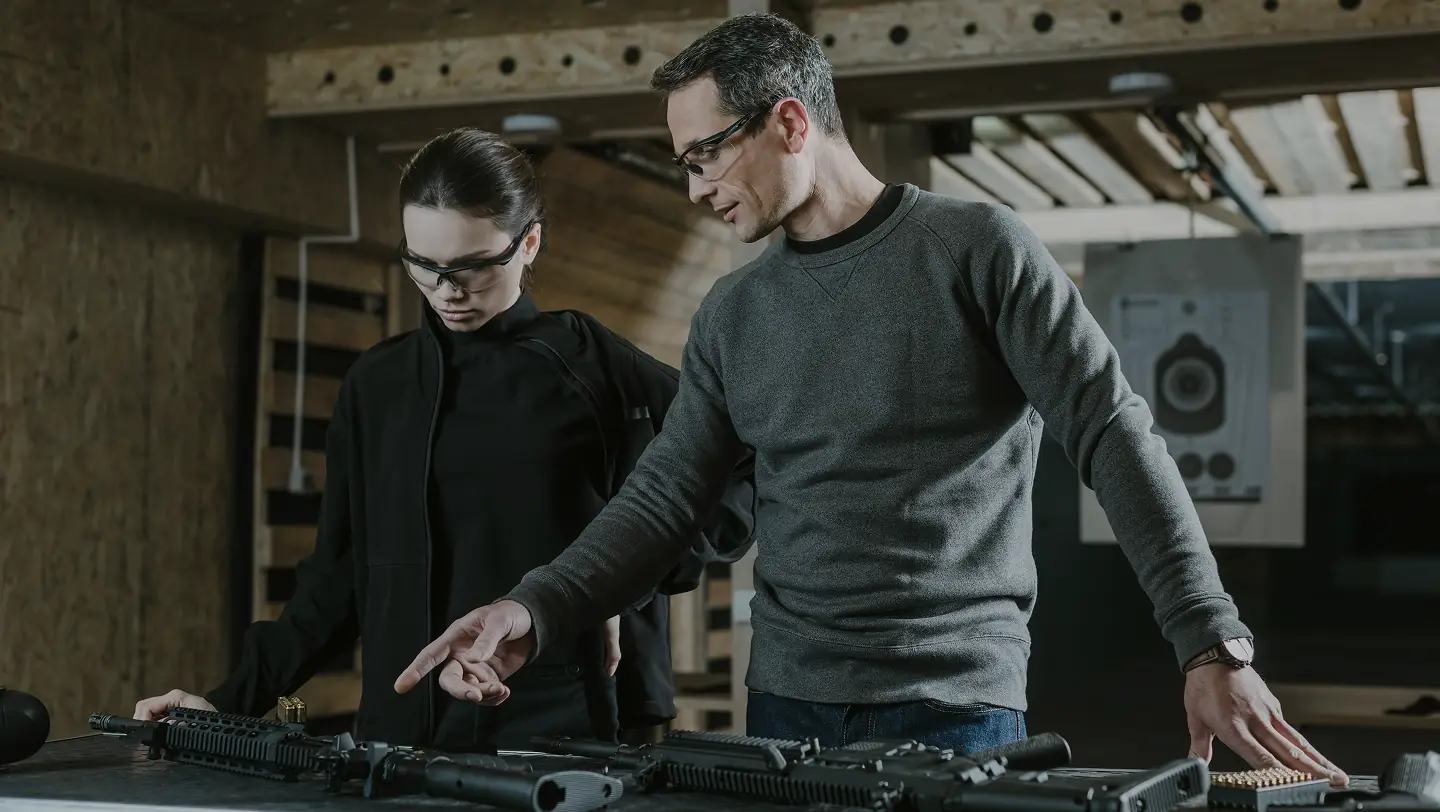
A self defense merchant account is a specialized payment processing account that acquiring banks issue to stun gun retailers, TASER consumer-channel dealers, pepper spray brands, expandable baton and kubotan sellers, personal alarm distributors, women's self-defense specialty stores, and training-bundled defense programs, designed to handle the state-by-state legality map, federal 18+ age verification, ship-to-state geo-blocking, and elevated card-not-present dispute exposure that aggregators like Stripe, Square, and PayPal refuse to underwrite.
The account permits card-not-present sales of civilian stun guns, TASER Pulse / Bolt / StrikeLight consumer models, OC pepper spray and gel, expandable batons, kubotans, tactical pens, personal alarms, and women's self-defense kits, and it operates under tailored underwriting terms that include rolling reserves, state-restriction audits, age-gate requirements, and discount rates between 3.49% and 4.95%.Self Defense Merchant Account
Merchant Account for Self Defense Business [Instant Approval]
Opening a merchant account for a self defense business through 2Accept connects stun gun retailers, TASER consumer-channel dealers, pepper spray brands, baton and kubotan sellers, personal alarm distributors, and women’s self-defense specialty stores to acquiring banks that explicitly underwrite MCC 5941 (sporting goods), MCC 5947 (gift/novelty), MCC 5999 (misc specialty retail), and MCC 5969 (direct marketing combined) — without the freezes, account-balance holds, and sudden terminations that aggregators like Stripe, Square, and PayPal issue the moment they see a Vipertek stun gun, Sabre pepper spray, ASP expandable baton, or TASER Pulse SKU in your catalog. Critically, this is a non-FFL underwriting profile — no ATF license is required because none of these products are firearms — so the workflow is meaningfully faster than the adjacent firearms vertical even though some buyer audiences overlap.
The process of opening a self defense merchant account with 2Accept takes four steps. First, complete the online application with your EIN, Articles of Incorporation, last three months of bank and processing statements, your live store URL, your federal 18+ age-verification configuration at checkout, and your state-restricted SKU filter for the legality map (Hawaii’s pre-2016 stun gun ban, Massachusetts’s pre-2018 ban and current FID-card pepper spray rules, Rhode Island’s recently-unwound ban, New York’s pepper spray 0.7oz / 2-can limit, Wisconsin’s 10% OC concentration cap, and city-level restrictions in DC, Annapolis, and elsewhere). Second, a dedicated self-defense underwriter reviews your state-restriction logic, age-gate workflow, processing history, and chargeback ratio within one business hour. Third, you receive your MID and integrate via Shopify, WooCommerce, BigCommerce, Magento 2, or REST API after signing the merchant processing agreement. Fourth, you go live in 48 hours with ship-to-state filter logging, age-verification authorization proof, chargeback alerts, and multi-MID load balancing built into the account.
Rates for a self defense merchant account on 2Accept start at 3.49% for established stun gun and pepper spray retailers with a clean processing history and an active state-restricted SKU filter, and run higher for newer brands, kubotan and brass-knuckle-replica specialists with elevated state-restriction complexity, or international sellers with multi-currency settlement. Custom interchange-plus pricing is available for self-defense operators processing above $100K monthly. Pricing depends on monthly volume, average ticket (a $14.99 keychain pepper spray and a $399 TASER Pulse 2 price very differently), chargeback ratio, your card-not-present mix, and whether your account requires the standard D2C MID or an additional B2B wholesale MID for corporate safety and campus security customers.
48h
Average approval98%
Approval rate40+
Acquiring banks$2B+
Processed yearly Industries we underwrite
Everything 2Accept handles for self defense merchants
Every dimension below covers what stun gun retailers, TASER dealers, pepper spray brands, baton and kubotan sellers, and women's self-defense specialty stores evaluate when choosing a payment processor. 2Accept's self defense underwriting desk approves the SKUs, business models, state-restriction configurations, age-gate workflows, and platform integrations listed here without aggregator-style freezes — and crucially, the account is structured as non-firearm retail under MCC 5941, 5947, 5999, or 5969 so the underwriting profile is meaningfully different from an FFL gun shop even though some buyers overlap.
Self-Defense Products We Approve
Self-defense products covered by 2Accept
2Accept underwrites the full non-firearm self-defense catalog — civilian stun guns (Vipertek-style high-voltage units, mini keychain stunners, stun batons), TASER International consumer models (Pulse, Pulse+, StrikeLight, Bolt 2), OC pepper spray and gel from Sabre, Mace Security International, Fox Labs, and POM, expandable batons (ASP, Smith & Wesson, Streetwise), kubotans and tactical pens, personal alarms and panic buttons, body-worn personal security cameras, and the broader women's self-defense category that bundles several of these SKUs together. Each SKU group maps to a sporting-goods or specialty-retail MCC rather than the firearms MCC profile.
Product positioning, state-restricted SKU handling, age-gate at checkout, and federal age-18 requirement workflows are reviewed during onboarding because they determine whether the acquirer approves the catalog under a single MID or whether segregated MIDs are needed when you also sell adjacent categories. Crucially, this is a non-FFL underwriting profile — no ATF license is required because none of these products are firearms, but state-by-state legality varies significantly and the gateway must geo-block restricted ship-to states for the SKUs each state restricts.
Approved Self-Defense Categories
- Civilian Stun Guns (Vipertek, mini, baton-style)MCC 5941 / 5999 (state-restricted)
- TASER Consumer Models (Pulse, Bolt 2, StrikeLight)MCC 5941 (state-restricted)
- OC Pepper Spray & Gel (Sabre, Mace, Fox Labs, POM)MCC 5941 / 5947 (NY/MA size limits)
- Expandable Batons, Kubotans, Tactical PensMCC 5947 / 5999 (state-by-state)
- Personal Alarms, Panic Buttons, Safety WhistlesMCC 5947 (no restrictions)
- Body Cameras & Personal Security CamerasMCC 5999 / 5965
Self-Defense Business Models
Self-defense business models we underwrite
Self-defense merchants run a wide spectrum of business models — direct-to-consumer Shopify and WooCommerce stores selling stun guns and pepper spray nationwide (geo-filtered by ship-to state), specialty retailers focused on a single category (a Sabre-authorized pepper spray dealer, a TASER consumer-channel dealer, a kubotan and tactical-pen specialty store), training-bundled platforms that sell defensive products alongside in-person or virtual self-defense classes (overlap with the Coaching vertical), women's self-defense brands that curate kits combining alarm + pepper spray + stun keychain + safety whistle for a single target audience, and B2B suppliers selling into corporate safety, university campus security, and travel-protection markets.
Whether your business runs a card-not-present D2C checkout, a training-bundled subscription, or a wholesale invoice to a corporate safety program, the MID is structured to support the channel with age-verification gating (federal 18+), state-restricted SKU filtering at the cart and gateway level, and ship-to address verification that blocks orders for restricted SKUs into HI, MA, RI, IL, MI, WI, CT, NY, NJ historical-restriction states based on each state's evolving stun gun and pepper spray rules.
Approved Self-Defense Configurations
- D2C Stun Gun & Pepper Spray E-commerceApproved (state-filtered)
- TASER-Authorized Consumer DealersApproved
- Women's Self-Defense Specialty RetailApproved
- Training-Bundled Defense ProgramsApproved (Coaching overlap)
- Kubotan / Tactical Pen Specialty StoresApproved (state-by-state)
- Corporate / Campus B2B Safety SuppliersApproved (wholesale MID)
State Stun Gun / Pepper Spray Compliance
Compliance handling for self-defense merchants
Self-defense compliance is a 50-state legality map rather than a single federal license. 2Accept's underwriting desk audits your compliance stack at onboarding — federal age-18 verification at checkout, state-by-state stun gun rules (HI banned civilian ownership historically but the 2016 Caetano v. Massachusetts ruling and subsequent federal court decisions have unwound MA and RI bans; NY allowed civilian stun gun ownership after the 2019 federal court ruling in Avitabile v. Beach; NJ allowed after the 2017 New Jersey Second Amendment Society v. Porrino case; IL, MI, WI, and CT still require permits or have city-level restrictions), pepper spray size and concentration limits (NY caps OC at 0.7oz / 2-can max per civilian; MA requires a Firearms Identification Card to carry OC; WI limits OC concentration to 10% and capacity to 60g), expandable baton rules (banned for civilian carry in CA, MA, NY, DC, and some cities), and kubotan / brass-knuckle replica rules that vary by state.
Missing or stale state-restriction data is the leading cause of first-pass rejection on self-defense applications — an acquirer reviewing your store will block-test a ship-to address in Massachusetts on a stun gun SKU and reject the application if the cart accepts the order. We catch the gap before submission by auditing your geo-blocking logic against the current legality map (the 2016 SCOTUS Caetano ruling and the subsequent federal district court rulings have changed several state restrictions in the last decade, so the legality map shifts faster than most merchants update their store).
Compliance Frameworks Covered
- Compliance Frameworks CoveredRequired on all SKUs
- State Stun Gun Ban Audit (HI / MA / RI legacy)Verified at onboarding
- Pepper Spray Size & Concentration (NY / MA / WI)Geo-filtered at cart
- Expandable Baton Carry Rules (CA / NY / MA / DC)Ship-to blocked
- Kubotan / Replica Knuckle Rules (state-by-state)Filtered per state
- Interstate Shipping (federal — generally legal)Confirmed at onboarding
State-Filtered Shipping & Age-Gate Features
Payment features for self-defense merchants
Self-defense e-commerce is overwhelmingly card-not-present D2C, so the gateway needs three features that aggregators don't reliably ship — federal 18+ age verification at checkout, real-time ship-to state filtering that blocks restricted SKUs into restricted states, and adult-signature delivery on higher-voltage stun gun and TASER orders. 2Accept's gateway bundles all three with the MID and surfaces the geo-block rules in a merchant dashboard you can update yourself as state laws shift (so a federal court ruling that unblocks NY stun gun sales tomorrow takes effect at the cart the same day, not on a quarterly compliance review cycle).
Unlike firearms, self-defense products do not require FFL-to-FFL routing, NICS background check, or Form 4473 capture. The transaction flow is closer to a standard D2C cart with the addition of state-restricted-SKU filtering and an 18+ age gate. Subscription billing is supported for the small share of self-defense merchants who run training-bundled monthly memberships (pairing a defensive product kit with a recurring coaching component) — that subset overlaps with our Coaching vertical underwriting workflow.
Supported Payment Capabilities
- Federal 18+ Age Verification at CheckoutIncluded
- Ship-To State Geo-Blocking (restricted SKU map)Included
- Adult-Signature Delivery (stun gun / TASER)Supported
- Subscription Billing (training-bundled kits)Supported (tokenized vault)
- Tokenized Card Vault & Account UpdaterIncluded
- 3DS 2.0 Authentication on CNP Self-Defense SalesStandard
Self-Defense Platform Integrations
Platform & gateway integrations for self-defense stores
Most self-defense merchants run on Shopify, WooCommerce, or BigCommerce — and unlike firearms, these mainstream platforms generally allow non-firearm self-defense products at the platform level (the prohibition is only at Shopify Payments / BigCommerce Payments / WooPayments, which are powered by aggregators like Stripe). 2Accept replaces the embedded aggregator payment processor with a dedicated self-defense MID while keeping the native Shopify, WooCommerce, or BigCommerce checkout experience intact, including third-party app integrations for age verification and state-restricted-SKU filtering.
Custom storefronts and headless commerce builds integrate through REST API or hosted payment page. For training-bundled self-defense brands that operate a course/coaching component alongside the product catalog, we plug into the major LMS and course platforms (Kajabi, Teachable, Thinkific, MemberPress) so a single subscription bundle covers both the recurring training and the one-time defensive-product shipment.
Native Integration Support
- Shopify (third-party gateway replaces Shopify Payments)Native plugin
- WooCommerce (replaces WooPayments)Native plugin
- BigCommerce (replaces BigCommerce Payments)Native plugin
- Magento 2 & Shift4ShopNative plugin
- Kajabi / Teachable / Thinkific (training bundles)Direct integration
- Custom REST API & Hosted Payment PageFull developer docs
Self-Defense Chargeback Defense
Risk defense for self-defense chargeback exposure
Self-defense chargeback exposure is elevated for two structural reasons — fraud-card use is high on viral stun gun and pepper spray SKUs that hit social media (cards from breaches get tested on $19.99 mini-stun-keychain SKUs because the price point sits below most issuer fraud thresholds), and ship-to address fraud is common when the buyer tries to route a restricted SKU into a restricted state by entering a neighboring-state ZIP. 2Accept's risk stack catches disputes before they post (Ethoca + Verifi alerts), authenticates online self-defense transactions to shift fraud liability to the issuer (3DS 2.0), and files compelling-evidence representments using age-verification logs, ship-to-state filter logs, adult-signature delivery proof, and IP geolocation at ~55%+ win rate.
For higher-volume self-defense e-commerce operators, multi-MID cascading distributes volume across 2–5 accounts so no single MID exceeds Visa's VDMP threshold (0.9%) or Mastercard's ECM threshold (1.5%) when a viral TikTok video on women's self-defense kits spikes ammo-direct-style volume on a single SKU. Critically, because the underwriting is non-FFL, the dispute documentation does not require Form 4473 or NICS records — but ship-to-state filter logs become the equivalent piece of compliance evidence in a representment package.
Risk & Chargeback Tools Included
- Ship-To-State Filter Log RepresentmentIncluded (Mid/Top tier)
- Age-Verification Log Authorization ProofIncluded
- Ethoca + Verifi CDRN AlertsIncluded (Mid/Top tier)
- 3DS 2.0 on Online Self-Defense SalesStandard
- Multi-MID Cascading (stun gun / pepper spray / kit bundles)Supported (2–5 MIDs)
- Representment ServiceAvailable (~55% win rate)
Pricing Tiers
High risk processing rates, published up front
Every high risk merchant account is priced by risk tier. Your vertical, volume, and chargeback ratio determine which tier underwrites you. Rates are average and may vary depending on individual circumstances and risk profile. Interchange may be passed to merchants for more challenging approvals
Low-Tier High Risk
2.89%
+ $0.20Subscription · SaaS · Coaching · Digital
- Domestic U.S. MID
- Next-day funding
- 0–10% rolling reserve
- Free gateway integration
- Account updater included
Most Approved
Mid-Tier High Risk
3.49%
+$0.25CBD · Peptides · Telehealth · Vape · Dating · Travel
- Domestic or offshore MID
- Chargeback alerts (Ethoca + Verifi)
- 0-10% rolling reserve
- Dedicated underwriter
- MATCH-list considered
- Multi-MID load balancing
Top-Tier High Risk
4.95%
+$0.30Adult · Firearms · Crypto · Gaming
- Offshore acquiring
- AEP / MSB registration support
- 0-10% rolling reserve
- 3DS 2.0 authentication
- Descriptor optimization
- Cascading across 3+ MIDs
How It Works
From application to live processing in 4 steps
01
Apply Online
Complete the 4-minute application. No credit pull, no application fee, no long-term contract.
02
Meet Your Underwriter
A 2Accept underwriter reviews your business model, volume, and documents within 1 business hour.
03
Go Live in 48 Hours
Sign your MPA, receive your MID, and integrate via gateway API, hosted checkout, or Shopify.
04
Scale Safely
Grow with chargeback alerts, fraud scoring, and multi-MID load balancing as your volume scales.
2Accept vs Aggregators
Why a dedicated MID beats Stripe, Square, and PayPal
Aggregators pool thousands of merchants under one master account. When any single MCC trips a threshold, entire verticals get frozen. A dedicated MID from 2Accept belongs to your business alone.
| Feature | 2ACCEPT | Stripe | Square | PayPal |
|---|---|---|---|---|
| CBD / Hemp approved | ||||
| Vape / E-cig approved | ||||
| Firearms / Ammo approved | ||||
| Dedicated MID (not aggregator) | ||||
| MATCH-list merchants considered | ||||
| Human underwriter (not chatbot) | ||||
| Multi-MID load balancing |
Risk Management
Keep your MID alive with built-in chargeback defense
Every 2Accept high risk merchant account includes the monitoring and mitigation stack required to stay under Visa's 1.0% chargeback threshold.
Chargeback Alerts
Ethoca and Verifi CDRN integrations catch disputes before they post, letting you refund pre-chargeback and protect your ratio.
Fraud Scoring
Kount, Sift, and NoFraud rules block velocity attacks, BIN testing, and stolen-card fraud in real time at authorization.
3DS 2.0 Authentication
3D Secure shifts liability to the issuer on authenticated transactions, eliminating fraud-based chargebacks on compliant checkouts.
Representment
Our dispute team files compelling evidence packages against friendly fraud and product-not-received disputes, recovering revenue within 45 days.
Multi-MID Load Balancing
Split volume across 2–5 MIDs via our cascading gateway to stay under per-MID caps and maintain chargeback ratios on every account.
Descriptor Optimization
Dynamic billing descriptors matched to your brand lower “I don't recognize this charge” disputes by 40%+.
Real businesses, real approvals
What merchants say
“After Stripe terminated us for selling CBD gummies, 2Accept had us live in 48 hours on a domestic MID. Zero freezes in 18 months.”
SL
Sarah L. Founder,
CBD E-commerce Brand
“I tried four processors for my FFL store. 2Accept was the only one that understood MCC 5999 and got my ammo transactions approved.”
MR
Michael R. ,
Owner, Firearms Retailer
“Our subscription box was flagged by Square for 'high chargeback volume.' 2Accept's Ethoca alerts dropped our ratio to 0.3% in one month.”
MR
Michael R. ,
Firearms Retailer
What It Is
What is a self defense merchant account?
A self defense business gets a high risk classification because Visa and Mastercard place MCC 5941, 5947, 5999, and 5969 partially on their restricted MCC list when the catalog includes weapons-adjacent products, because the state-by-state legality of stun guns and pepper spray creates a structural compliance burden that aggregators won't underwrite at scale, because the federal 18+ age requirement requires a hard age-gate at checkout that most aggregator checkouts don't enforce, and because the card-not-present dispute exposure on viral stun gun and pepper spray SKUs runs structurally higher than mainstream e-commerce. Card brands also treat self-defense merchants as adjacent to firearms in some risk models — even though the underwriting profile is fundamentally different because no FFL is required, no NICS check is needed, no Form 4473 capture is involved, and no ATF chain-of-custody documentation applies.
Opening a self defense merchant account differs from opening a standard low-risk retail account in three ways. First, underwriting takes 2 to 5 business days rather than instant approval, because the acquirer audits your state-restricted SKU filter against the current 50-state legality map (which shifts when federal courts unwind state bans, as happened in MA in 2016, NJ in 2017, and NY in 2019) and verifies your federal 18+ age-gate at checkout. Second, pricing typically ranges from 3.49% to 4.95% rather than the 2.6%–2.9% flat rate aggregators offer, because the acquirer absorbs the elevated dispute exposure on viral CNP self-defense SKUs and the operational overhead of monitoring state-restriction compliance. Third, the account issues a dedicated MID that belongs exclusively to your self-defense business, so the account cannot be terminated for selling the non-firearm self-defense products it was approved to underwrite.
2Accept underwrites self-defense merchant accounts for stun gun retailers (Vipertek-style high-voltage units, mini keychain stunners, stun batons), TASER consumer-channel dealers (Pulse, Pulse+, Bolt 2, StrikeLight), OC pepper spray and gel brands (Sabre, Mace Security International, Fox Labs, POM), expandable baton and tactical-pen specialty stores, kubotan and personal-alarm distributors, women's self-defense specialty brands, training-bundled defense programs (overlap with our Coaching vertical), B2B suppliers selling into corporate safety and campus security, and body-camera / personal security camera retailers. Applications are reviewed by a dedicated self-defense underwriter within one business hour, approved in 48 hours to 5 business days depending on the complexity of your state-restriction map, and integrated through Shopify, WooCommerce, BigCommerce, Magento 2, or custom REST API.
Common types of self-defense merchants we underwrite
Acquiring banks segment self-defense merchants by product category, target audience, and state footprint. The self-defense verticals 2Accept underwrites most often are:
- TASER consumer-channel dealers — MCC 5941, sells TASER International Pulse, Pulse+, Bolt 2, and StrikeLight to civilian buyers (high-amperage LE-only models are excluded from civilian-channel MIDs)
- Weighted glove / sap glove retailers — MCC 5947 / 5999, sells weighted gloves and sap gloves where state law permits (state-restricted in CA, MA, NY, and several other jurisdictions)
- B2B safety supply distributors — MCC 5969 / 5099, sells into corporate safety programs, university campus security, and travel-protection markets with wholesale invoicing
- Body camera and personal security camera retailers — MCC 5999 / 5965, sells body-worn personal security cameras and lapel cameras as a non-firearm safety category
- Women's self-defense specialty brands — MCC 5969 / 5941, curates kits combining pepper spray + stun keychain + personal alarm + safety whistle for a single target audience with subscription or one-time bundle billing
- Training-bundled defense programs — MCC 5941 + 8299, pairs a defensive product kit with recurring in-person or virtual self-defense coaching (overlap with our Coaching vertical underwriting workflow)
- Expandable baton retailers — MCC 5947 / 5999, sells ASP, Smith & Wesson, Streetwise, and Cold Steel batons with carry-ban states (CA, NY, MA, DC) geo-blocked from ship-to
- Kubotan, tactical pen, and self-defense keychain stores — MCC 5947, sells kubotans, tactical pens, and self-defense keychains with brass-knuckle-replica state rules filtered per ship-to state
- OC pepper spray and gel brands — MCC 5941 / 5947, sells Sabre, Mace Security International, Fox Labs, POM, and private-label OC formulations with NY 0.7oz cap, MA FID-card requirement, and WI 10% concentration limit enforced at the cart
- Civilian stun gun retailers — MCC 5941 / 5999, sells Vipertek-style high-voltage units, mini keychain stunners, and stun batons direct-to-consumer with state-restricted shipping (geo-blocked from historical-ban states and permit-required states)
- Personal alarm and panic-button retailers — MCC 5947, sells safety whistles, screaming alarms, smart-button panic devices, and wearable safety jewelry with no state restrictions and minimal dispute exposure
Advantages of a self-defense-specific merchant account
A dedicated self-defense merchant account gives you advantages that no payment aggregator can match, because the account is underwritten by an acquiring bank that explicitly approves non-firearm self-defense retail with state-restriction and age-gate workflow:
- Dedicated MID for self-defense sales — belongs to your store alone, not pooled into an aggregator master account that gets frozen the moment a single stun gun SKU trips a generic weapons-keyword filter
- Multi-MID structure for D2C + B2B + training-bundled — separate accounts for D2C stun gun retail, B2B campus / corporate safety wholesale, and training-bundled subscription kits so one channel's disputes never threaten another
- Higher monthly volume caps — $500K+ on domestic self-defense accounts vs. the $25K–$50K aggregator ceilings that trigger review on a single TikTok-viral keychain stunner SKU
- Federal 18+ age verification at checkout — hard age-gate on every self-defense SKU at the cart, with the verification log retained for representment evidence
- No sudden terminations for selling stun guns or pepper spray — the MID is approved for civilian stun guns, TASER consumer models, OC pepper spray, batons, and kubotans, so the Stripe / Square / PayPal "we changed our policy" e-mail does not apply
- Non-FFL underwriting profile — faster than the adjacent firearms vertical because no ATF license, no NICS check, no Form 4473, and no SOT class is required for any non-firearm self-defense product
- State-restricted SKU filtering at checkout — Hawaii, Massachusetts, Rhode Island legacy bans, New York pepper spray size cap, Wisconsin OC concentration limit, Illinois / Michigan / Connecticut permit requirements, and California / DC baton-carry rules all enforced at the cart and gateway level
- Direct interchange-plus pricing — available above $100K monthly volume, lowering effective rate significantly on high-volume self-defense e-commerce
- Human self-defense underwriters — who understand the 50-state legality map, the post-Caetano federal court ruling history that unwound stun gun bans in MA / RI / NY / NJ, and the pepper spray and baton state rules; not chatbots or generic ticket queues
- Ship-to-state filter log representment — compelling-evidence packages built around the ship-to-state filter log, age-verification log, adult-signature delivery proof, and IP geolocation win friendly-fraud disputes at ~55%+
- Chargeback alerts included — Ethoca + Verifi CDRN catch disputes 24–72 hours before they post, critical on viral stun gun and pepper spray SKUs that get hit with fraud-card velocity attacks
How to qualify for a self-defense merchant account
Qualifying for a self-defense merchant account requires meeting entity, documentation, age-gate, and state-restriction requirements that the acquiring bank reviews during underwriting. Standard qualification criteria include:
- Three months of processing statements — if you were previously processing self-defense transactions on another MID or aggregator before termination
- Personal guarantee — from the principal for newer self-defense brands or sub-650 credit applicants, with reserve adjustment after 90 days of clean processing
- State-restricted SKU filter — configured for Hawaii (historical stun gun ban / current rules), Massachusetts (FID-card requirement on OC pepper spray), Rhode Island (recently unwound stun gun ban), New York (pepper spray 0.7oz / 2-can cap), Wisconsin (10% OC concentration limit, 60g cap), Illinois / Michigan / Connecticut (permit requirements on stun guns), California / New York / Massachusetts / DC (expandable baton civilian-carry bans), and city-level rules
- Chargeback ratio under 1.5% — on prior self-defense processing history
- Live website with age-gate and state filter — working checkout, Terms, Privacy, Refund, Contact pages, plus federal 18+ age verification and ship-to-state geo-blocking on every restricted SKU
- Federal 18+ age verification at checkout — hard age-gate on every self-defense SKU; verification log retained for representment evidence
- Registered legal entity — LLC, Corporation, or DBA with valid EIN; no FFL is required because none of these products are firearms
- Business bank account — in the legal entity's name for settlement
- Clear product positioning — catalog language that frames the products as civilian self-defense / personal safety tools, not as weapons or assault devices, to align with the MCC 5941 / 5947 underwriting profile
- Authorized-dealer documentation — where applicable — TASER International authorized consumer-channel dealer status, Sabre or Mace authorized retailer credentials, or other manufacturer dealer agreements that strengthen the application
- Government-issued ID — for the principal signer
- Three months of bank statements — showing consistent self-defense revenue
Strategies for managing a self-defense merchant account
Keeping a self-defense merchant account active long-term requires active risk management because the state-by-state legality map shifts when federal courts unwind state bans, Visa's VDMP threshold (0.9%) and Mastercard's ECM threshold (1.5%) trigger fines and termination above either limit, viral social-media SKU spikes create fraud-card velocity attacks, and acquirers re-audit self-defense MIDs when state law changes are reported. The strategies that protect a self-defense MID are:
- File representment with filter-log and age-gate evidence — compelling-evidence packages including the ship-to-state filter log, the 18+ age verification record, signed ToS acceptance, delivery proof, and IP geolocation win friendly-fraud disputes at ~55%+
- Enforce federal 18+ age verification at checkout — hard age-gate on every SKU, retain the verification log linked to the card transaction record for representment evidence
- Distribute volume across multiple MIDs — separate D2C stun gun retail, B2B safety wholesale, and training-bundled subscription kits onto distinct MIDs so a viral-SKU dispute spike on one channel does not threaten the others
- Optimize the billing descriptor — match it to the customer-facing store name on the receipt to reduce "I don't recognize this charge" disputes on small-ticket pepper spray and personal-alarm SKUs
- Audit the state-restricted SKU filter quarterly — post-Caetano federal court rulings have unwound stun gun bans in MA (2016), NJ (2017), and NY (2019), and state legislatures continue to revise pepper spray size limits, baton-carry rules, and kubotan / brass-knuckle-replica rules; stale filters are the leading cause of acquirer re-audit issues
- Enable AVS and CVV verification — on every online self-defense transaction and decline mismatched cards — fraud-card use is elevated on viral keychain stunner and pepper spray SKUs that sit below most issuer fraud thresholds
- Capture ship-to-state filter logs on every transaction — the filter log is the self-defense equivalent of an FFL's Form 4473; it proves the transaction was approved against the current state legality map and is decisive in representment
- Refund before chargeback on disputed shipments — resolve disputes within 24 hours of an Ethoca or Verifi alert so they never post against your ratio, especially on viral keychain stun gun SKUs hit by fraud-card velocity
- Maintain a clear self-defense refund policy — posted at checkout and in the receipt email; "opened pepper spray canisters non-returnable; stun gun returns subject to 25% restocking fee" reduces dispute volume by ~30%
- Track chargeback reason codes monthly — and address the top three sources (10.4 fraud, 13.1 service not provided, 13.6 not as described) before they trigger VDMP or ECM enrollment on your self-defense MID
- Run 3D Secure 2.0 on every online self-defense transaction — to shift fraud liability to the issuer on card-not-present stun gun, pepper spray, baton, and kubotan orders
- Document delivery with adult signature — USPS, UPS, or FedEx tracking and adult signature confirmation on higher-voltage stun gun and TASER consumer-model orders
Frequently Asked Questions
Questions merchants ask before applying
Do I need an existing self-defense business to apply?
Yes. Acquiring banks require a registered legal entity (LLC, Corp, or DBA), an EIN, a business bank account in the legal entity's name, and a live self-defense website with working checkout, federal 18+ age verification, and a configured state-restricted SKU filter. Startup self-defense brands under 6 months old qualify at mid-tier rates with a personal guarantee from the principal and a 90-day rolling reserve that typically drops after clean processing history.
Can I apply with bad personal credit if I'm selling stun guns or pepper spray?
Yes. Personal credit below 600 does not automatically disqualify a self-defense merchant. Acquirers weigh self-defense business volume, chargeback ratio, state-restriction filter quality, and age-gate compliance more heavily than personal FICO. A personal guarantee is typically required on sub-600 credit applications, and the acquirer may add a small rolling reserve that drops after 90 days of clean processing.
Do I need an FFL to sell stun guns, TASER, or pepper spray?
No. Stun guns, TASER consumer models, OC pepper spray, expandable batons, kubotans, tactical pens, and personal alarms are all non-firearm products under federal law, so no ATF Federal Firearms License is required to retail them. This is the single biggest underwriting difference between a self-defense merchant account and a firearms merchant account — the application clears faster because there is no FFL verification step, no SOT class check, no NICS workflow audit, and no Form 4473 capture requirement. The compliance burden instead shifts to state-by-state legality and federal 18+ age verification at checkout.
Can I apply if a previous processor terminated my self-defense account?
Yes. 2Accept specifically underwrites self-defense merchants terminated by Stripe, Square, PayPal, or other aggregators after the platform discovered stun gun, TASER, pepper spray, or baton SKUs in the catalog (a very common pattern, since aggregators routinely treat non-firearm self-defense merchants the same as firearms merchants despite the substantially different underwriting profile). Full disclosure of the termination reason is required, along with a remediation plan if chargeback ratio was the cause. MATCH-listed self-defense merchants can be placed on offshore acquirers.
What documents do I need to apply for a self defense merchant account?
A self defense application typically requires your EIN, Articles of Incorporation, voided check for settlement, 3 months of business bank statements, 3 months of processing statements (if applicable), government-issued ID for the principal signer, a live URL with working checkout, your federal 18+ age verification configuration at checkout, and your state-restricted SKU filter for Hawaii, Massachusetts, Rhode Island legacy rules, New York pepper spray size limits, Wisconsin OC concentration limits, Illinois / Michigan / Connecticut permit requirements, and California / DC baton-carry bans. No ATF FFL is required because none of these products are firearms — this is one of the key differentiators from a firearms merchant account application.
Do I sign a long-term contract on a self defense merchant account?
No. 2Accept self-defense agreements do not include early termination fees or multi-year lock-in. You may close the self-defense account with 30 days written notice. The acquiring bank retains the rolling reserve for 180 days post-closure to cover any lingering self-defense-related chargebacks.
Is there an application fee for a self defense merchant account?
No. 2Accept does not charge an application fee, underwriting fee, or setup fee on self defense accounts. You only pay transaction fees once your self-defense MID goes live and starts processing. There is no fee to be reviewed, and there is no fee if you are declined.
How do I integrate my self-defense gateway after approval?
After approval, 2Accept provides credentials for Authorize.net, NMI, or our native gateway. Self-defense integrations support Shopify (third-party gateway replaces Shopify Payments), WooCommerce (replaces WooPayments), BigCommerce (replaces BigCommerce Payments), Magento 2, Shift4Shop, REST API, and hosted payment page. For training-bundled brands, we also integrate with Kajabi, Teachable, Thinkific, and MemberPress for the recurring coaching component. Integration support is free for the lifetime of the self-defense account.
What rates should I expect on a self defense merchant account?
Self-defense rates start at 3.49% for established stun gun and pepper spray retailers with a clean processing history and an active state-restricted SKU filter, and run higher for newer brands, kubotan and brass-knuckle-replica specialists with elevated state-restriction complexity, or international sellers. Custom interchange-plus pricing is available for self-defense operators processing above $100K monthly. Your final rate depends on monthly volume, average ticket (a $14.99 keychain pepper spray and a $399 TASER Pulse 2 price very differently), chargeback ratio, and CNP-vs-card-present mix.
Do self-defense merchants need a rolling reserve?
Most self-defense merchant accounts carry a 0%–10% rolling reserve held for 180 days to soften the elevated dispute risk on viral CNP SKUs and fraud-card velocity attacks on small-ticket items. Established self-defense brands with clean processing history can qualify for zero-reserve domestic accounts. Newer D2C stun gun and pepper spray merchants typically sit toward the 10% end. Reserve percentages can be renegotiated downward after 6 months of clean processing.
What is interchange and does 2Accept pass it through on self-defense?
Interchange is the wholesale fee that Visa, Mastercard, and Discover charge the acquiring bank for every transaction, typically 1.5%–2.5% depending on card type. 2Accept offers both flat-rate pricing (discount rate includes interchange) and interchange-plus pricing (interchange passed through plus a fixed 0.5%–1.5% markup) for self-defense merchants processing above $100K monthly. High-volume D2C self-defense e-commerce MIDs are most commonly priced interchange-plus.
Is there a monthly minimum on a self-defense MID?
Not on most standard D2C self-defense retail accounts. 2Accept may require a monthly minimum on offshore self-defense MIDs or specialty international tactical-export accounts when the approval is laborious or the account would operate at a loss when volume is low or zero. You will always pay transaction fees only on the volume you process.
Are there any hidden fees on self-defense accounts?
No. 2Accept publishes a flat monthly statement with your discount rate, per-transaction fee, monthly gateway fee, and chargeback fee only. There are no PCI non-compliance surcharges, no early termination fees, no monthly minimums on standard self-defense retail accounts, and no junk-fee line items hidden in the merchant statement.
What is the chargeback fee on a self-defense account?
Chargeback fees on 2Accept self-defense merchant accounts range from $15 to $40 per dispute depending on the account configuration, risk profile, and acquiring bank. The fee applies whether you win or lose the representment. Ethoca and Verifi alerts prevent disputes from becoming chargebacks in the first place — important on viral keychain stunner and pepper spray SKUs hit by fraud-card velocity.
Can my self-defense rate decrease over time?
Yes. After 6 months of clean self-defense processing (chargeback ratio under 0.5%, consistent volume, no bank complaints, current state-restriction filter, no shipping into restricted states), 2Accept can submit a rate review request to the acquiring bank. Successful self-defense rate reviews reduce the discount rate by 0.25%–0.75%.
When does my self-defense MID fund?
Domestic U.S. self-defense merchant accounts receive next-day funding via ACH for all batches submitted before 8:00 PM ET. Offshore self-defense acquiring accounts (typically used for international tactical-export accessory fulfillment) fund on a weekly or bi-weekly schedule (T+3 to T+7).
What qualifies a self-defense business as high risk?
A self-defense business is classified high risk because its MCC (5941 sporting goods, 5947 gift/novelty, 5999 misc specialty retail, 5969 direct marketing combined) sits on the card networks' restricted MCC list when the catalog includes weapons-adjacent products, because the state-by-state legality of stun guns and pepper spray creates a structural compliance burden, because federal 18+ age verification is required at checkout, and because card-not-present dispute exposure on viral self-defense SKUs runs structurally higher than mainstream e-commerce. Card brands also treat self-defense merchants as adjacent to firearms in some risk models — though the underwriting profile is fundamentally different because no FFL is required.
Do you support training-bundled self-defense programs?
Yes. Self-defense brands that pair a defensive product kit with in-person or virtual training (a women's self-defense brand bundling pepper spray + personal alarm + a 4-week virtual coaching course, for example) qualify for a hybrid MID that supports both the one-time product shipment and the recurring coaching billing. The training component overlaps with our Coaching vertical underwriting workflow, and we structure the MID so the bundle bills cleanly under MCC 5941 with the recurring component supported via tokenized vault and Account Updater.
Can I combine stun guns, pepper spray, batons, and accessories under one MID?
Often yes for a single D2C self-defense retailer — stun guns, pepper spray, batons, kubotans, personal alarms, and accessories typically share one MCC 5941 or MCC 5947 MID. B2B wholesale to corporate safety and campus security programs may segregate to a dedicated MCC 5969 MID because the average ticket and dispute profile differ from D2C retail. Training-bundled subscription kits often segregate to a third MID because the recurring billing component overlaps with our Coaching vertical underwriting workflow. Your self-defense underwriter structures one or multiple MIDs based on channel and ticket distribution.
Do you approve body camera and personal security camera retailers?
Yes. Body-worn personal security cameras, lapel cameras, and dash cameras marketed as personal safety tools qualify under MCC 5999 or MCC 5965 with standard underwriting and no state restrictions. They often share a MID with the broader self-defense catalog when the brand sells a unified personal-safety product line.
Do you handle international self-defense or tactical exports?
Yes, with caveats. Domestic D2C is straightforward on a U.S. acquirer. International stun gun and TASER exports require ITAR / EAR review on certain higher-amperage models that classify as defense articles, which 2Accept verifies before placing an offshore MID. International pepper spray, baton, kubotan, personal alarm, and women's self-defense kit sales place readily on offshore acquirers with multi-currency settlement in USD, EUR, GBP, and CAD.
How is a self-defense merchant account different from a firearms merchant account?
The single biggest difference is that no ATF Federal Firearms License is required to sell stun guns, TASER consumer models, OC pepper spray, expandable batons, kubotans, tactical pens, or personal alarms — they are all non-firearm products under federal law. That removes the FFL verification step, the SOT class check, the NICS workflow audit, and the Form 4473 capture requirement from the underwriting process. The compliance burden instead shifts to state-by-state legality and federal 18+ age verification at checkout, with ship-to-state filter logs serving as the equivalent compliance documentation in dispute representment. Underwriting also typically clears faster on self-defense MIDs than on FFL firearms MIDs even though some buyer audiences overlap.
Which states ban or restrict civilian stun gun ownership?
The state stun gun map has shifted significantly in the past decade. Hawaii historically banned civilian stun gun ownership; Massachusetts and Rhode Island also banned civilian stun guns until the 2016 Supreme Court ruling in Caetano v. Massachusetts and subsequent federal district court decisions (Ramirez v. Commonwealth in MA, 2018) struck down those bans. New York banned civilian stun guns until the 2019 federal court ruling in Avitabile v. Beach. New Jersey banned them until the 2017 New Jersey Second Amendment Society v. Porrino case. Illinois, Michigan, Wisconsin, and Connecticut still require permits or have city-level restrictions. The legality map shifts faster than most merchants update their store, so our underwriting desk audits the ship-to-state filter against the current map at onboarding and on every quarterly review.
Are there pepper spray restrictions I need to know about?
Yes. New York caps OC pepper spray at 0.7oz with a 2-can-per-civilian limit. Massachusetts requires a Firearms Identification Card (FID) to carry OC pepper spray, even though the card name implies firearms — it's a quirk of MA statute that catches many out-of-state retailers off guard. Wisconsin limits OC concentration to 10% and capacity to 60g. Michigan caps OC at 35g and 18% concentration. New Jersey limits OC to 0.75oz. California requires a felony-free purchaser and limits OC to 2.5oz canisters. These restrictions need to be enforced at the cart and gateway level so the order is blocked before payment authorization.
What happens if my self-defense application is denied?
If a primary acquirer denies your self-defense application, 2Accept automatically reshops it to secondary and offshore self-defense-friendly banks within our network without requiring you to resubmit. If all placements decline, you receive a written explanation and a remediation roadmap specific to self-defense underwriting — usually focused on tightening the state-restricted SKU filter, hardening the federal 18+ age gate, or improving chargeback ratio.
What increases my chance of self-defense approval?
Clean self-defense processing history (under 0.5% chargeback ratio), six or more months of bank statements showing consistent self-defense revenue, a live and fully functional store with federal 18+ age verification at checkout and an active state-restricted SKU filter, manufacturer authorized-dealer status (TASER International consumer-channel dealer, Sabre or Mace authorized retailer), product-positioning language that frames the catalog as civilian self-defense / personal safety, and a dedicated settlement bank account all strengthen approval. Personal credit above 650, entity formation over 12 months old, and no prior aggregator terminations also help but are not required.
Can I get self-defense processing if I'm on the MATCH list?
Yes. 2Accept can consider MATCH-listed self-defense applicants. Full disclosure of the termination reason code is required, and the acquirer will typically place the MID on an offshore bank with adjusted reserve and pricing. The most common MATCH reasons on self-defense applicants are aggregator policy violations (Stripe / Square / PayPal terminating after detecting stun gun or pepper spray SKUs) rather than fraud or insolvency, which acquirers weight less heavily once the state-restriction filter and chargeback ratio are confirmed.
What causes a first-pass rejection on a self-defense application?
First-pass self-defense rejections usually result from a website that ships stun guns into Hawaii / Massachusetts / Rhode Island without filtering (the acquirer test-orders into the state and the cart accepts it), missing federal 18+ age verification at checkout, pepper spray SKUs that ship into New York without the 0.7oz / 2-can cap enforced, expandable batons that ship into California / New York / DC without the carry-ban geo-block, inconsistent bank and tax records, a disclosed chargeback ratio above 1.5%, or the applicant's domain appearing on a card brand's high risk watchlist. 2Accept's self-defense underwriter catches most of these before submission to prevent rejections.
Can I be approved for self-defense processing without prior processing history?
Yes. New self-defense brands without prior processing can be considered at mid-tier pricing with a 0–10% rolling reserve and personal guarantee. Projected self-defense volume, product compliance posture, state-restricted SKU filter quality, age-gate enforcement, principal experience, and manufacturer authorized-dealer status substitute for processing history. The reserve drops after 90 days of clean self-defense processing.
What's your self-defense approval rate?
98% of self-defense merchants who complete a full application with all required documentation (configured state-restricted SKU filter, federal 18+ age verification at checkout, three months of bank statements, working checkout) get approved. The 2% rejection rate is driven by OFAC sanctions matches, active bankruptcy, undisclosed shipping into restricted states (the acquirer test-orders into MA or NY and the cart accepts it), products outside the self-defense catalog the underwriter approved (e.g. an FFL-required firearm or NFA item slipped onto a non-FFL self-defense MID), or the applicant being on the card brand's internal high risk merchant watchlist.
Do you pull my personal credit on a self-defense application?
A soft credit inquiry is run during self-defense underwriting for personal guarantee verification. Soft pulls do not affect your FICO score and do not appear on your credit report to other lenders. A hard credit pull may be requested by certain acquiring banks for newer self-defense brands or sub-650 applicants depending on the bank's requirements.
How long does it take to get a self-defense MID approved?
Most self-defense merchant accounts are approved in 48 hours to 5 business days after complete documentation is received. D2C stun gun and pepper spray retailers with clean processing history and a current state-restricted SKU filter approve in 48–72 hours. B2B wholesale and training-bundled subscription accounts may require 3–7 business days due to multi-MID structuring and cross-vertical (Coaching) underwriting overlap. Approval is generally faster than the adjacent firearms vertical because no FFL verification, SOT check, or NICS workflow audit is required.
Does 3D Secure 2.0 eliminate fraud chargebacks on self-defense sales?
3DS 2.0 shifts liability for fraud-based chargebacks (reason codes 10.4, 83) from the merchant to the issuing bank on authenticated self-defense transactions. It does not eliminate friendly fraud, product-not-received, or "not as described" disputes — common on stun gun and pepper spray SKUs where the buyer claims the product didn't work as advertised. Implementing 3DS typically reduces total self-defense chargebacks by 30%–50% and saves $4–$8 per transaction in fraud losses on small-ticket viral SKUs.
How long does representment take on a self-defense chargeback?
A Visa representment cycle on self-defense disputes resolves in 45–60 days: merchant submits evidence (30 days), issuer reviews (30 days), and the final case status posts in the merchant portal. Mastercard cycles run 45 days. Amex resolves in 20 days. Winning representments recover both the self-defense transaction amount and the chargeback fee.
Can I fight friendly fraud chargebacks on self-defense sales?
Yes. 2Accept's representment team files compelling evidence packages on self-defense disputes using the ship-to-state filter log (the self-defense equivalent of an FFL's Form 4473), the federal 18+ age verification log, delivery confirmation with adult signature on stun gun and TASER orders, IP geolocation, AVS / CVV match, customer email, and signed ToS acceptance. Win rates run roughly 55%+ on 2Accept-managed self-defense disputes.
What is an Excessive Chargeback Merchant (ECM) and how does it affect self-defense MIDs?
An Excessive Chargeback Merchant is a Mastercard designation applied when a merchant exceeds 100 chargebacks in a month AND a 1.5% chargeback ratio for two consecutive months. ECM enrollment imposes escalating fines ($5,000–$25,000 monthly), mandatory chargeback reduction plans, and a path to permanent MATCH listing if the self-defense ratio is not remediated within 6 months. Viral-SKU spikes on social media can push a small self-defense merchant into ECM territory quickly if the multi-MID structure isn't in place.
What chargeback ratio will get my self-defense account closed?
Visa's VDMP threshold is 0.9% chargebacks-to-transactions; Mastercard's ECM threshold is 1.5%. Crossing either threshold triggers Early Warning monitoring on your self-defense MID. Staying over for 4+ months leads to enrollment in VAMP, ECM, or VFMP, additional fines of $25,000–$200,000, and possible self-defense MID termination with MATCH listing — particularly painful because re-placement after a MATCH listing requires offshore acquiring and higher reserve.
What counts as a chargeback vs a refund on a self-defense sale?
A refund is initiated by the merchant and returns funds to the customer without a dispute entry — common when a ship-to address fails the state-restriction filter post-charge and the order is voided. A chargeback is initiated by the customer through their issuing bank, carries a reason code (10.1–13.9 for Visa), counts against the VDMP/ECM ratio, and imposes a $15–$40 chargeback fee regardless of outcome. Refund-before-chargeback is the core prevention strategy on self-defense MIDs, especially on viral small-ticket SKUs.
What is the difference between Ethoca and Verifi for self-defense?
Verifi CDRN is owned by Visa and covers Visa issuers. Ethoca is owned by Mastercard and covers Mastercard plus Amex, Discover, and some Visa issuers. Using both networks together covers roughly 90% of U.S. card-issuing banks — important on self-defense MIDs where dispute volume is elevated by fraud-card velocity attacks on viral small-ticket SKUs and ship-to-state filter conflicts (where the buyer entered a neighboring-state ZIP to bypass the geo-block).
How do chargeback alerts work on self-defense transactions?
Ethoca Alerts and Verifi CDRN forward dispute intents from issuing banks before they post as chargebacks. On a self-defense transaction — say, a viral keychain stunner SKU hit by fraud-card velocity — you receive the alert within 24–72 hours of the customer's bank contact, issue a refund inside the alert window, and the chargeback never counts against your self-defense MID's ratio. Refund-before-chargeback is the single highest-leverage tool a self-defense retailer has to protect its MID, especially on small-ticket SKUs sitting below issuer fraud thresholds.
What about Authorize.net or NMI for self-defense e-commerce?
Authorize.net and NMI are payment gateways, not merchant accounts. A gateway transmits self-defense card data between your checkout and the acquiring bank but does not underwrite or settle self-defense funds. You still need a self-defense merchant account behind them. 2Accept connects to both gateways and to our native gateway with the same state-restriction filter and federal 18+ age-gate workflow.
Can I run two processors at once for self-defense redundancy?
Yes. Running a primary and backup self-defense processor (or multi-MID load balancing across 2–5 accounts) is standard risk practice for high-volume self-defense merchants — especially when you split D2C stun gun and pepper spray retail, B2B campus / corporate safety wholesale, and training-bundled subscription kits across distinct MIDs. 2Accept builds multi-MID structures into Mid-Tier and Top-Tier self-defense plans by default and load-balances volume through our cascading gateway, which is critical when a viral TikTok video spikes volume on a single keychain stunner or pepper spray SKU.
Do you integrate with Shopify, WooCommerce, and BigCommerce for self-defense stores?
Yes. 2Accept offers native self-defense-friendly gateway integrations for Shopify (third-party gateway replaces Shopify Payments), WooCommerce (replaces WooPayments), BigCommerce (replaces BigCommerce Payments), Magento 2, and Shift4Shop. For training-bundled self-defense brands, we also integrate with Kajabi, Teachable, Thinkific, and MemberPress for the recurring coaching component. Custom self-defense platforms integrate through REST API, hosted payment page iframe, or direct Authorize.net / NMI connection. Integration support is free for the lifetime of the self-defense account.
How is 2Accept different from PaymentCloud, Durango, or Soar Payments for self-defense?
PaymentCloud, Durango, and Soar are ISOs/MSPs similar to 2Accept, but they operate primarily as resellers with variable pricing and limited self-defense-specific underwriting depth. 2Accept publishes flat-tier pricing upfront (2.89% / 3.49% / 4.95%), includes ship-to-state filter log representment and age-verification log authorization proof in standard plans, provides dedicated self-defense underwriters who understand the 50-state legality map and the post-Caetano federal court ruling history that unwound stun gun bans in MA / RI / NY / NJ, and offers guaranteed 48-hour approvals on standard D2C self-defense retail with a 98% approval rate.
How does 2Accept compare to Stripe or Square for self-defense?
Stripe, Square, and PayPal are payment aggregators that pool thousands of merchants under one master MID and prohibit stun guns, TASER, pepper spray, and most other self-defense weapons in their acceptable-use policies. Even self-defense accounts they initially approve get frozen the moment compliance flags trigger — usually within weeks of the first stun gun or pepper spray transaction, because aggregators routinely treat non-firearm self-defense merchants the same as firearms merchants. 2Accept issues a dedicated self-defense MID from an acquiring bank that explicitly approves civilian stun guns, TASER consumer models, OC pepper spray, batons, and kubotans under MCC 5941 / 5947 / 5999 / 5969, so the account cannot be shut down for doing the self-defense business it was approved to serve unless there is a change in laws, regulations, or card brand rules.
Can I keep my current gateway and just switch self-defense processors?
Yes. If you currently use Authorize.net, NMI, USAePay, or any compatible gateway for your self-defense checkout, 2Accept switches only the acquiring bank behind it. Your self-defense checkout, state-restriction filter, age-gate, customer vaulting, and any existing training-bundle subscription tokens remain in place with no customer-visible change and no re-integration work on your store.
Can I use Shopify Payments or BigCommerce Payments for my self-defense storefront?
No. Shopify Payments is powered by Stripe and prohibits stun guns, TASER, pepper spray, and most self-defense weapons in its acceptable-use policy. BigCommerce Payments and WooPayments (which power most BigCommerce and WooCommerce stores by default) have similar prohibitions. However — unlike the firearms vertical — Shopify, BigCommerce, and WooCommerce do generally allow non-firearm self-defense products at the platform level, so 2Accept simply replaces the embedded aggregator payment processor with a dedicated self-defense MID while keeping the native Shopify, WooCommerce, or BigCommerce checkout experience intact.
What about BitPay or Coinbase Commerce for self-defense?
BitPay and Coinbase Commerce process cryptocurrency payments (BTC, ETH, USDC) only — they do not accept Visa, Mastercard, or Amex on self-defense sales. They are complementary to, not a replacement for, a self-defense merchant account. 2Accept self-defense customers who want to accept both cards AND crypto integrate a card MID from 2Accept alongside BitPay or Coinbase in the same checkout.

Ready to open your self defense merchant account?
Underwriting review in 1 business hour. Full approval in 48.
No application fee
98% approval rate
Dedicated human underwriter
More verticals we underwrite
Adjacent industries 2Accept also approves
Self-defense merchants frequently expand into adjacent verticals as their catalog and customer base mature — stun gun and pepper spray brands add survivalist and tactical preparedness inventory, women's self-defense retailers add personal safety jewelry and panic-button wearables, training-bundled platforms add coaching subscriptions and educational seminars, and some operators eventually pursue an FFL for an adjacent firearms line. 2Accept underwrites every adjacent vertical on this list under the same acquiring relationships, so a single self-defense operator can hold multiple MIDs across related categories without restarting underwriting from scratch each time the catalog widens.
Smoking Accessories Coaching & Training Programs Real Estate & Property Services Business Opportunity (BizOps) Firearms & Ammunition (FFL) Hunting & Outdoor Equipment Survivalist & Tactical Gear 1. Glassware & Specialty Retail
If your self-defense business operates across multiple categories — say, a D2C stun gun and pepper spray e-commerce brand plus a training-bundled women's self-defense coaching program plus a B2B wholesale arm supplying campus safety departments — 2Accept can structure separate MIDs for each entity under one master underwriting relationship. Volume load-balances across the MIDs through our cascading gateway, each MID's chargeback ratio is monitored independently, and a dispute spike on the D2C ammo-direct-style viral SKU cannot threaten the underwriting status of the B2B safety-supply MID. And because none of these MIDs require an FFL, the underwriting clears faster than the adjacent firearms vertical even when the customer base partially overlaps.