Sweepstakes Merchant Account

Merchant Account for Sweepstakes Business [Instant Approval]

Opening a merchant account for a sweepstakes business through 2Accept connects dual-currency sweepstakes casinos, social sweepstakes gaming studios, consumer prize-promotion companies, instant-win and scratch-game platforms, online giveaway operators, and white-label sweepstakes software vendors to acquiring banks that explicitly underwrite MCC 7993 (video amusement / game-of-chance software) and MCC 5816 (digital goods / game currency) for properly structured no-purchase-necessary sweepstakes — without the freezes, rolling holds, and sudden terminations that aggregators like Stripe, Square, and PayPal issue the moment they see sweeps-coin redemptions, gold-coin package sales, or any merchant descriptor referencing the words “sweeps,” “coins,” or “prize.”

The process of opening a sweepstakes merchant account with 2Accept takes four steps. First, complete the online application with your EIN, Articles of Incorporation, your written AMOE legal opinion supporting the no-purchase-necessary alternative-method-of-entry framework with a state-by-state legality map, your official rules, your Florida and New York sweepstakes registration and surety-bond evidence (if prize pools exceed the state thresholds), your geofencing configuration for excluded states (typically WA, MI, ID, MT, NV), your age-and-identity verification provider (IDology, Jumio, LexisNexis), last three months of bank and processing statements, and your KYC procedure on prize redemption. Second, a dedicated sweepstakes underwriter reviews your AMOE structure, equal-dignity free-entry path, prize-value-to-registration mapping, and dispute history within one business hour. Third, you receive your MID(s) and integrate via REST API into your dual-currency back office, Unity/iOS/Android SDK for gold-coin top-ups, or Shopify/WooCommerce plugin for consumer-sweepstakes storefronts after signing the merchant processing agreement. Fourth, you go live in 48 hours to 10 business days with chargeback alerts, 3DS 2.0, AMOE structural evidence capture, geofence pass-record logging, and push-to-card prize redemption built into the account.

Rates for a sweepstakes merchant account on 2Accept start around 4.95% for established social-sweepstakes studios with mature KYC, a clean AMOE structure, and 18+ age gating, and run higher for dual-currency sweepstakes casinos in early AMOE rollout, operators with prior aggregator terminations, and offshore-placed corridors, with custom interchange-plus pricing for high-volume operators processing above $500K monthly in gold-coin sales. Pricing depends on monthly volume, average gold-coin ticket size, chargeback ratio, AMOE structural maturity, prize-pool size and the state registration/bonding it triggers, geofencing performance across excluded states, KYC tier mix on prize redemption, and whether your account requires a domestic acquirer or offshore acquiring with multi-currency settlement.
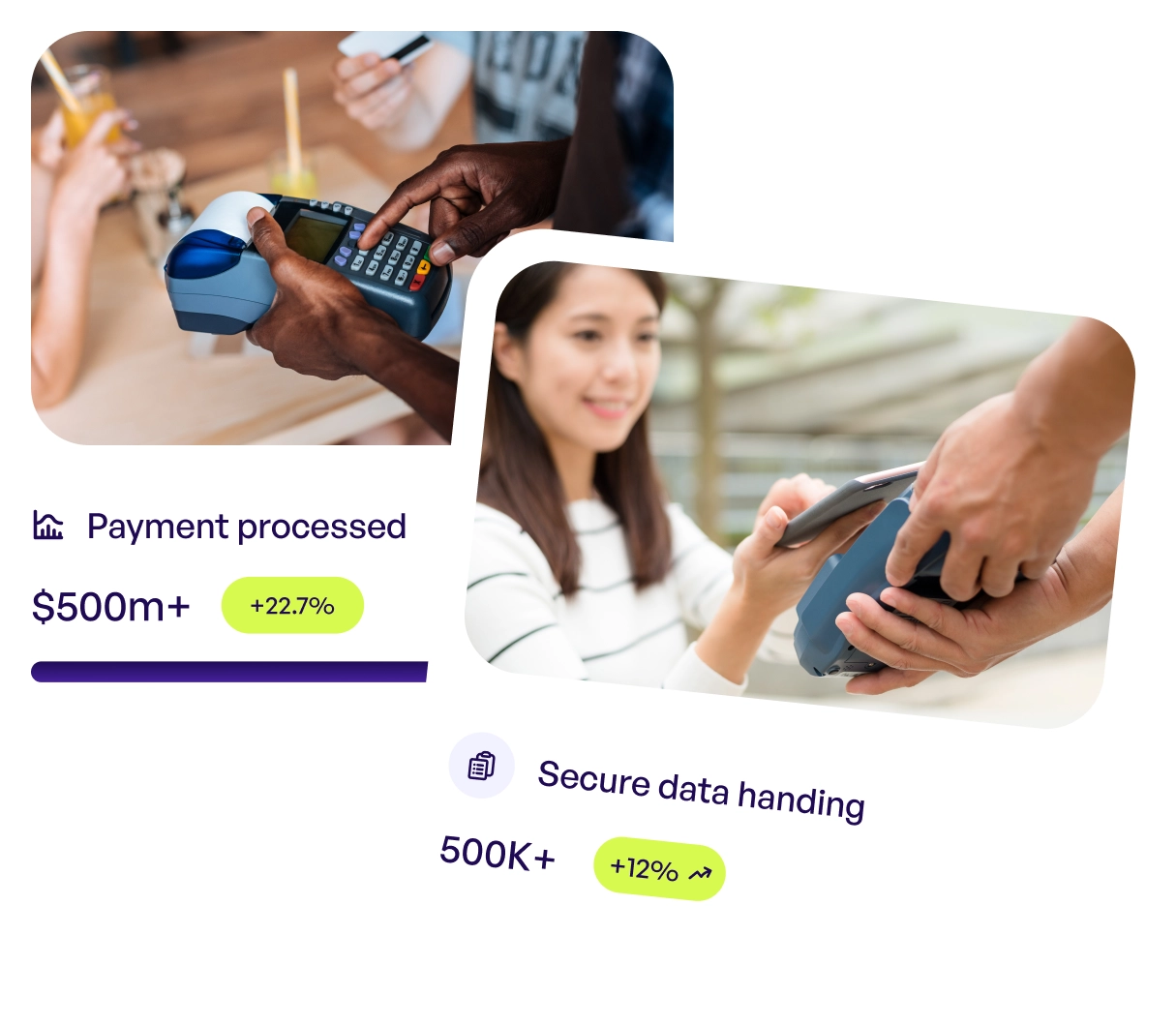
48h
Average approval
98%
Approval rate
40+
Acquiring banks
$2B+
Processed yearly

Apply for a merchant account

Free underwriting review. No application fee.

Phone number
SSL encrypted. No credit pull. Soft underwriting review only.
Industries we underwrite

Everything 2Accept handles for sweepstakes merchants

Every dimension below covers what sweepstakes operators typically evaluate when choosing a card-acquiring partner for gold-coin package sales, sweeps-coin redemptions, and prize-promotion funding. 2Accept's sweepstakes underwriting desk approves the platform models, dual-currency structures, AMOE configurations, integrations, and prize-funding rails listed here without the freezes and sudden MID terminations that aggregators issue the moment they see sweepstakes redemptions or any merchant descriptor referencing the words "sweeps," "coins," or "prize."

Sweepstakes Products We Approve

Sweepstakes products covered by 2Accept

2Accept underwrites the full spectrum of sweepstakes SKUs — from dual-currency sweepstakes casinos selling gold-coin packages bundled with free sweeps-coin promotional credits redeemable for cash prizes under an alternative-method-of-entry (AMOE) framework, to social sweepstakes gaming studios, consumer sweepstakes and prize-promotion campaigns, instant-win and scratch-card platforms, online giveaway and raffle-style promotions structured as legal sweepstakes, and white-label sweepstakes software vendors selling the underlying platform. Each product maps to a specific MCC profile (typically MCC 7993 for video amusement / game-of-chance software, MCC 5816 for digital goods and game-currency purchases, and deliberately NOT MCC 7995 because a properly structured no-purchase-necessary sweepstakes is legally distinct from gambling) and a dedicated MID structure tuned to that product's chargeback and AMOE-structural profile.

Product positioning, the dual-currency design (purchasable gold coins for play vs. promotional sweeps coins for prizes), the free alternative method of entry, the official rules, prize-value thresholds that trigger state registration and bonding (Florida, New York, Rhode Island), age gating (18+ or 21+), and the state-by-state geofencing map all get reviewed during onboarding because they determine whether the operation qualifies as a legitimate AMOE sweepstakes under MCC 7993 rather than as unlicensed gambling under MCC 7995.

Apply for a Sweepstakes Products We Approve MID

Approved Sweepstakes Product Categories

  • Dual-Currency Sweepstakes Casino (Gold + Sweeps Coins)MCC 7993 (AMOE structure)
  • Gold-Coin Package Sales (Play Currency)MCC 7993 / 5816
  • Sweeps-Coin Cash Prize RedemptionPush-to-card / ACH payout
  • Consumer Sweepstakes & Prize PromotionsMCC 7993 / 5969
  • Instant-Win, Scratch & Reveal GamesMCC 7993 (no MCC 7995)
  • Sweepstakes Software / White-Label PlatformMCC 7372 / 5816
Sweepstakes Business Models

Sweepstakes business models we underwrite

Sweepstakes operators come in many configurations — pure-play dual-currency sweepstakes casinos monetizing gold-coin top-ups with bundled sweeps-coin promotions, social sweepstakes gaming studios running slots-, poker-, and bingo-themed games under an AMOE framework, consumer brands running limited-time prize-promotion sweepstakes to drive engagement, instant-win and scratch-game platforms with continuous play, online raffle and giveaway operators structured as legal no-purchase-necessary sweepstakes, subscription boxes and loyalty programs that layer in sweepstakes entries, and white-label sweepstakes software vendors selling the platform to downstream operators.

Whether your business runs one-time gold-coin package purchases, recurring VIP gold-coin subscriptions, season-pass prize promotions, or hybrid loyalty programs where purchases earn bonus sweeps entries, the MID is structured to support the funding cadence with tokenized vault storage, Account Updater for recurring gold-coin cards, 3DS 2.0 authentication on every purchase, and push-to-card disbursement rails for the sweeps-coin cash-prize redemptions that define the AMOE model.

Apply for a Sweepstakes Business Models MID

Approved Business Configurations

  • Dual-Currency Sweepstakes CasinoApproved with AMOE legal opinion
  • Social Sweepstakes Gaming StudioApproved (MCC 7993)
  • Consumer Sweepstakes / Prize PromotionApproved (rules + bonding reviewed)
  • Instant-Win / Scratch-Game PlatformApproved (AMOE structure)
  • Online Raffle / Giveaway (Legal Sweepstakes)Approved (state map reviewed)
  • Sweepstakes Software / White-Label VendorApproved via SaaS MID
AMOE & Sweepstakes Law Compliance

Compliance handling for sweepstakes merchants

Sweepstakes sit at the intersection of state sweepstakes and prize-promotion law, the three-part gambling test (consideration, chance, prize — a legal sweepstakes removes consideration via a genuine free entry method), state registration and bonding requirements (Florida and New York require registration and a surety bond for sweepstakes with prize pools above $5,000; Rhode Island for retail sweepstakes above $500), FTC prize-promotion and deceptive-marketing rules, the Deceptive Mail Prevention and Enforcement Act for mail-in entries, state-specific carve-outs that prohibit or restrict certain sweeps-redemption structures (commonly Washington, Michigan, Idaho, Montana, Nevada, and at times New York), and BSA/AML obligations once cash prize redemption volume scales. 2Accept's underwriting desk audits your AMOE posture at onboarding — your official rules, the genuine no-purchase-necessary alternative entry method, prize-value-to-registration mapping, state bonding evidence, geofencing of excluded states, age-and-identity verification, and KYC on prize redemption.

A structurally flawed AMOE is the #1 cause of first-pass rejection on sweepstakes applications. We catch the gaps before submission and coach merchants through remediation — a free entry method buried or made impractical, equal-dignity-of-prize failures between the paid and free path, missing Florida/New York registration and bonding, geofencing gaps in excluded states, or official rules that read like a gambling product — so the application clears underwriting on the first review cycle backed by a clean legal opinion.

Apply for a AMOE & Sweepstakes Law Compliance MID

Compliance Frameworks Covered

  • AMOE Legal Opinion (No-Purchase-Necessary)Required at application
  • Official Rules + Equal-Dignity Free EntryReviewed line-by-line
  • FL / NY Registration & Surety Bond (>$5K pool)Evidence required
  • Excluded-State Geofencing (WA, MI, ID, MT, NV)Required, audited
  • Age & Identity Verification (18+ / 21+)Required at purchase + redemption
  • BSA/AML on Prize RedemptionRequired above CTR thresholds
Gold-Coin & Prize Redemption

Purchase and prize-redemption features for sweepstakes operators

Sweepstakes businesses are defined by the quality of their inbound gold-coin sales rails and their outbound sweeps-coin prize-redemption rails. 2Accept MIDs support gold-coin and prize-entry purchases via Visa, Mastercard, Amex, and Discover with 3DS 2.0 authentication, ACH purchases via NACHA Same-Day, PayNearMe and VanillaDirect cash-vouchers for non-card buyers, and online banking direct (Plaid / Trustly) for high-trust flows. The MID is configured to dispatch fiat to your settlement bank within T+1 on domestic accounts so liquidity is available to fund sweeps-coin cash-prize redemptions on demand.

For prize redemptions, 2Accept supports ACH credit pushes, Visa Direct (OCT) and Mastercard Send for instant push-to-card disbursements that get winners their cash-prize value in minutes rather than the 3–5 business days legacy ACH required, segregated prize-pool bank-account validation for operators that escrow prize obligations, multi-currency settlement on offshore accounts, and split-settlement support for affiliate revenue-share and white-label platform-provider obligations.

Apply for a Gold-Coin & Prize Redemption MID

Supported Purchase & Redemption Capabilities

  • Gold-Coin Card Purchases (Visa / MC / Amex / Disc)Supported (3DS 2.0)
  • ACH Purchases (NACHA Same-Day)Included on domestic accounts
  • PayNearMe, VanillaDirect, Online BankingSupported (alt-purchase rails)
  • Visa Direct (OCT) / Mastercard Send RedemptionsPush-to-card prize payouts
  • Segregated Prize-Pool Trust AccountValidated at onboarding
  • Multi-Currency Settlement (Offshore)USD, EUR, GBP, CAD
Sweepstakes Platforms Integrations

Platform & gateway integrations for sweepstakes operators

Most sweepstakes platforms run on a dedicated sweepstakes back office (Sweepium, Optimove-driven loyalty stacks, proprietary dual-currency engines) or a game-studio-integrated lobby (slots, poker, bingo themes from social-game studios). 2Accept ships a documented REST API and webhook event stream that plug into any of these back offices, so card-derived gold-coin purchases land in the operator's coin-balance ledger with the same memo, reference ID, KYC attestation, and geofence pass record that the platform's risk engine expects, and so sweeps-coin redemption requests trigger the correct push-to-card disbursement.

For consumer sweepstakes operators, instant-win platforms, and white-label vendors, native integrations exist for Shopify (third-party gateway replacing Shopify Payments, which prohibits sweepstakes and gambling), WooCommerce, Unity in-app purchases with server-side validation, native iOS/Android SDKs for gold-coin top-ups, custom storefronts via REST, and direct hosted-payment-page iframe embedding for any third-party promotion platform or loyalty engine.

Apply for a Sweepstakes Platforms Integrations MID

Native Integration Support

  • Sweepstakes Back Offices / Dual-Currency EnginesREST API + webhooks
  • Social Game Studios (Slots, Poker, Bingo Themes)Compatible (platform-side)
  • Shopify / WooCommerce (Gold-Coin Storefront)Third-party gateway plugin
  • Unity / iOS / Android In-App SDKNative SDK (gold-coin top-ups)
  • Custom Storefront / Headless CheckoutREST + tokenized vault
  • Hosted Payment Page (Lobby Cashier Embed)Iframe + redirect modes
Sweepstakes Chargeback & AMOE Defense

Risk defense for sweepstakes chargeback & AMOE exposure

Sweepstakes chargeback ratios run higher than mainstream e-commerce because of player friendly-fraud on gold-coin purchases ("I didn't authorize this charge," filed after the coins are spent), problem-gambling-style disputes filed by family members even though the product is a no-purchase-necessary sweepstakes, fraud-card use on high-velocity gold-coin top-up cycles, and buyer's-remorse after a losing run of play. 2Accept's risk stack catches disputes before they post (Ethoca + Verifi alerts on every gold-coin purchase), authenticates transactions to shift fraud liability to the issuer (3DS 2.0 on every purchase), and ties the AMOE structural record — the equal-dignity free entry, the official rules acceptance, and the geofence pass record — into the compelling-evidence representment package on dispute response.

For high-volume sweepstakes operators, multi-MID cascading distributes volume across 2–5 accounts so no single MID exceeds Visa's VAMP threshold or Mastercard's ECM threshold on dispute ratio. A clean, prominent no-purchase-necessary disclosure and a clear cashier-level refund policy reduce the volume of buyer's-remorse and friendly-fraud disputes that drive the elevated baseline on dual-currency sweepstakes MIDs.

Apply for a Sweepstakes Chargeback & AMOE Defense MID

Risk & Chargeback Tools Included

  • Ethoca + Verifi CDRN AlertsIncluded (Mid/Top tier)
  • 3DS 2.0 AuthenticationRecommended on every purchase
  • AMOE Structural Evidence CaptureBundled into dispute response
  • Geofencing (Excluded-State) Evidence CaptureBundled into dispute response
  • Multi-MID Cascading (2–5 MIDs)Supported via gateway
  • Representment ServiceAvailable (~54% win rate)
Pricing Tiers

High risk processing rates, published up front

Every high risk merchant account is priced by risk tier. Your vertical, volume, and chargeback ratio determine which tier underwrites you. Rates are average and may vary depending on individual circumstances and risk profile. Interchange may be passed to merchants for more challenging approvals

Low-Tier High Risk
2.89%
+ $0.20

Subscription · SaaS · Coaching · Digital

  • Domestic U.S. MID
  • Next-day funding
  • 0–10% rolling reserve
  • Free gateway integration
  • Account updater included
Apply
Most Approved
Mid-Tier High Risk
3.49%
+$0.25

CBD · Peptides · Telehealth · Vape · Dating · Travel

  • Domestic or offshore MID
  • Chargeback alerts (Ethoca + Verifi)
  • 0-10% rolling reserve
  • Dedicated underwriter
  • MATCH-list considered
  • Multi-MID load balancing
Apply
Top-Tier High Risk
4.95%
+$0.30

Adult · Firearms · Crypto · Gaming

  • Offshore acquiring
  • AEP / MSB registration support
  • 0-10% rolling reserve
  • 3DS 2.0 authentication
  • Descriptor optimization
  • Cascading across 3+ MIDs
Apply
How It Works

From application to live processing in 4 steps

01

Apply Online

Complete the 4-minute application. No credit pull, no application fee, no long-term contract.

02

Meet Your Underwriter

A 2Accept underwriter reviews your business model, volume, and documents within 1 business hour.

03

Go Live in 48 Hours

Sign your MPA, receive your MID, and integrate via gateway API, hosted checkout, or Shopify.

04

Scale Safely

Grow with chargeback alerts, fraud scoring, and multi-MID load balancing as your volume scales.

2Accept vs Aggregators

Why a dedicated MID beats Stripe, Square, and PayPal

Aggregators pool thousands of merchants under one master account. When any single MCC trips a threshold, entire verticals get frozen. A dedicated MID from 2Accept belongs to your business alone.

Feature 2ACCEPTStripeSquarePayPal
CBD / Hemp approved
Vape / E-cig approved
Firearms / Ammo approved
Dedicated MID (not aggregator)
MATCH-list merchants considered
Human underwriter (not chatbot)
Multi-MID load balancing
Risk Management

Keep your MID alive with built-in chargeback defense

Every 2Accept high risk merchant account includes the monitoring and mitigation stack required to stay under Visa's 1.0% chargeback threshold.

Chargeback Alerts

Ethoca and Verifi CDRN integrations catch disputes before they post, letting you refund pre-chargeback and protect your ratio.

Fraud Scoring

Kount, Sift, and NoFraud rules block velocity attacks, BIN testing, and stolen-card fraud in real time at authorization.

3DS 2.0 Authentication

3D Secure shifts liability to the issuer on authenticated transactions, eliminating fraud-based chargebacks on compliant checkouts.

Representment

Our dispute team files compelling evidence packages against friendly fraud and product-not-received disputes, recovering revenue within 45 days.

Multi-MID Load Balancing

Split volume across 2–5 MIDs via our cascading gateway to stay under per-MID caps and maintain chargeback ratios on every account.

Descriptor Optimization

Dynamic billing descriptors matched to your brand lower “I don't recognize this charge” disputes by 40%+.

Real businesses, real approvals

What merchants say

“After Stripe terminated us for selling CBD gummies, 2Accept had us live in 48 hours on a domestic MID. Zero freezes in 18 months.”

SL

Sarah L. Founder, 

CBD E-commerce Brand

“I tried four processors for my FFL store. 2Accept was the only one that understood MCC 5999 and got my ammo transactions approved.”

MR

Michael R. , 

Owner, Firearms Retailer

“Our subscription box was flagged by Square for 'high chargeback volume.' 2Accept's Ethoca alerts dropped our ratio to 0.3% in one month.”

MR

Michael R. , 

Firearms Retailer

What It Is

What is a sweepstakes merchant account?

sweepstakes merchant account is a specialized payment processing account that acquiring banks issue to dual-currency sweepstakes casinos, social sweepstakes gaming studios, consumer prize-promotion companies, instant-win and scratch-game platforms, online giveaway operators, and white-label sweepstakes software vendors, designed to handle the elevated chargeback exposure, buyer's-remorse and friendly-fraud disputes, AMOE structural complexity, and prize-redemption oversight that aggregators like Stripe, Square, and PayPal refuse to underwrite. The account permits card-not-present gold-coin and prize-entry purchases under MCC 7993 (video amusement / game-of-chance software) and MCC 5816 (digital goods / game currency) — deliberately not MCC 7995, because a legitimate no-purchase-necessary sweepstakes is legally distinct from gambling — and it operates under tailored underwriting terms that include AMOE legal-opinion review, official-rules verification, Florida/New York registration and bonding validation, excluded-state geofencing, age and identity verification, segregated prize-pool trust accounting, push-to-card prize redemption, and discount rates between 4.95% and 7.5%.

A sweepstakes business gets a high risk classification because, despite being legally distinct from gambling, the dual-currency model looks structurally similar to a casino to card-brand risk engines, because chargeback exposure on gold-coin purchases is elevated (buyer's-remorse after a losing run of play, player friendly-fraud claiming "I didn't authorize this charge," problem-gambling-style disputes filed by family members, and fraud-card use targeting fast-velocity gold-coin top-up cycles), because the AMOE structure that keeps the operation legal is fragile and frequently challenged (a buried or impractical free entry method, equal-dignity failures between the paid and free path, or official rules that read like a gambling product can collapse the entire legal basis), because card networks scrutinize any sweeps-coin redemption descriptor for gambling proximity, and because the U.S. state-by-state patchwork (full sweeps redemption commonly excluded in Washington, Michigan, Idaho, Montana, Nevada, and at times New York, with Florida and New York requiring registration and bonding above prize-value thresholds) requires precise geofencing and per-state legality mapping that the acquirer underwrites continuously.

Opening a sweepstakes merchant account differs from opening a standard low-risk account in three ways. First, underwriting takes 5 to 12 business days rather than instant approval, because the acquirer reviews your AMOE legal opinion, official rules, equal-dignity free-entry path, Florida/New York registration and surety bond, excluded-state geofencing, age-verification integration, segregated prize-pool accounting, KYC on prize redemption, and prior sweepstakes processing history. Second, pricing typically ranges from 4.95% to 7.5% rather than the 2.6%–2.9% flat rate aggregators offer, because the acquirer absorbs higher chargeback exposure on gold-coin disputes, ongoing AMOE-structural monitoring cost, and state-by-state registration-maintenance verification. Third, the account issues a dedicated MID that belongs exclusively to your sweepstakes business, so the account cannot be terminated for serving the sweepstakes vertical the MID was approved to serve.

2Accept underwrites sweepstakes merchant accounts for dual-currency sweepstakes casinos selling gold-coin packages bundled with sweeps-coin promotional credits under an AMOE framework; social sweepstakes gaming studios running slots-, poker-, and bingo-themed games; consumer prize-promotion companies running brand-engagement sweepstakes; instant-win and scratch-game platforms; online raffle and giveaway operators structured as legal no-purchase-necessary sweepstakes; and white-label sweepstakes software vendors selling the underlying platform. Applications are reviewed by a dedicated sweepstakes underwriter within one business hour, approved in 5 to 12 business days depending on AMOE structural complexity and state registration review, and integrated through REST API into your dual-currency back office, native mobile SDK for gold-coin top-ups, or Shopify/WooCommerce plugin for consumer-sweepstakes storefronts after signing the merchant processing agreement.

Common types of sweepstakes merchants we underwrite

  Acquiring banks segment sweepstakes merchants by product category, dual-currency structure, prize-value tier, and the AMOE framework that keeps the operation legal. The sweepstakes verticals 2Accept underwrites most often are:
  • Consumer sweepstakes & prize-promotion companies —  — MCC 7993 / 5969, run limited-time brand-engagement sweepstakes and giveaways with official rules, no-purchase-necessary entry, and Florida/New York registration and bonding above prize-value thresholds
  • White-label sweepstakes software vendors —  — MCC 7372 / 5816, sell the underlying dual-currency platform, gold-coin engine, and AMOE-redemption tooling to downstream operators on a SaaS or licensing model
  • Dual-currency sweepstakes casinos —  — MCC 7993, sell purchasable gold coins for play bundled with free sweeps coins redeemable for cash prizes under an AMOE framework, run slots, table-game, and live-style themes with 18+/21+ age gating, excluded-state geofencing, and a written legal opinion supporting the no-purchase-necessary structure
  • Promotional sweepstakes agencies —  — MCC 7311 / 7993, design and administer sweepstakes campaigns on behalf of consumer brands, handling official rules, bonding, fulfillment, and the AMOE entry infrastructure
  • Online raffle & giveaway operators —  — MCC 7993, run draw-style giveaways structured as legal no-purchase-necessary sweepstakes (not unlicensed raffles), with state-by-state legality mapping and a genuine free alternative entry method
  • Offshore-placed sweepstakes operators —  — MCC 7993 offshore MID, operate dual-currency sweepstakes for non-U.S. players or for operators with prior aggregator termination, with multi-currency settlement and FATF-AML compliance
  • Social sweepstakes gaming studios —  — MCC 7993, monetize free-to-play sweepstakes games (slots, poker, bingo themes) with optional gold-coin top-ups via in-app SDK, redeem sweeps coins for prizes under AMOE, available in most U.S. states with carve-outs
  • Skill-game / amusement-with-prize operators —  — MCC 7993, run skill-based reveal games with prize payouts in jurisdictions that recognize a predominance-of-skill carve-out, paired with AMOE backstops where chance elements exist
  • Instant-win & scratch-game platforms —  — MCC 7993, run continuous-play reveal games (scratch, spin-to-win, instant reveal) under an AMOE structure with prize redemption, age gating, and excluded-state geofencing
  • Subscription & loyalty sweepstakes programs —  — MCC 7993 / 5968, layer sweepstakes entries onto a recurring subscription or loyalty box, with each purchase awarding bonus entries while preserving a free no-purchase-necessary path

Advantages of a sweepstakes-specific merchant account

  A dedicated sweepstakes merchant account gives you advantages that no payment aggregator can match, because the account is underwritten by an acquiring bank that explicitly approves MCC 7993 AMOE-structured sweepstakes, gold-coin sales, and sweeps-coin prize redemption flows:
  • Chargeback alerts included —  — Ethoca + Verifi CDRN catch gold-coin disputes 24–72 hours before they post, critical for the elevated buyer's-remorse baseline on dual-currency sweepstakes MIDs
  • AMOE-aware underwriter —  — the underlying bank understands the no-purchase-necessary structure, equal-dignity free entry, and the legal distinction between a sweepstakes and gambling, so the MID isn't reflexively coded MCC 7995 and shut down
  • Push-to-card prize redemption —  — Visa Direct (OCT) and Mastercard Send disbursements let winners receive cash-prize value in minutes rather than the 3–5 business days ACH historically required, dramatically reducing payout-related complaint and dispute volume
  • Human sweepstakes underwriters —  — understand AMOE structures, equal-dignity free entry, Florida/New York registration and bonding, excluded-state geofencing, dual-currency design, and the sweepstakes-vs-gambling legal line; not chatbots or ticket queues
  • No sudden terminations for running a sweepstakes —  — the MID is approved for the AMOE products you sell, so Stripe-style aggregator de-platforming on the words "sweeps," "coins," or "prize" doesn't apply
  • 3DS 2.0 authentication —  — shifts fraud-based chargeback liability to the issuer on authenticated gold-coin purchases, cutting fraud-card and BIN-testing losses on high-velocity top-up cycles
  • AMOE structural evidence capture —  — the equal-dignity free-entry record, official-rules acceptance, and geofence pass record stored with every gold-coin purchase, forming the backbone of representment on a disputed transaction
  • Multi-MID cascading —  — distribute volume across 2–5 MIDs so a chargeback spike on the sweepstakes-casino side doesn't threaten the social-game MID, the consumer-promotion MID, or the offshore MID
  • Official-rules and bonding support —  — acquirers approve operators with Florida/New York registration and surety bonds in place and provide remediation paths when prize pools cross state-registration thresholds
  • Segregated prize-pool trust account —  — validated at onboarding for operators that escrow prize obligations; reduces buyer-protection exposure and supports timely prize payouts
  • Dedicated MID for gold-coin sales —  — belongs to your business alone, not shared in an aggregator pool that gets frozen the moment a sweeps-coin redemption descriptor or an MCC trips the aggregator's automated gambling screen
  • Higher monthly volume caps —  — $2M+ on domestic sweepstakes accounts and $10M+ on offshore acquiring vs. $25K–$100K aggregator ceilings before automatic review
  • Excluded-state geofencing integration —  — acquirer-side hooks for geolocation pass-record capture across WA, MI, ID, MT, NV, and any other excluded state, bundled into compelling-evidence dispute responses
  • Offshore acquiring available —  — for operators serving non-U.S. players or with prior aggregator termination, with multi-currency settlement in USD, EUR, GBP, CAD on a single offshore MID

How to qualify for a sweepstakes merchant account

  Qualifying for a sweepstakes merchant account requires meeting documentation, structural, and compliance requirements that the acquiring bank reviews during underwriting. Standard qualification criteria include:
  • Government-issued ID and beneficial ownership —  for the principal signer and all 25%+ beneficial owners under CDD/CTR rules
  • Three months of bank statements —  showing consistent revenue from gold-coin sales and prize-payout outflow
  • AMOE legal opinion —  — a written legal opinion supporting the no-purchase-necessary alternative-method-of-entry framework with a state-by-state legality map
  • Florida & New York registration and bonding —  — required where prize pools exceed the state thresholds ($5,000 in FL and NY); evidence of registration and surety bond at application
  • Chargeback ratio under 1.0% —  on prior sweepstakes processing history, with clear visibility into reason-code breakdown (10.4 fraud, 13.1 service not provided, 13.6 not as described)
  • KYC on prize redemption —  — mandatory ID verification at first cash-out, source-of-funds documentation at high-redemption thresholds, and AML disclosure
  • Age and identity verification —  — IDology, Jumio, LexisNexis, or equivalent integrated and live, enforcing 18+ (or 21+ where required) at purchase and at prize redemption
  • Excluded-state geofencing —  — geolocation provider integrated and live, blocking full sweeps redemption in WA, MI, ID, MT, NV, and any other excluded state
  • Live platform with dual-currency UI —  — working cashier showing the purchasable gold-coin path and the free sweeps-coin entry path, with KYC tiering on redemption
  • Three months of processing statements —  if you were previously processing gold-coin sales on another MID or aggregator
  • Official rules with equal-dignity free entry —  — published official rules including a genuine, practical, equal-dignity free alternative method of entry (typically mail-in request) for sweeps-coin acquisition
  • Business bank account —  in the legal entity's name for settlement of gold-coin sales (and a segregated prize-pool trust account where prize obligations are escrowed)
  • Registered legal entity —  — LLC, Corporation, or international equivalent with valid EIN, operating agreement, and beneficial ownership disclosure for all 25%+ owners
  • BSA/AML procedure —  — a written program with a designated point of contact once cash-prize redemption volume scales past CTR thresholds

Strategies for managing a sweepstakes merchant account

  Keeping a sweepstakes merchant account active long-term requires active AMOE-integrity, risk, and compliance management because card-brand risk engines continuously re-screen MCC 7993 sweepstakes portfolios for gambling proximity, state attorneys general examine prize-promotion structures, Visa's VAMP and Mastercard's ECM thresholds trigger fines and termination above ratio limits, and a single AMOE structural failure can collapse the legal basis of the entire operation. The strategies that protect a sweepstakes MID are:
  • Audit your AMOE structure quarterly —  — state sweepstakes carve-outs shift, prize-value thresholds change, and equal-dignity standards tighten; an outdated AMOE structure triggers acquirer MID review and potential termination
  • Distribute volume across multiple MIDs —  via cascading gateway logic so sweepstakes-casino, social-game, consumer-promotion, and offshore MIDs each stay under VAMP and ECM thresholds independently
  • Document segregated prize-pool compliance —  — periodic attestation that escrowed prize funds are held separately from operating funds, supporting timely payouts and reducing buyer-protection exposure
  • Track prize-redemption KYC and complaint volume monthly —  — elevated complaint volume and KYC failures on redemption drive acquirer review and increase the friendly-fraud baseline
  • Maintain excluded-state geofencing —  — keep WA, MI, ID, MT, NV (and any state where your structure is challenged) blocked for full sweeps redemption; a redemption from an excluded state is both a legal exposure and an acquirer-escalation trigger
  • Optimize the billing descriptor —  — match the descriptor to the customer-facing brand on the receipt (not a parent entity and never a gambling-adjacent term), reducing "I don't recognize this charge" disputes
  • Keep Florida and New York registration current —  — renew sweepstakes registration and surety bonds before prize-pool thresholds are crossed; lapsed registration triggers state action and acquirer MID review
  • Maintain a clear purchase and refund policy —  displayed at the cashier and on the player dashboard — "gold-coin purchases are non-refundable once credited; no purchase is necessary to enter or win; please use deposit limits if you need to control your play" reduces buyer's-remorse dispute volume by demonstrating informed player choice
  • Keep the free entry method genuinely equal-dignity —  — the no-purchase-necessary path must offer the same prize odds and value as the paid path, be prominently disclosed, and be practical to use; an impractical or buried free entry is the fastest way to lose the sweepstakes legal classification and the MID with it
  • Run age and identity verification at purchase and redemption —  — continuous verification at every cash-out (not just account creation) catches stolen-account fraud and underage use that drives disputes
  • Capture AMOE and geofence evidence on every purchase —  — official-rules acceptance, the free-entry availability record, and the geolocation pass record stored with each transaction become the centerpiece of compelling-evidence dispute responses
  • File representment on buyer's-remorse and friendly fraud —  with compelling-evidence packages including official-rules and terms acceptance, KYC attestation with ID-verification timestamps, the geofence pass record, the equal-dignity free-entry availability record, AVS and CVV match, and session-play logs showing the player engaged with the purchased gold coins
  • Refund before chargeback —  — resolve gold-coin disputes within 24 hours of an Ethoca or Verifi alert so they never post against your VAMP ratio; buyer's-remorse volume on dual-currency MIDs makes this the single most impactful intervention
Payment processing
Frequently Asked Questions

Questions merchants ask before applying

Can I apply for a sweepstakes MID if I'm based outside the United States?

Yes. 2Accept onboards both U.S.-based and non-U.S. sweepstakes operators. Non-U.S. sweepstakes businesses are placed with offshore acquiring banks in the U.K., EU, Caribbean, or APAC with multi-currency settlement in USD, EUR, GBP, CAD, and AUD. U.S. sweepstakes entities qualify for domestic MIDs with next-business-day funding, provided the AMOE structure, official rules, and state registrations are in place. Operators serving U.S. players must geofence the excluded states (typically WA, MI, ID, MT, NV) out of full sweeps redemption to clear underwriting.

Do I sign a long-term contract on a sweepstakes merchant account?

No. 2Accept sweepstakes agreements do not include early termination fees or multi-year lock-in. You may close the sweepstakes account with 30 days written notice. The acquiring bank retains the rolling reserve for 180 days post-closure to cover any lingering chargebacks from buyer's-remorse and friendly-fraud disputes on gold-coin purchases. Operators must keep their official rules and state registrations valid through any open prize-promotion period even after closing the MID.

What documents do I need to apply for a sweepstakes merchant account?

A sweepstakes application typically requires your EIN, Articles of Incorporation, beneficial ownership disclosures for all 25%+ owners, a voided check for settlement (with verification that a segregated prize-pool trust account exists where prize obligations are escrowed), 3 months of business bank statements, 3 months of processing statements (if applicable), government-issued ID for the signer, a live URL, your written AMOE legal opinion supporting the no-purchase-necessary structure with a state-by-state legality map, your published official rules including the equal-dignity free alternative method of entry, your Florida and New York sweepstakes registration and surety-bond evidence (where prize pools exceed the state thresholds), your excluded-state geofencing configuration (WA, MI, ID, MT, NV and any others), your age-and-identity verification provider configuration (IDology, Jumio, LexisNexis), and your KYC procedure on prize redemption.

Can I apply with bad personal credit if I'm running a sweepstakes?

Yes, generally. Personal credit below 600 does not automatically disqualify a sweepstakes merchant. Acquirers weigh sweepstakes business volume, chargeback ratio, AMOE structural integrity, geofencing performance, prize-redemption KYC posture, and AML compliance much more heavily than personal FICO. A personal guarantee is typically required on sub-600 credit applications, and the acquirer may add a small rolling reserve increase to offset the credit risk.

Do I need an existing sweepstakes business to apply?

Yes. Acquiring banks require a registered legal entity (LLC, Corp, or international equivalent), an EIN, a business bank account in the legal entity's name (and a segregated prize-pool trust account where prizes are escrowed), a live platform with a working dual-currency cashier showing both the paid gold-coin path and the free sweeps-coin entry path, age verification, geofencing, and — critically — a written AMOE legal opinion in hand. New sweepstakes operators under 6 months old qualify at mid- to top-tier rates with a personal guarantee from the principal and a 10–20% rolling reserve that typically drops after clean processing history.

Is there an application fee for a sweepstakes merchant account?

No. 2Accept does not charge an application fee, underwriting fee, or setup fee on sweepstakes accounts. You only pay transaction fees once your sweepstakes MID goes live and starts processing gold-coin sales or prize-entry purchases. There is no fee to be reviewed by our sweepstakes underwriting desk, and there is no fee if you are declined. State registration authorities (Florida, New York, Rhode Island) and surety-bond providers charge their own fees separately and outside the 2Accept processing relationship.

How do I integrate my sweepstakes platform after approval?

After approval, 2Accept provides credentials for direct REST API integration with your dual-currency back office or proprietary platform, plus webhook event streams for purchase confirmation, KYC attestation passing, geofence pass record, and dispute notifications. Social sweepstakes and instant-win operators integrate via native iOS/Android SDKs for in-app gold-coin top-ups, Unity SDK for cross-platform game engines, Shopify high-risk plugin or WooCommerce module for web-based gold-coin storefronts, or a hosted payment-page iframe for any lobby-cashier embedding. Sweeps-coin prize redemptions trigger Visa Direct (OCT) or Mastercard Send push-to-card disbursements through the same integration. Our integration team provides free developer support during go-live.

Can I apply if a previous processor terminated my sweepstakes account?

Yes. 2Accept specifically underwrites sweepstakes merchants terminated by Stripe, Square, PayPal, or other processors. Full disclosure of the termination reason is required (typically sweepstakes/gambling prohibition under the aggregator's acceptable-use policy, chargeback ratio above 1.5%, a descriptor or MCC tripping the automated gambling screen, or an AMOE structural challenge), along with a remediation plan addressing the underlying cause. MATCH-listed sweepstakes merchants are placed on offshore acquirers under additional rolling reserve terms (15%–25% for the first 6 months) with the option to migrate to domestic acquirer placement after clean processing history establishes and the AMOE structure is re-confirmed by legal opinion.

What rates should I expect on a sweepstakes merchant account?

Sweepstakes rates start around 4.95% for established social-sweepstakes studios with mature KYC, a clean AMOE structure, 18+ age gating, and clean processing history, and run higher for dual-currency sweepstakes casinos (typically 5.5%–7.0% with excluded-state geofencing overhead), operators in early AMOE rollout (5.5%–7.5%), operators with prior aggregator terminations (6.0%–7.5%), and offshore-placed corridors (5.5%–7.5%). High-volume operators above $500K monthly typically migrate to interchange-plus pricing. Your final sweepstakes rate depends on monthly volume, average gold-coin ticket, chargeback ratio, AMOE structural maturity, prize-pool size and the state registration it triggers, geofencing performance, KYC tier mix on redemption, and your overall compliance posture.

Is there a monthly minimum on a sweepstakes MID?

Not always. 2Accept does require a monthly minimum on sweepstakes processing in circumstances where the approval is laborious (full AMOE legal-opinion sweep, multi-state registration review, OFAC remediation) or where the account would operate at a loss when volume is low or zero. Some acquiring banks on top-tier sweepstakes verticals — particularly offshore acquirers serving operators with prior terminations — may set a $50K or $100K monthly minimum to maintain the MID. Established social-sweepstakes operators typically have no minimum. You will always pay transaction fees only on the volume you actually process.

Are there any hidden fees on sweepstakes accounts?

No. 2Accept publishes a flat monthly statement on sweepstakes accounts with your discount rate, per-transaction fee, monthly gateway fee, chargeback fee, and geofencing screening fee only. There are no PCI non-compliance surcharges, no early termination fees, no monthly minimums on standard accounts, no junk-fee line items, and no separate AMOE-monitoring or age-verification toolkit fees (bundled into the gateway fee). State registration authorities and surety-bond providers charge their own fees outside the 2Accept relationship.

Can my sweepstakes rate decrease over time?

Yes. After 6–12 months of clean sweepstakes processing (chargeback ratio under 0.5%, zero excluded-state redemption failures, current Florida/New York registration and bonding, complete geofence coverage, and a stable AMOE structure), 2Accept can submit a rate review request to the acquiring bank. Successful sweepstakes rate reviews reduce the discount rate by 0.50%–1.5% — meaningful basis points on the higher base rates that apply to game-of-chance verticals. Operators that grow gold-coin volume while keeping disputes low have the strongest negotiating position.

What is interchange and does 2Accept pass it through on sweepstakes?

Interchange is the wholesale fee that Visa, Mastercard, and Discover charge the acquiring bank for every transaction, typically 1.65%–2.75% on MCC 7993 game-currency card-not-present transactions (interchange runs higher on game-of-chance software than on standard retail e-commerce because of elevated dispute exposure on gold-coin purchases). 2Accept offers both flat-rate pricing (discount rate includes interchange) and interchange-plus pricing (interchange passed through plus a fixed 1.5%–3.0% markup) for sweepstakes merchants processing above $500K monthly. Sweepstakes MIDs are most commonly priced interchange-plus once volume scales because the wide spread between best-case and downgrade interchange makes flat-rate pricing less efficient at high volume.

When does my sweepstakes MID fund?

Domestic U.S. sweepstakes merchant accounts receive next-business-day funding via ACH for all batches submitted before 8:00 PM ET, which matters for operators that need liquidity to fund sweeps-coin prize redemptions on the same business cycle as the gold-coin sale. Offshore sweepstakes acquiring accounts fund on a weekly or bi-weekly schedule (T+3 to T+7) and hold a slightly higher rolling reserve to compensate. Operators that run push-to-card prize redemption draw from settled funds, so maintaining funding velocity is part of keeping prize payouts fast.

What is the chargeback fee on a sweepstakes account?

Chargeback fees on 2Accept sweepstakes merchant accounts range from $25 to $50 per dispute depending on the account configuration, risk profile, and acquiring bank. Sweepstakes chargeback fees run higher than retail e-commerce because of the additional compelling-evidence assembly required (geofence pass record, official-rules acceptance, equal-dignity free-entry availability record, KYC attestation, session-play logs) and because buyer's-remorse volume on gold-coin purchases is structurally elevated. The fee applies whether you win or lose the representment. Ethoca and Verifi alerts prevent the vast majority of disputes from becoming chargebacks.

Do sweepstakes merchants need a rolling reserve?

Most sweepstakes merchant accounts carry a 5%–20% rolling reserve held for 180 days to soften the elevated dispute risk on gold-coin purchases (which fund coin balances that may immediately be spent in play and become functionally non-reversible). Established social-sweepstakes operators with clean processing history, a strong AMOE structure, and good geofence performance can qualify for reserves at the 5%–7% end. New dual-currency sweepstakes casinos, operators in early AMOE rollout, and operators with prior aggregator terminations typically sit toward the 15%–20% end. Reserve percentages can be renegotiated downward after 6–12 months of clean sweepstakes processing.

Is a sweepstakes the same as a casino for merchant-account purposes?

No, and the distinction is the entire point of the underwriting. A casino runs real-money gambling under MCC 7995, a state gaming license (or offshore license), and UIGEA transaction coding. A legal sweepstakes runs under MCC 7993 (game-of-chance software) with no gaming license because a genuine no-purchase-necessary alternative method of entry removes the "consideration" element of the legal gambling test. 2Accept underwrites both, but a sweepstakes MID is approved specifically on the strength of its AMOE structure and official rules, not a gaming license — which is why a flawed AMOE collapses the legal basis and the MID, whereas a casino MID depends on license validity instead.

Which states are typically excluded for sweepstakes redemption?

Full sweeps-coin cash-prize redemption is most commonly excluded or restricted in Washington, Michigan, Idaho, Montana, and Nevada, with New York and a handful of others restricted for certain structures — but this map shifts as state attorneys general and legislatures act, so it must be re-audited continuously and is governed by your own AMOE legal opinion. Separately, Florida and New York require sweepstakes registration and a surety bond where the prize pool exceeds $5,000, and Rhode Island requires registration for retail sweepstakes above $500. 2Accept underwrites to your current legal opinion and geofence configuration, not to a fixed list, because the safe-state map is operator- and structure-specific.

What qualifies a sweepstakes business as high risk?

A sweepstakes business is classified high risk because — despite being legally distinct from gambling — its dual-currency model looks structurally similar to a casino to card-brand risk engines, because gold-coin purchases carry elevated chargeback exposure tied to buyer's-remorse, player friendly-fraud, and problem-gambling-style disputes filed by family members, because the AMOE structure that keeps the operation legal is fragile and frequently challenged, because card networks scrutinize sweeps-coin redemption descriptors for gambling proximity, because the U.S. state-by-state patchwork (full sweeps redemption commonly excluded in WA, MI, ID, MT, NV, with FL and NY requiring registration and bonding above prize-value thresholds) requires precise geofencing and per-state legality mapping, and because prize-redemption KYC and AML oversight scales with volume.

Can I run social-casino-style games under a sweepstakes structure?

Yes. Social-casino-style games (slots, poker, bingo, blackjack themes) can run under a sweepstakes structure when the dual-currency model is properly built — purchasable gold coins for play, free sweeps coins redeemable for prizes under AMOE, no direct cash-for-play wagering — and backed by a legal opinion. This is the dominant model for sweepstakes casinos. 2Accept underwrites these under MCC 7993, distinct from MCC 7995 real-money iGaming, because the AMOE structure removes the consideration element. The underwriter pays close attention to whether the gold-coin and sweeps-coin economies are kept structurally separate and whether the free entry is genuinely equal-dignity.

Can I process instant-win and scratch-game platforms?

Yes. Instant-win, scratch, spin-to-win, and reveal-game platforms qualify under MCC 7993 when structured as legal no-purchase-necessary sweepstakes with prize redemption. Underwriting reviews the AMOE structure, the equal-dignity free entry path, age gating, excluded-state geofencing, and prize-redemption KYC. Because instant-win games run continuous high-velocity play, the acquirer pays particular attention to the dispute and refund policy and to chargeback-alert coverage on the gold-coin or entry purchases that fund the games.

Do you support white-label sweepstakes software vendors?

Yes. White-label sweepstakes software vendors — companies that sell the underlying dual-currency platform, gold-coin engine, and AMOE-redemption tooling to downstream operators — qualify under MCC 7372 / 5816 on a SaaS or licensing model. Because the vendor's own card volume is platform-licensing revenue rather than gold-coin sales, underwriting is generally lighter than for an operator, but the acquirer reviews whether the platform's default configuration ships a compliant AMOE structure and excluded-state geofencing, since downstream misuse can reflect on the vendor's MID.

Do you underwrite consumer sweepstakes and prize-promotion campaigns?

Yes. Consumer sweepstakes and prize-promotion companies running brand-engagement campaigns, instant-win games, and giveaways qualify under MCC 7993 / 5969. Underwriting reviews your official rules, your no-purchase-necessary entry path, your prize-value-to-registration mapping (Florida and New York require registration and a surety bond above $5,000; Rhode Island for retail sweepstakes above $500), FTC prize-promotion compliance, and your fulfillment process. Promotional sweepstakes agencies that administer campaigns on behalf of brands are also supported, typically under MCC 7311 / 7993.

Do you work with dual-currency sweepstakes casinos?

Yes. Dual-currency sweepstakes casinos — those selling purchasable gold coins for play bundled with free sweeps coins redeemable for cash prizes under an AMOE framework — are a core 2Accept vertical. Underwriting requires a written AMOE legal opinion, published official rules with a genuine equal-dignity free entry method, excluded-state geofencing (typically WA, MI, ID, MT, NV), 18+/21+ age gating, KYC on prize redemption, and Florida/New York registration and bonding where prize pools exceed the state thresholds. Gold-coin purchases process under MCC 7993, and sweeps-coin prize redemptions run as push-to-card (Visa Direct / Mastercard Send) or ACH disbursements.

Can I get sweepstakes processing if I'm on the MATCH list?

Yes. 2Accept can consider MATCH-listed sweepstakes applicants. Full disclosure of the termination reason code is required (reason code 04 — Excessive Chargebacks, reason code 12 — Fraud Conviction, reason code 14 — MATCH Inquiry, etc.) along with a remediation plan addressing the underlying cause. MATCH-listed sweepstakes merchants are typically placed on offshore acquirers with enhanced rolling reserve (15%–25%) for the first 6 months and the option to migrate to domestic acquirer placement after clean processing history establishes, the AMOE structure is re-confirmed by legal opinion, and the MATCH listing entry is documented as resolved or aged-out.

How long does it take to get a sweepstakes MID approved?

Most sweepstakes merchant accounts are approved in 5 to 12 business days after complete documentation is received. Social-sweepstakes studios with a clean MCC 7993 positioning, mature KYC, and 18+ age gating approve in 5–7 business days. Dual-currency sweepstakes casinos with a solid AMOE legal opinion, official rules, and excluded-state geofencing approve in 7–10 business days. Operators in early AMOE rollout, operators with prior aggregator terminations, or operators with prize pools that trigger multi-state registration may require 10–12 business days due to AMOE legal-opinion review, geofence-coverage validation, state registration verification, and additional bank vetting. Applicants without an AMOE legal opinion in hand cannot receive a live MID until that opinion is produced.

What happens if my sweepstakes application is denied?

If a primary acquirer denies your sweepstakes application, 2Accept automatically reshops it to secondary and offshore sweepstakes-friendly banks within our network without requiring you to resubmit. If all placements decline, you receive a written explanation and a remediation roadmap specific to sweepstakes underwriting (e.g., strengthen the equal-dignity free entry method, obtain a cleaner AMOE legal opinion, complete Florida/New York registration and bonding, expand excluded-state geofencing, or restructure beneficial ownership to clear an OFAC near-match).

Can I be approved for sweepstakes processing without prior processing history?

Yes. New sweepstakes businesses without prior processing can be considered at mid- to top-tier pricing with a 10–20% rolling reserve and personal guarantee. A solid AMOE legal opinion, published official rules with equal-dignity free entry, KYC and age-verification integration, excluded-state geofencing, state registration where required, a clear business plan, principal experience in promotions or gaming, and the technology stack you have integrated all substitute for processing history. The reserve drops after 90–180 days of clean sweepstakes processing. The AMOE legal opinion must be in hand at application — it is the one document the acquirer will not waive.

What increases my chance of sweepstakes approval?

A clean AMOE structure backed by a current written legal opinion, published official rules with a genuine equal-dignity free entry method, current Florida and New York registration and bonding where prize pools require it, live excluded-state geofencing, real-time age and identity verification on every gold-coin purchase and every prize redemption, KYC at first cash-out, clean processing history (chargeback ratio under 0.5%), six or more months of bank statements showing consistent gold-coin revenue and prize-payout outflow, and a documented dispute/refund policy all strengthen approval. The single biggest factor is a defensible, equal-dignity AMOE structure.

Do you pull my personal credit on a sweepstakes application?

A soft credit inquiry is run during sweepstakes underwriting for personal guarantee verification on the principal signer and 25%+ beneficial owners under CDD rules. Soft pulls do not affect your FICO score and do not appear on your credit report to other lenders. Hard credit pulls can be used in some cases depending on the acquiring bank's requirements — typically only for offshore-placed sweepstakes accounts with elevated rolling reserves where the principal's personal solvency materially affects the acquirer's risk model.

What causes a first-pass rejection on a sweepstakes application?

First-pass sweepstakes rejections usually result from a structurally flawed or missing AMOE (no genuine free entry, an impractical or buried no-purchase-necessary path, or equal-dignity failures between the paid and free path), official rules that read like a gambling product, missing Florida/New York registration and bonding where prize pools require it, no excluded-state geofencing, absent age-and-identity verification on purchases, missing KYC on prize redemption, commingled (non-segregated) prize-pool funds, a disclosed chargeback ratio above 1.5%, or the applicant's principal appearing on an OFAC near-match list. 2Accept's sweepstakes underwriter catches most of these before submission to prevent rejections.

What's your sweepstakes approval rate?

Approximately 97% of sweepstakes merchants who complete a full application with all required documentation (AMOE legal opinion, official rules with equal-dignity free entry, Florida/New York registration and bonding where applicable, excluded-state geofencing, age-and-identity verification, KYC on prize redemption) get approved. The ~3% rejection rate is driven by a structurally flawed AMOE that fails legal-opinion review, an impractical or missing free entry method, OFAC sanctions matches on principals or beneficial owners, active bankruptcy that cannot be mitigated with reserves, or the applicant being on the card brand's internal fraud watchlist.

Does 3D Secure 2.0 eliminate fraud chargebacks on sweepstakes?

3DS 2.0 shifts liability for fraud-based chargebacks (reason codes 10.4, 83) from the merchant to the issuing bank on authenticated gold-coin purchases. It does not eliminate friendly fraud (player files a dispute claiming "I didn't authorize" after spending the coins), product-not-received disputes (player claims the coins never landed in their balance), problem-play disputes (family member files), or buyer's-remorse disputes (player files after a losing run). Implementing 3DS typically reduces total sweepstakes chargebacks by 30%–50% and saves meaningful fraud losses on the high-velocity top-up cycles common to dual-currency platforms.

How long does representment take on a sweepstakes chargeback?

A Visa representment cycle on sweepstakes disputes resolves in 45–60 days: merchant submits compelling evidence (30 days), issuer reviews (30 days), and the final case status posts in the merchant portal. Mastercard cycles run 45 days. Amex resolves in 20 days. Winning representments recover both the gold-coin purchase amount and the chargeback fee — but sweepstakes representments rely on the synthesis of official-rules acceptance, KYC, the geofence pass record, the free-entry availability record, and session-play logs, making the evidence-assembly process more involved than retail e-commerce.

What is the difference between Ethoca and Verifi for sweepstakes?

Verifi CDRN is owned by Visa and covers Visa issuers. Ethoca is owned by Mastercard and covers Mastercard plus Amex, Discover, and some Visa issuers. Using both networks together covers roughly 90% of U.S. card-issuing banks — essential on sweepstakes MIDs where dispute volume on gold-coin purchases is structurally elevated due to buyer's-remorse, problem-play family disputes, and stolen-card fraud targeting fast-velocity top-up cycles. Running both alert networks is the standard configuration on dual-currency sweepstakes accounts.

What counts as a chargeback vs a refund on a gold-coin purchase?

A refund is initiated by the merchant (in response to an Ethoca/Verifi alert, a direct player request before the coins are spent, or a responsible-play intervention) and returns funds to the player without a dispute entry on the sweepstakes MID. A chargeback is initiated by the player (or a family member on the player's account) through their issuing bank, carries a reason code (10.1–13.9 for Visa), counts against the VAMP and ECM ratios, and imposes a $25–$50 chargeback fee regardless of outcome. Refund-before-chargeback via Ethoca + Verifi is the core prevention strategy on sweepstakes MIDs, paired with a clear cashier-level refund and no-purchase-necessary policy.

How do chargeback alerts work on gold-coin purchases?

Ethoca Alerts and Verifi CDRN forward dispute intents from issuing banks before they post as chargebacks. On gold-coin purchases you receive the alert within 24–72 hours of the player's bank contact, issue a refund inside the alert window (or net-zero the coin balance and close the account if responsible-play concerns are present), and the chargeback never counts against your sweepstakes MID's ratio. This is critical on sweepstakes because buyer's-remorse and friendly-fraud ("I didn't authorize this charge," filed after the coins are spent, or "my spouse used my card," filed by a family member) are structurally elevated, and the refund-before-chargeback path lets the operator absorb the loss without the VAMP-ratio damage that would otherwise threaten the MID.

What chargeback ratio will get my sweepstakes account closed?

Visa's VAMP (Visa Acquirer Monitoring Program) thresholds on MCC 7993 game-of-chance software are scrutinized more tightly than standard e-commerce — sustained ratios above 0.65% trigger Early Warning, and crossing 0.9% leads to formal enrollment with mandatory remediation plans. Mastercard's ECM threshold is 1.5% but with stricter scrutiny on sweepstakes MIDs given their gambling proximity. Staying over either threshold for 4+ months leads to enrollment in VAMP or ECM, additional fines of $25,000–$200,000, and possible sweepstakes MID termination with MATCH listing. Sweepstakes operators target sub-0.5% ratios as a working buffer because buyer's-remorse volume can spike unpredictably after a losing run of play.

What is VAMP and how does it affect sweepstakes MIDs?

VAMP — Visa Acquirer Monitoring Program — is Visa's expanded chargeback and fraud monitoring framework launched as the successor to VDMP and VFMP. On MCC 7993 sweepstakes MIDs, VAMP is applied with the heightened scrutiny that attaches to game-of-chance and gambling-adjacent verticals (Early Warning around 0.65%, formal enrollment around 0.9%). VAMP enrollment imposes escalating fines ($5,000–$50,000 monthly), mandatory chargeback-reduction plans, additional scrutiny on the AMOE structure and geofence performance, and a path to permanent MATCH listing if the ratio is not remediated within 6 months. Remediation typically requires expanded Ethoca/Verifi coverage, 3DS 2.0 hardening, and a tightened refund policy.

Do problem-gambling-style disputes apply to a no-purchase-necessary sweepstakes?

Yes, in practice. Even though a properly structured sweepstakes is legally not gambling, family members still file disputes framed as problem-gambling complaints ("my spouse spent our money on these coins"), and issuing banks process them as ordinary chargebacks. The defense is the same as on a casino MID: refund before chargeback via Ethoca/Verifi alerts, capture the official-rules acceptance and no-purchase-necessary disclosure record, run age and identity verification, offer deposit-style spend limits, and file representment with session-play logs showing the player knowingly purchased and spent gold coins. A prominent no-purchase-necessary disclosure is itself a dispute-reduction tool because it demonstrates informed player choice.

What about social-casino processors — can I use those for a sweepstakes casino?

Partly. Pure social-casino processing (free-to-play with optional gold-coin top-ups and no prize redemption) is lower-risk than a sweepstakes casino because there is no cash-out, so some processors that approve social casino balk at the sweeps-coin redemption side. 2Accept underwrites the full sweepstakes-casino model including the redemption rail, structuring the gold-coin purchase MID and the sweeps-coin push-to-card redemption together under one AMOE-aware relationship, rather than forcing you to bolt a redemption processor onto a social-casino-only MID that wasn't approved for prize payouts.

How does 2Accept compare to Stripe or Square for sweepstakes?

Stripe, Square, and PayPal are payment aggregators that pool thousands of merchants under one master MID and explicitly prohibit sweepstakes, gambling, real-money gaming, and most prize-redemption businesses in their acceptable-use policies. Even sweepstakes accounts they initially approve (often by misclassification at sign-up) get frozen the moment a sweeps-coin redemption descriptor or an MCC trips the aggregator's automated gambling screen. 2Accept issues a dedicated sweepstakes MID from an acquiring bank that explicitly approves MCC 7993 AMOE-structured sweepstakes, gold-coin sales, and prize redemption, so the account cannot be shut down for doing the sweepstakes business it was approved to serve unless there is a change in laws, state sweepstakes regulations, or card-brand rules.

What about PayNearMe, Trustly, or online banking for sweepstakes purchases?

PayNearMe (cash vouchers), Trustly and Plaid (online banking direct), and VanillaDirect (cash vouchers) are alternative purchase rails widely used by sweepstakes operators alongside card processing, particularly to reach non-card buyers. They are complementary to, not a replacement for, a dedicated sweepstakes merchant account that processes Visa, Mastercard, Amex, and Discover. 2Accept sweepstakes customers integrate a card MID alongside these alternative rails in the same cashier UI, with each routed based on the buyer's preference and the operator's per-rail cost economics.

Can I use Shopify Payments for my gold-coin or sweepstakes storefront?

No. Shopify Payments is powered by Stripe and prohibits gambling, real-money gaming, sweepstakes redemptions, and most prize-promotion verticals in its acceptable-use policy. 2Accept integrates directly with Shopify as a third-party gateway, replacing Shopify Payments while keeping the native Shopify checkout experience intact for your gold-coin storefront, sweepstakes-operator front-end (gold-coin packages with bundled sweeps-coin promotions), or merch/loyalty store associated with your sweepstakes brand. Native checkout, customer vaulting, and recurring billing all continue to function with the 2Accept gateway behind the storefront.

What about BitPay or Coinbase Commerce for sweepstakes crypto purchases?

BitPay and Coinbase Commerce process cryptocurrency payments (BTC, ETH, USDC) only — they do not accept Visa, Mastercard, or Amex on gold-coin purchases. They are complementary to, not a replacement for, a dedicated sweepstakes merchant account. 2Accept sweepstakes customers who want to accept both card-funded fiat AND crypto purchases integrate a card MID alongside BitPay or Coinbase Commerce in the same cashier UI, with each rail routed based on the buyer's preference. Many U.S. sweepstakes operators keep card-funded fiat as the primary purchase rail because it reaches the broadest buyer base.

Is a sweepstakes structure a legal workaround to avoid a gaming license?

It is a distinct legal model, not a workaround — and 2Accept underwrites it as such only when it is genuinely compliant. A legitimate sweepstakes removes the "consideration" element of the legal gambling test by offering a genuine, equal-dignity, no-purchase-necessary alternative method of entry, which is why it operates under MCC 7993 without a gaming license. If the free entry is a sham (impractical, hidden, or not equal-dignity), the structure collapses into illegal gambling and both the legal basis and the MID disappear. This is exactly why the AMOE legal opinion and official-rules review are non-negotiable parts of underwriting — the acquirer is approving the structure's legitimacy, not helping evade licensing.

Can I run two processors at once for sweepstakes redundancy?

Yes. Running a primary and backup sweepstakes processor (or multi-MID load balancing across 2–5 accounts) is standard risk practice for high-volume operators. 2Accept builds multi-MID structures into Mid-Tier and Top-Tier sweepstakes plans by default — for example, separate MIDs for dual-currency sweepstakes-casino flow, social-game flow, consumer-promotion flow, and offshore flow, each independently monitored against VAMP and ECM thresholds and each isolated so a dispute spike on one vertical doesn't threaten the others.

Can I keep my current sweepstakes platform and just switch processors?

Yes. If you currently run your dual-currency back office on a sweepstakes platform vendor (Sweepium-class engines, a white-label dual-currency stack, or a proprietary platform), 2Accept switches only the acquiring bank behind it. Your cashier flow, gold-coin and sweeps-coin economies, KYC attestation logs, geofence integration, age verification, official rules, and prize-redemption rails all remain in place with no player-visible change and no re-integration work on the platform side — only the underlying MID and settlement bank change.

Ready to open your sweepstakes merchant account?

Underwriting review in 1 business hour. Full approval in 48.

No application fee
98% approval rate
Dedicated human underwriter
More verticals we underwrite

Adjacent industries 2Accept also approves

Sweepstakes operators frequently expand into adjacent regulated verticals as their business matures — a dual-currency sweepstakes casino layers in a social-casino sister brand, a consumer prize-promotion company branches into online-auction giveaway campaigns, a sweepstakes software vendor white-labels into the broader iGaming market, a high-volume gold-coin platform launches a crypto deposit corridor through an MSB-registered partner, and an instant-win operator activates event-ticketing for live prize-draw events. 2Accept underwrites all of these adjacent categories under the same acquiring relationships, so a single sweepstakes operator can hold multiple MIDs across related verticals without restarting underwriting from scratch.


If your sweepstakes business operates across multiple high risk verticals — say, a dual-currency sweepstakes casino, plus a separate social-casino studio published on iOS and Android, plus a consumer prize-promotion arm running brand campaigns — 2Accept can structure separate MIDs for each entity under one master underwriting relationship. Volume load-balances across the MIDs through our cascading gateway, each MID's chargeback exposure, AMOE structural integrity, geofence performance, and prize-redemption KYC metrics are monitored independently so a dispute spike on the sweepstakes-casino side doesn't threaten the social-casino MID, and all entities clear under a unified BSA/AML and responsible-play reporting workflow.

GET STARTED